Archive for Books

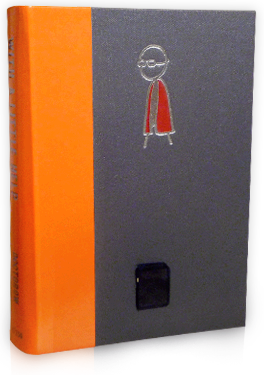
Book Review: “Super Sad True Love Story” by Gary Shteyngart


Warning: the following book review contains explicit language, which is quoted directly from the novel. Reader discretion is advised.

I find most near-future-world-gone-mad stories hit-or-miss. Either they try too hard, or the characters are too flat, or the ideas are just too far out there (or not far out there enough). But occasionally I’ll find one that has the perfect mix of stuff I like.

With Super Sad True Love Story by Gary Shteyngart, I got lucky.

Super Sad True Love Story is a hilariously-scary near-future love story about a 39-year-old man named Lenny Abramov, clearly based at least in part on Shteyngart himself. The son of Jewish Russian immigrants who moved to New York before he was born, Lenny grew up with all the Russian pessimism, Jewish guilt, and immigrant pride that those folks were wont to do. Now he works for a multinational corporation’s Post Human Services division, selling life extensions to HNWIs (high net worth individuals). Our story begins with him finishing up a year in Italy, trying to make sales and failing spectacularly, living in a way considered dangerous by his coworkers (eating too many carbs, drinking too much wine), going to parties, and trying to figure out how he’s going to explain to his boss and close friend Joshie why he hasn’t hooked any clients.

At a party, Lenny runs into Eunice Park, spending time in Italy between her graduation from college and her entry into law school. Eunice, the daughter of Korean immigrants living in New Jersey, is very thin, very pretty, and very much a product of her environment. Lenny falls in love with her instantly, and through a strange confluence of circumstances manages to take her to bed.

Using first-person accounts from Lenny’s diary and Eunice’s GlobalTeens account (more on that shortly), the book then follows Lenny and Eunice as they separate and get back together, return to New York, and try to build a relationship.

Until America falls.

From a science-fictional perspective, Super Sad True Love Story is the standard “America loses power while Europe and China grow in strength, America falls, America is rebuilt” story I’ve read in various short-stories and novels over the years. But where the novel shines is in the author’s uncanny predictions of the near future*. Here are some:

Money: The dollar is as devalued as the currency in current third-world nations, but most upper- or middle-class Americans use yuan, or “yuan-pegged dollars”, which are worth more. Right now, if I’m reading the news right, the dollar isn’t as well-respected globally as it used to be. Also, in the book, several nations are run by their largest companies — StatOil in Norway, HSBC in the UK (which is now called HSBC-London), Stability in Canada, and Petro in Russia. Mergers are rampant, too; Eunice’s bank is AlliedWasteCVSCitigroup, and LandOLakes also apparently has a financial wing.

Technology: Phones have been replaced by an umlaut-laden version of the word apparatus, “apparat”. People rarely speak (or “verbal”) to each other, preferring to use apparati to instantly find out about others. This is already happening; people on dates, trying to build relationships, would rather sit and stare at their phones than actually speak to each other. Apparati are also getting smaller and smaller, and are able to bring in more and more information; while cell phones have actually gotten slightly larger, the other half is already happening. (The book also has a very clever dig against iPhones in it.) Oh, and the sheer amount of information Lenny can get about Eunice as he flies back from Italy is staggering and scary — credit information, friends, photos, addresses, shopping trends…

Social Networking: Today, everyone and everything is on Facebook, and Facebook can suck in all your different social networks — Twitter, Foursquare, GetGlue, etc. In Super Sad True Love Story, everyone — adults, kids, professionals — uses a social network called GlobalTeens. Eunice happens to write long letters to her best friend Jenny, who lives in California (where Eunice used to live), and GlobalTeens keeps telling her that people don’t read anymore, that she should send image messages or video streams instead.

TV News: There are apparently only two 24-hour news channels, FoxLiberty-Prime and FoxLiberty-Ultra. Lenny’s parents watch these. Everyone else gets their news from media streams, which can come from anywhere, including Lenny’s friend Noah (who does a political stream) and Noah’s girlfriend Amy (who, despite being in perfect shape, runs the “Muffintop Hour”). This is sort of a riff on Current, and others who have YouTube or UStream shows.

Devaluation of Shock: Slang has gotten more and more extreme. JK, for example, has become “JBF”, or “just butt-fucking”. Eunice talks to Jenny about porn they watched together as children (and the context indicates this is completely normal). The terms AssLuxury and AssDoctor are thrown around with impunity. One of Noah’s friends runs a liberal-slanting news stream intercut with explicit video of hardcore homosexual sex. The pervasiveness of porn and the subsequent imitation of acts seen in it is described in Jenny’s letters to Eunice about parties where it is normal for people to have pornographic-style sex in company. A top retailer of clothes for women and men is JuicyPussy. The hot new jeans trend is called Onionskin, which are completely transparent. “TotalSurrenders” are women’s undergarments that pop right off with the touch of a button. And we complain about pants on the ground…

Rating Everything: Walking through New York City, Lenny passes credit poles, which display his high rating (1520). Apparati can rank everyone in the room to see who the most desirable men and women are. Personality and fuckability are measured on a scale of 0 to 800. At Lenny’s office (a converted synagogue — actually kind of a cool image), an arrivals/departures train board shows what kind of mood everyone is in.

American Patriotism: In the novel, America is very much in decline. Poorly-spelled signs from the American Restoration Authority claim “Together We’ll Go Far” (the Wells Fargo slogan; I knew it sounded familiar) and various other vaguely-positive messages about change. Anti-immigrant sentiment is strong, and people who don’t look like “‘Murricans” (in the Fox News sense of the word) are grouped by metaphor or stereotype — Chinese people save, Latinos spend or have bad credit, and so on. As things get worse, roadblocks are set up throughout New York, plastered with signs saying that, by reading the sign, citizens deny the existence of the checkpoint while implying their consent to let the ARA do whatever it needs to do. And while the use of apparati is permitted on airplanes, the closest Lenny can get to JFK to meet Eunice’s plane is somewhere on the Van Wyck Expressway, at an ARA checkpoint patrolled by National Guardsmen with automatic weapons.

The novel is full of clever wordplay, prescient references, hilarious-while-being-vaguely-uncomfortable interactions between characters, and a scenario about the end of America that will frighten the hell out of you because it’s completely plausible. It’s also vaguely reminiscent of the way Muggle Britain was unaware of the war between Voldemort and the Order during HP6 and HP7. I really enjoyed reading it, and I got through it quickly — it’s an easy read, and I’ve always found humor to go faster than tragedy. I’d call this a satire more than anything else, but I think it also fits into sci-fi in the same way as films like Gattaca and Code 46**, and its exaggeration of what’s happening now echoes the “Would You Like To Know More” moments of Paul Verhoeven’s adaptation of Starship Troopers. I definitely recommend Super Sad True Love Story.

And I’m not JBF.

* I believe the book takes place in the 2030s (possibly the 2020s or 2040s). I can’t recall it ever being explicitly stated, and I wasn’t able to easily infer it.

** A quick rant about “Code 46” — I really liked the film, and thought it was beautifully-shot with great sets and locations. It doesn’t have any cursing, and there’s no explicit violence, but it’s rated R. Why? Because in one scene, actress Samantha Morton is shown from the front with her bottom half completely uncovered. Meanwhile, films suffused with violence like “The Dark Knight” and “Batman Begins” are PG-13. What does it say about us as a culture that we’re more afraid of a one-second shot of the place that babies come from than our tweens and teens seeing a pencil jammed through a guy’s eye and the aforementioned guy stumbling around in pain for at least five times that long?

Review: “Monster Hunter International” by Larry Correia


Monster Hunter InternationalI had a warm spot in my heart for Larry Correia after reading his HK rant. (“Because you suck. And we hate you.”) Unfortunately, I decided to read his novel, Monster Hunter International. This book was originally self-published, and owes its success to Mr. Correia’s marketing instincts. I don’t have space to cover all the flaws in this book, so I’ll just hit the highlights. Because it was self-published and only later picked up by Baen, Monster Hunter International shows no sign of an editor’s pen. The characters are flat. The prose is stale and repetitive. The plot reads like something intended for a weekend of tabletop gaming, complete with prophetic visions from the storyteller to keep the protagonists on track.

The company called Monster Hunter International was founded when a group of good Southern boys got a lynch mob together in order to drive some unsavory elements (read: vampires) out of their town. I wish I was kidding. In the years since, Monster Hunter has made its founder’s family rich by collecting government-sponsored bounties on supernatural creatures like werewolves, zombies, and vampires. These days, the only thing they fear is the EPA (and Fish and Wildlife, and OSHA, and…).

Our hero, Owen Pitt (brother of the heavy metal artist Mosh Pitt — not kidding about that one, either), gets involved in the monster hunting business when he defeats his evil-boss-turned-werewolf in single combat. Afterwards, he is visited at his home by Monster Hunter International’s recruitment team, including one Julie Shackleford, who tells him that not only is he the first man in history to kill a werewolf with his bare hands, but that his scores in various firearm competitions are even better than hers! Also, his college degree proves that he is a genius. Owen decides that he is in love (though whether with her or her handguns is sometimes an open question). He expresses his love by staring at her a lot, and when that doesn’t work, by pretending to be her friend.

I decided to read this book based on the strength of its action scenes, but to my dismay I found that the narrative is dominated by lectures. The hundred pages or so that pass between the werewolf fight and the first vampire fight are filled with Owen’s monster hunter training. We are introduced to some more monster hunters, whom the reader might be tempted to worry about if Mr. Correia had the fortitude to kill his characters. In training, Owen proves that he is the best at every possible thing (except running), earning the admiration of all the instructors. Multi-page monologues leave the reader with only one questions: Who will be beating our hero with the exposition bat this time?

When the book finally gets back to the action, it’s a mess of vampires on a cargo ship. Owen saves everyone from the cowardly French vampire, and is left for dead by Julie’s asshole boyfriend (and who didn’t see that one coming?). We learn the first rule of monster hunting: Any problem can be solved by getting a bigger gun. In Owen’s case, it’s a fully automatic cut-down combat shotgun with a spring-loaded bayonet and optional grenade launcher. (“How many gun laws does this break?” “All of them.”) The action scenes are precise and well-scripted, but I was willing to put this book down at any time up to the last fifty pages. The final battle is the most interesting one in the book, but suffers from overuse of the passive voice (see: the perils of self-publishing). Finally, it turns out that women are the source of all evil.

Owen is not the kind of character who thinks his way out of problems. Despite being introduced as a genius, he isn’t particularly bright. He has a magical dead Jew in his head who does his thinking for him (still not kidding). Instead of figuring out the bad guy’s plans, the magical Jew dumps Owen directly into the bad guy’s head and lets him see through his eyes, removing all suspense from their later encounters. People who learn things tend to go insane, like Julie’s father.

Monster Hunter International did not have to be seven hundred pages long. Its sequel, which I am told did benefit from the attentions of an editor, is much shorter. Not that it really matters, since I’m not going to spend any more time struggling through yet another lecture set to the sound of an entire Viking army’s worth of political axes grinding. Monster Hunter International is not a book for people who enjoy well-crafted prose or fast-paced action. It is not for people who don’t care about the difference between a Government .45 and a Glock. Larry Correia is writing for a specific audience, and it is clear that I am not one of them.

Review: For the Win by Cory Doctorow


I don’t play MMORPGs. I never have. They’re just too big for me. If I’m going to play a RPG, it’s going to be something I can play by myself, with lots of cut-scenes and a hint book — because, in my opinion, the best part about RPGs isn’t figuring out that you need to combine the Widget of Destiny with the Wilted Flower to create a Magical Key of Awesomeness. It’s playing the game like an interactive movie with battle sequences.

Which is why I love Final Fantasy VII and X so very much.

But that doesn’t mean I didn’t also thoroughly enjoy Cory Doctorow’s latest novel, For the Win.

For the Win, ostensibly a YA novel (I’d say “mature YA”), contains some pretty heavy concepts, most of them dealing with economics, gaming, labor, employee rights, and the way totalitarian governments deal with lawbreakers. But fortunately, that’s not all it’s about.

For the Win follows a few major characters and spans the entire near-future Earth (much in the same way that Doctorow’s Little Brother was just around the corner in terms of its timeline). In California, Leonard Goldberg dreams of going to China to meet his guildmates in Svart… Svartal… Some-Long-Viking-Word Warriors. In Atlanta, Connor Prikkel works to protect Coca-Cola’s games division from people who game the system. In India, Mala forms an army to take on gold farmers at the behest of the games companies themselves. In China, Matthew Fong uses his savant-like strategies to get the best stuff from games. Also in China, we have Jiandi, a radio host very popular with the downtrodden factory girls — the young women who make a huge amount of stuff Westerners take for granted. And then, I believe in Indonesia or Malaysia, we find the trio of Big Sister Nor, Justbob, and The Mighty Krang, who just want gold farmers to have the same rights as everyone else.

Far more complicated than Little Brother, For the Win requires readers to keep all these characters and their motivations straight in their heads, while also keeping track of the different game worlds in which they all play. S-Word Warriors, Mushroom Kingdom, and Zombie Mecha are the three main ones, but Doctorow also gives us glimpses into others, such as Magic of Hogwarts, which I for one would really like to play. But like Little Brother, For the Win educates as well as entertains. Most gamers have at least heard of gold farmers, of boys and young men in China playing games to make money and get big items that can be sold to people who don’t have eight hours a day, every day, to level their characters up. What For the Win does is reminds us that these gold farmers, while they do get to play games all day, are still doing work, and if they’re in one of the many countries where workers don’t have rights… well, things can get ugly. Especially if they demand what even the most slacker teen working at Taco Bell has here in the U.S. (and much of the West).

It’s a big concept, and not something that every YA reader will be able to wrap his or her head around. Doctorow does a great job of breaking down the economics and the labor issues into understandable chunks, but I don’t think a tenth-grade teacher could give this book to an average English class and expect all the students to grasp everything as well as, say, a college freshman or early-30s writer could do. Not the author’s fault; like I said, these are big concepts, much bigger than Little Brother‘s relatively-simple “freedom to do what we want, without being spied upon, so long as we’re not harming anyone” message.

This book is also pretty violent. Kids are hurt, and even killed; there’s one scene where a murder takes you completely by surprise because you’re expecting something different to happen. The police beat and jail young teens and adults alike. There’s riots, narrow escapes, unjust imprisonments, and a disproportionate number of kicks or punches to the groin area — for a book as short as For the Win, I really did notice it. I guess that’s intentional — not every YA reader has been beaten up by the police, but I’m going to bet that most boys, by the age of 18, have taken at least one shot to the nads and can therefore identify with the pain the characters are going through.

I realize now that this review has been fairly dark so far, which isn’t fair to the tone of the book — Doctorow’s writing is quick and witty, full of contemporary phrases that the intended audience will totally grok. And there’s lots of hopeful moments, such as when Leonard realizes his dream only to find out that what his parents were putting him through was nothing compared to the lives his friends in China have to deal with, and then watching him rise to the occasion. Plus the irrepressible good humor of Jiandi, Ashok’s insistence that everything is going to be all right if only people listen to him, and of course the ending. I can’t tell you much about it, because it would be spoiler-y, but if you’ve ever read a YA novel where kids are the heroes and adults are the villains, you’ve probably got a pretty good idea what happens.

I really enjoyed For the Win, and I enjoyed it even more because Doctorow makes all his books available for free on his website. I read this as a PDF on my iPad — the first electronic book I’ve read for pleasure* — and if you have a device that can read PDFs, you can just download it. But that’s not to say there’s anything wrong with picking it up in the store. I’m fairly certain that most people have done so (or at least bought a Kindle/Nook version).

I wouldn’t recommend this book to someone just picking up Doctorow for the first time (although it is pretty accessible). However, if there’s a gamer in your life that you want to start reading books instead of killing orcs, this is definitely one to buy. Technically-minded people will also appreciate the level of detail and research in the novel, and genre readers will see all of this happening just around the corner.

For the Win. Full of win.

* I had to read Wealth of Nations on a website for one of my seminar courses in college. White Courier font on a black background. My eyes hurt. A lot.

Review: Souls in the Great Machine by Sean McMullen


Every now and then, a sci-fi or fantasy novel or series comes along that completely redefines your definition of “the best sci-fi book I’ve read”. Which is not to say it’s the best book ever, or that everyone who reads it will love it.

However, in the case of author Sean McMullen’s Souls in the Great Machine, I feel comfortable saying “you’re going to like this book”.

SOTM, released in 1999 as a single-book version of McMullen’s Voices in the Light (1994) and Mirrorsun Rising (1995), takes place in Australia, in the future, after a worldwide event called Greatwinter led to the end of modern technology as we know it. No cars, only trains — many powered by wind or by passengers doing the pedaling. No phones, only beamflash — long-distance semaphore similar to the Clacks. And no computers.

Until a young woman named Zarvora Cybeline decides to build a computer.

The thing is, she can’t do it with electronic machines, because the Wanderers — satellites left in orbit from the technological age — will blow electronic and fuel-powered machines out of existence the moment they sense them.

What’s a girl to do? Well, if you’re Zarvora, you take over the most powerful entity in Australia — Libris, the library system — and conscript criminals and numerate individuals to sit in a huge room and do calculations for you. Occasionally you’ll have to duel someone — with flintlock firearms — or take over the government, but when you want to prevent the end of the world (again), sometimes a girl’s got to get her hands dirty.

Into this world, we bring a cast of characters that you’ll enjoy the hell out of, including such rogues as:

  • Lemorel: an extremely intelligent librarian who you should never, ever wrong. Because she’ll kill you.
  • Glasken: a chemistry student with a taste for fine wine and fine women. Guess who he ends up with.
  • Theresla: an abbess from a far-off region who, it’s said, eats grilled mice on toast. When she can find toast.
  • Ilyire: a driven, dangerous man who you’d be glad to have at your back. Just make sure he’s on your side first.
  • Dolorian: a beautiful junior librarian who knows exactly how many buttons of her blouse should be undone at any time.

These characters, and all the other inhabitants of Australia, are subject to a strange force — the Call — which sweeps across the land, forcing those caught unawares to walk south, to some unimaginable fate. No one knows where the Call comes from, and only a few can predict it, and no one can resist it. Precautions are taken — belt anchors, mercy walls, and the like — but if you’re caught, you’re gone.

Lest you think nothing actually happens in the book, I assure you there’s murder, mischief, sex, love, war, technology, and a whole lot of humor. In fact, McMullen is one of the most consistently humorous writers I’ve encountered who isn’t specifically writing a humorous tale.

The book itself is massive — a small-print mass-market paperback version is almost 600 pages — but into those pages you’ll find a world unlike many others, a world of intelligence and honor, chivalry and technology, science and religion, and much, much more. Oh, and for some reason, lots of talk about breasts — I’m going to be honest here: one thing McMullen does in both the Greatwinter and Moonworlds sagas is show his characters’ appreciation for that part of the female anatomy. It’s not like there’s a Hooters in Rochester (the Australian city around which much of this book takes place), but trust me. You’ll notice it.

And if you really like the book, don’t fret — there’s volumes two and three, The Miocene Arrow and Eyes of the Calculor. I personally think Souls is the best of them, and it does stand alone; you don’t have to read the other two.

I’d love to tell you everything about my favorite scenes — Denkar meeting Black Alpha’s true face, learning about resistance to the Call and how exactly that works, Glasken’s time with Theresla as well as his escape from the most dangerous fighting monks in the land, and the final duel between the villain and… well, I can’t tell you that. I don’t want to spoil the book for you — especially when, as I said, this is the book that, to me, redefined my personal definition of “best” when it comes to SF novels. It has everything I like — full characters, a sweeping story, great worldbuilding, and enough action to keep me interested without taking away from the science and technology*.

Buy this book. Read it. It’s worth it. Trust me.

* And breasts. Hey, I’m a lech, but at least I’m a charming one. Right? Anyone?

Review: The Habitation of the Blessed by Catherynne Valente


The Habitation of the Blessed, being the first volume of A Dirge for Prester John, is the newest addition to the long and honorable tradition of fan fiction dedicated to a 12th-century forgery. The original letter described a kingdom in the generically exotic and conveniently distant “east,” where a Christian priest ruled a nation of improbable creatures, and oh-by-the-way also the Fountain of Youth. The letter went viral, spawning argument, analysis, fan fiction, and ill-fated military expeditions whose commanders though Prester John would show up with his griffins and his lions to help with the Crusades. It stayed popular for the next five hundred years, until Europeans got far enough east to realize that Prester John had never existed.

More information about the historical Letter of Prester John can be found at the handy Prester John website.

Catherynne Valente’s book takes on the myth from a science fiction point of view, asking the practical questions of — How did a random Christian guy end up king of all these incredible people? How does a society made of so many radically different people, from the talking griffons to the headless Blemmyes, actually work? And what is life like for people who drink from the Fountain of Youth?

The world she builds on this foundation is like nothing I have seen before. If I had to, I suppose I could compare it to the way I remember Narnia, before someone pointed out all the Christian symbolism and I grew old enough to wonder where the tea and sugar came from. Catherynne Valente does a remarkable thing in a book with one foot in a medieval bestiary: Not one of her characters is a symbol. Each of them, even the ones we only meet briefly, feels as real as any of the people I see every day. At one point our heroes meet a man who is digging endless tunnels through the mixture of air and sea that has smothered his city. He has the head of a goat, and his circumstances are strange even by local standards, but in a crisis he puts his head down and gets to work, trusting everyone else to do the same.

The superbly-drawn characters make the framing narrative and structure easy to follow. The Habitation of the Blessed has at least four major narrative tracks — the story of Hagia, fierce and beautiful, who forces Prester John to see her as a person and not just as an upsetting body, the story of Imtithal and the queen’s children, Prester John’s own story, and the story of the monks who followed him.

Prester John himself has the potential to be just another Christian man who arrives in a foreign country, fails to understand or even acknowledge the beliefs of the locals, and decides that God wants him to be in charge (why they never seem to use the premises that 1-their God is supposed to be omnipotent and 2-the locals are getting along fine to deduce that 3-God is ok with the status quo… is a topic for another time.) Like the rest of the characters, though, he isn’t a just symbol or a message, and it’s hard not to feel for him as he tries to make sense of the bizarre world in which he finds himself, as the people he meets challenge and overturn his most deeply held beliefs, just by existing.

I didn’t want to put The Habitation of the Blessed down and read something else, but I ran out of pages. It comes to a conclusion of sorts, though there is clearly more story left to tell. My only consolation is the promise of a sequel.

Superhero fiction: the next big thing?


There is an old writing adage worth paying attention to: don’t write for the market. What’s hot now may not be hot next year, and considering a book may take two to three years to come out after being picked up by a publisher – and that’s not counting the time it takes to actually write and sell the thing – deciding to jump on the current trend is not a good idea. This probably applies more to specific concepts rather than genres as a whole. For example, while zombies, vampires and werewolves are currently ruling the roost, horror as a general genre is also experiencing something of a resurgence. So although writing a paranormal vampire romance is not the best idea (unless you have something unique and/or amazing), writing something in the horror field might be a good bet, as a genre trend might have a longer cycle of popularity and decline.

Might.

Predicting trends is also pretty much impossible. Although you can spot signs here and there, a scene will have pretty much established itself already before anyone notices, and it’s only in retrospect that you can more clearly identify the key titles and writers responsible. Many publishers will try to pick a trend anyway, and some will even rush-release titles to cash in. You can usually tell which books these are, and I really have no idea if it works as a method of generating a quick buck. Bully for them if it does.

So far, so good. Two facts: don’t write for a trend, and trends are impossible to predict anyway. Got it? Got it. So whatever you do, don’t ask me what the Next Big Thing in genre fiction will be, because I don’t know, and if I did know I probably wouldn’t tell you.

But… maybe it’s superhero fiction.  I said maybe.

Superhero prose fiction has been around for as long as its comicbook equivalent of course, but has been paid far less attention than the original material for an obvious reason: superheroes are visual. They wore bright costumes in the late 1930s because the bold colours really stood out amidst the monotonous gray of the corner news stand. They caught the eye, and what better way to show Superman lifting a car over his head than to show Superman lifting a car over his head.

But prose is different. Everything takes place in the reader’s head, and what they see will undoubtedly be completely different to how the writer pictured it, even if he or she goes crazy with description. That’s how prose works and what makes it so brilliant. But this may explain why superhero fiction, while enjoying a modest level of popularity over the years, has never really caught on. In fact, I’ve met a lot of people who raise an eyebrow when I mention that I’ve written superhero prose fiction, so ingrained is the notion that superheroes are for comics and comics are a visual medium.

The most notable recent example of superhero fiction that had a slightly higher profile among the public was Soon I Will Be Invincible by Austin Grossman. When this novel was released in 2007, public telephone boxes in the UK were transformed with wraparound advertising, playing on the traditional cliché of Superman. The book isn’t bad either, although it’s probably more important as an example of how superhero fiction can work outside of a visual medium.

Unfortunately, the momentum of Soon I Will Be Invincible was quickly lost – just last month the author updated his blog to say that he has some more books scheduled for 2011, but that’s a gap of nearly four years since Invincible came out, and in the interim trends in science fiction, fantasy, and everything genre have changed. Another notable entry is From The Notebooks of Dr. Brain, by Minister Faust, also from 2007, but while this comedy novel gained something of a cult following, like Invincible it perhaps arrived too early.

Why then am I breaking one of the golden rules and predicting an upswing in superhero fiction? Well, my friends, there are signs.

Superheroes have always been popular material for film adaptation, more so now than ever. I think this is because of all media, film (especially big budget film) is the one that can match the visual spectacle of comics. And just look at the line-up of comicbook adaptations coming in 2011 and beyond: Green Lantern, Thor, Captain America, The Avengers, The Dark Knight Rises, Iron Man 3… the list goes on.

But all of these are adaptations of existing properties. This is logical, of course – with the gargantuan amounts of money spent on Hollywood productions it makes sense to stick to the tried and true, and it’s also a good way for publishers like DC and Marvel to get their characters and stories to a wider audience. Off the top of my head I don’t recall an original superhero concept on the big screen, except for Pixar’s The Incredibles, and Megamind from Dreamworks, both of which are CG animation. Hancock, starring Will Smith, might be the only live-action original superhero film of recent times, but its not exactly a shining example of the genre.

More interesting than film – and possibly more indicative of a growing trend – is the explosion of superhero television shows, specifically original superhero shows. Heroes was the first, but after a spectacular first season it floundered terribly and was ultimately canned. Currently we have No Ordinary Family, a drama series about a family of four who gain superpowers after surviving a plane crash in South America, and the forthcoming The Cape, about an ex-cop framed for murder who joins a circus and, erm, gains superpowers and stars Summer Glau as a…*cough* investigative blogger. Actually, it looks better than it sounds. The SyFy network is also developing Three Inches, a series about superheroes with rather pathetic powers (cover your ears, Mur!), and Alphas, a series about… actually, nobody seems to know. Of note, The Cape appears to be the only example so far of series about costumed superheroes, and even in this case they have a rationale for it (the cape in question being a circus costume). Surely I wasn’t the only one wishing that the characters that populated Heroes would just cut to the chase and form a spandex-clad crime-fighting league?

Anyone? Moving on…

The most interesting superhero television series comes not from the US but from the UK. Misfits is about five delinquent youths sentenced to community service for a variety of small crimes. Caught in a bizarre electrical storm, they are each gifted a power, and over two series (the second of which has almost finished screening here in the UK) become embroiled in an increasingly bizarre sequence of events which include murder and lot of sex (although not always at the same time). It is easily the best written British television series at the moment and is a dynamite subversion of the superhero genre and concepts.

Really, it’s genius. If you can see it, see it.

So what of books then? What signs are there that superheroes are about to become something big? Firstly, there’s the Masked anthology, edited by Lou Anders, which features short fiction from a number of comic writers and well-known novelists. Angry Robot Books is set to release The Damned Busters by Mathew Hughes later in 2011, in which an office worker summons a demon who grants him his greatest wish, to be a superhero.

Numerous online magazines and fiction sites have also sprung up, extolling the virtues of superhero fiction – Superhero Novels, A Thousand Faces and Beta City, to name but three.

Perhaps an even bigger sign that Something Is Coming is the fact that comic writer Bill Willingham is the guest of honour at WorldCon 2011, being held in Reno, Nevada, a convention traditionally tied very strongly to science fiction and fantasy literature (ie, prose fiction).

Will 2011 be the year of superhero fiction? Maybe. The signs are there. If the superhero genre does explode, I’ll be very happy indeed, as I love superheroes and have written a lot of superhero fiction. If that bandwagon is a-comin’ to town, I’ll be jumping right aboard (and thus breaking rule number one. Le sigh.).

Am I right? What are your picks for superhero fiction, and what other signs have I missed? Or is this all for nothing, and you really can’t predict forthcoming trends? I’d love to hear your comments!

Announcements from Pyr, Angry Robot, and Cory Doctorow!


First, Pyr is releasing a free ePub Novelette in celebration of its 100th book published: The Wolf Age by James Enge.

From the press release:

The Wolf Age is the third novel to feature Enge’s character Morlock Ambrosius, a wandering swordsman, an exile, and a drunk. Blood of Ambrose, Enge’s first Morlock novel, was on the Locus Recommended Reading list and a World Fantasy Award nominee for Best Novel.

In honor of this burgeoning Morlock fan base, and to commemorate The Wolf Age’s status as Pyr’s one-hundredth title, Pyr is issuing a free, exclusive, ePub novelette called “Travellers’ Rest.” Featuring a cover by artist Chuck Lukacs, “Travellers’ Rest” is an 8,500 word original novelette, written for Pyr, which takes place before the events of Blood of Ambrose. It is available on the Pyr website, http://www.pyrsf.com, as a free download in ePub format and will also be available via Kindle. (Two previously published Morlock short stories that take place many decades after the events of The Wolf Age—“A Book of Silences” and “Fire and Sleet” —are available on the Sample Chapters section of the Pyr website.)


Angry Robot Books is expanding its ebook store to include short stories from its authors. They’re calling it nano fiction and pricing them at 59p apiece or 10 for £3.49. They also have a fun Advent Calendar at their site, including presents from their authors, which is a unique and fun idea.

(Disclaimer- Escape Pod editor Mur Lafferty hosts and produces a podcast for Angry Robot Books.)


And Escape Pod favorite Cory Doctorow has released a ground-breaking self-publishing venture called With A Little Help. In short, it’s a short story collection. but it’s so much more than that. He’s done a limited edition (which I covet very much — see right), four different soft cover books (I want the Pablo Defendini cover), an audio book with stories narrated by Wil Wheaton, Neil Gaiman, JC Hutchins, and many others (including me!), and, if you know Cory’s work, this part is obvious, a free ebook. He’s been completely transparent thus far explaining his reasoning behind doing this, and how he’s gone about the process,and who has helped him with free work, and what work he paid for. It’s not just a neat book to get, it’s fascinating for anyone considering a self publishing venture.

Apocalypse now


So, you like The Walking Dead, huh? It’s neat, right? An ongoing post-apocalyptic TV series about zombies, based on an award-winning comic. What’s not to love? And fortunately, they’ve done a mighty fine job on the adaptation. This viewer is pleased. Zombies are popular at the moment, cresting at the top of one of those unpredictable waves of fashion. The Walking Dead has come at exactly the right time, whether by design or accident, and all power to it.

But this series fits into another genre, that of the post-apocalyptic. And this is where I have a confession to make.

I don’t like post-apocalyptic. Post-apocalyptic is predictable, formulaic, and easy. There, I’ve said it.

This is, of course, not true. Post-apocalyptic is also hugely popular and always has been, not just with the general public but with discerning genre fans like you and I. It seems that wiping out humanity in some global catastrophe is something that, maybe, we all secretly wish for. I mean, if we were among the lucky survivors, it’d be free reign, right? No work, no more need for money. No more cruelty and tyranny, no more pollution, overpopulation or war.

And of course no people, no family, no friends, no loved ones, and the beginning of a huge struggle for survival against impossible odds in a situation likely to psychologically traumatise even the most hardened survivalist.

So okay, not so neat.

I said I don’t like post-apocalyptic, and that bit is true. Post-apocalyptic is formulaic, simply because the scale of the situation is such that any fiction set after the disaster must follow similar plot lines. The survivors are isolated, and then eventually find each other. Cities are empty or full of the dead (or the walking dead). There is no power, no medicine. Every manmade resource is suddenly very finite indeed. And so on, and so on. Plotwise, most post-apocalyptic stories are more or less the same.

I should point out here that I’m no expert. I have friends who are very dedicated followers of end-of-the-world stories, and no doubt about now they’re ready to put their keyboards through the computer screen in frustration. But hear me out. Post-apocalyptic may suck, plotwise, but where it really shines is in characterisation. Possibly more than any other genre, post-apocalyptic depends upon strong characterisation. Because if all the plots are the same, or similar (and I’m talking pure plot here, which is different to story and situation), then all you have left are the survivors. And it is how the survivors act in their new environment that makes the story. I’m not saying that characterisation is unique to the post-apocalypse, far from it, but I am saying that if you’re about to write an epic tale of an empty world, you’ve got to be prepared to engage the reader with some very, very powerful players.

With that in mind, and as a self-confessed post-apocalyptic skeptic, here’s my list of five tales that, to me, are among the best examples of the post-apocalyptic. I’m not just going to regurgitate a list from Wikipedia (and, my heavens, there is quite a list on there), these are personal choices that I think are either great examples of either characterisation or perhaps an unusual or uncommon take on the post-apocalyptic plot. Having just slated the genre for being formulaic, let’s see if there are any stories which break the mould.

Before I continue, there’s also an important distinction to make here between those stories which are genuinely post-apocalyptic, and those which are really apocalyptic. Post-apocalypse, by definition, implies that the menace, threat, disaster, alien invasion, plague, etc, have been and gone. What we are left with is the world and the people left afterwards. Stories like the recent film Skyline, or 2012, or great classics like The War of the Worlds take place while the disaster is unfolding. While the aftermath may be considered post-apocalyptic (although probably not in the case of The War of the Worlds), we don’t see that bit. I’ll admit here I’m going to cheat on one entry in my list below, but only because I think it’s a particularly fine and relatively unknown example.

The Quiet Earth


I’m really sure how well known New Zealand cinema of the early 80s is outside of that country, but The Quiet Earth is well worth tracking down. It tells the story of a man who wakes up one morning to find the world empty − whatever the apocalypse was (I shall reveal nothing), it actually physically removed the world’s population, so our hero (played by the wonderful Bruno Lawrence) finds himself genuinely alone. With a completely deserted Earth, not even a single corpse in sight, Lawrence carries the majority of the film on his own. It’s a remarkable performance as his character goes from confusion, to exhilaration (with nobody around the world is his oyster… if he wants to drive a giant earthmover through a gas station to see what happens, why not?) and finally to total paranoia and delusion. And after all, if you were the only human being left on the planet, wouldn’t you start to think you were special? The Quiet Earth is out on DVD and I’d recommend you grab it.

The Stand


The grand-daddy of all post-apocalyptic stories, Stephen King’s 1978 tale of the survivors of a super flu which wipes out most of the human population is rightly considered a classic. At an eye-watering 1300 pages, this book is a perfect example of character over plot. Of course, King is known for this, but while the concept of a superflu (one engineered by the military as a biological weapon that is released accidentally) was old hat when King wrote it, the journey of the survivors as they find each other and come to terms with their new world is brilliant. Although the central plot eventually reveals itself − that of the survivor’s journey to Las Vegas to make their stand against an evil that has arisen − how the characters react and cope is what makes this whopping tome a real page-turner. If you haven’t read any King, this wouldn’t be a bad place to start. Afficiandos think that this is his best work; while I personally prefer ‘Salem’s Lot, if you have any doubts about the post-apocalyptic genre, this will set your mind at rest, as it did mine.

Earth Abides


Twenty-nine years before The Stand was published, academic George R. Stewart wrote his single novel which might be called “genre”. Earth Abides is another that follows the standard post-apocalyptic formula − a super-sickness kills everyone, leaving only those immune to the disease alive − but you can forgive Stewart for this given that it was probably a newer story concept back in the 1940s. Earth Abides might be that one book that I’d take to a desert island, should I be so abandoned. It’s beautiful, moving and sad, and sticks in the mind not just because of the human characters and their journey but because of Stewart’s depiction of the world itself. In Earth Abides, the Earth itself is a character. Rid of destructive humans, it begins to regenerate, reclaiming itself and returning to an earlier pre-industrial (you might even say ‘default’) state. Stewart conveys this in a striking way, with a key motif being the silence of the world. Without humans and their cars, planes, factories and technology, the Earth is mostly silent, the loudest sound being that of a thunderclap. In this quiet Earth, the survivors gather and attempt to reconstruct society but ultimately they fail, instead regressing to a more primitive level of society. This only reinforces the central theme of the book. The Earth abides; humanity does not.

The Road


I’m cheating here. I’m not talking about Cormac McCarthy’s Pulitzer Prize-winning post-apocalyptic novel, one which dominated the responses on Twitter when I put out a call for recommendations. I’m talking about Quatermass creator and master of British science fiction Nigel Kneale‘s one-off BBC television drama from 1963, now sadly lost from the archives and only surviving in script form plus, it seems, one manky photo. Also, it’s not really post-apocalyptic. In fact, it is really pre-apocalyptic. In the 18th century, the inhabitants of an English village shun the road that runs through the nearby woods, for the woods are haunted and people have heard terrible things. As the story reaches the climax, it is revealed that the manifestations on the road are the echo of people fleeing an atomic explosion in the present day, somehow riverberating back in time. The juxtaposition of modern − police sirens, recognisably modern people running in abject terror for their lives − with the old, with the 18th century characters cowering in terror, completely unable to comprehend the sound which we, the viewer, recognise all too well, must have been both brilliant and chilling when it was first shown.

Survivors


I can’t make this list, self-confessed archive television nut that I am, without mentioning Terry Nation’s BBC TV series, Survivors. Again, the scenario is pure post-apocalypse cliche. Humanity is mostly wiped out by a plague, strongly implied to be deliberately engineered and released by accident. Over three seasons between 1975 and 1979, Survivors charted the journey of the survivors as they found each other and ultimately formed a community. Critics often bemoan the transformation from gritty science fiction survival story to “soap opera”, but I think they’re confusing soap opera with character-driven drama, and this is where Survivors shows its real strength (characterisation, see?). Survivors was remade for a modern audience over two seasons in 2008 and 2010, but here the tired nature of the premise was in full effect, rendering the remake flat and pointless. Survivors should be experienced in all its 70s glory.

The Dalek Invasion of Earth


A sixth entry, mainly because Nigel Kneale’s The Road doesn’t quite count. The Dalek Invasion of Earth was the second appearance of the Daleks in Doctor Who, and was broadcast in six episodes from November 21 to December 26, 1964. Despite the title, this isn’t about an alien invasion. By the time the Doctor and company arrive in a deserted, dilapidated London, the Daleks have been the masters of the Earth for a decade or more. Here we discover that the Daleks first employed a virus to weaken society before arriving in force, and years late the surviving humans are either enslaved or gathered in disparate resistance groups.

The Dalek Invasion of Earth is Doctor Who‘s first foray into alien invasion and one of the rare occasions it featured a genuinely post-apocalyptic story. Extensive location work around London makes this story something of a small-screen epic, and to this day it is regarded as one of the best stories of the show’s early years.

There are many more that are worth of this list − as already mentioned, The Road by Cormac McCarthy, but also Wall-E, Boneshaker by Cherie Priest (perhaps a rare example of post-apocalyptic confined to a very specific place, namely the walled city of Seattle). UK genre publisher Abaddon has a entire ongoing post-apocalyptic series, The Afterblight Chronicles, which are well worth checking out. Like I said I’m not post-apocalyptic scholar so please, nominate your own prime examples of the genre in the comments and teach me a lesson.

Now, if you’ll excuse me, I have the next episode of The Walking Dead to watch.

Review: Shades of Milk and Honey by Mary Robinette Kowal


While I do not read romances, and I have not read a book by Jane Austen since high school, I nevertheless decided to pick up Shades of Milk and Honey by Mary Robinette Kowal. She is a brilliant writer, and I trusted her to write something I could endure. As it turned out, enduring the book wasn’t a problem — the hard part was putting it down.

The choice of detail in Shades of Milk and Honey is exquisite. Everything is described in spare, precise language. I can still see the glass cherries, the nymph’s face hidden in the tree, the dark and stormy bedroom of a heartsick girl. There is not a single wasted word or padded scene. That makes Shades of Milk and Honey a quick read. There is very little action until the dramatic ending, but that does not slow the narrative down. The majority of the book is concerned with interactions between people — with word and gesture, thought and response. I found it enthralling.

I believe the plot will be familiar to readers of romance. Two sisters named Jane and Melody try to walk the narrow path that society has marked for them, with the threat of scandal and ruin pressing in on both sides. Mary Robinette Kowal does not pull her punches in her portrayal of traditional marriage as an economic arrangement between families. As the sisters cannot inherit, they must either marry well or fall into poverty when their father dies. Romance in this setting is a matter of survival. Melody, who is beautiful, has no shortage of suitors. Jane, on the other hand, is cursed with a big nose and brown hair, and believes that she will never find a husband.

The aspect of the book that has gotten the most attention is its magic. Mary Robinette Kowal has made her book’s magic small and subtle, to avoid breaking history. This was not an easy task, and she has spoken at length about it elsewhere. The magic is called Glamour. It is the art of folding the ether to produce small illusions — a dress on a mannequin, a piece of ambient music to liven a party, or an elaborate “glamural” that turns a room into a forest glade. Jane has a particular talent for glamour, which gets her into trouble before it gets her out of it.

Just as the magic has been carefully constructed so as to allow the Regency period to proceed more or less as it did in the real world, the language in Shades of Milk and Honey has been chosen to fit the period. Modern readers will notice obvious examples of archaic English, such as “shew,” but the overall effect is wonderfully subtle, making the book feel right without distracting the reader. Shades of Milk and Honey is a deceptively simple book resting on a foundation of solid research.

I am told that there are plans for another book, which will involve swashbuckling. I can’t wait. I had my doubts about this book at first, but I’m glad I gave it a chance, and I am looking forward to the sequel.

The story is king


A friend pointed out to me on Twitter just the other day that as of this week, it is exactly one year since I picked up my first Stephen King book and started reading. That book was Under the Dome, which came out in November 2009, and I was utterly enthralled from beginning to end. As soon as I had finished I set myself the task of reading all of his work, in publication order. A year later and I have only reached The Stand – hey, it was a busy year – but I’m still loving every single word.

As a genre reader and writer, it might sound surprising that I came so late to King’s work. While his career has had high points and low, he is generally considered a master of science fiction, horror, and just plain writing, ably treading the line between vast commercial success and quality content.

But the reason I only came to his gigantic body of work with his latest novel is that prior to this, I was a King snob. Commercial success on such a scale usually meant – so I thought – very poor writing. This is often the case, but it was that foray Under the Dome last November that taught me a very good lesson indeed, one that is second only to the pants* rule.

It’s slightly oblique but I’ll try to explain. That lesson was: everything is about ‘the story’.

Okay? Hold tight. Here we go.

Currently we are continually bombarded with bad news about the publishing industry – about how publishing is on a downward slide, book sales are floundering while editors at the big houses flap to catch the next big trend or play it safe with unadventurous, unoriginal content. The industry is being shaken up by digital publishing and ebooks, while opportunities for new writers trying to get a break are shrinking more and more.

It would be easy, with all of this, to take a very bleak view, and certainly I’m not suggesting that the bad news is not true. If you were of a pessimistic nature you could lament the death of books and of writing as you sob into your cocoa in front of the TV. But there is one thing to remember amid this doom and gloom.

Writing and “the story”, to use some quasi-mystical catch-all, is all around us. Take a look at what you do during the day – strip out the day job (unless you actually make a living writing), the chores, the laundry, brushing your teeth, and look at what you do for entertainment, and what entertains you. I’m willing to bet that most of it, maybe 90%, is “the story”. And “the story” means writing.

There are more TV shows and films now than ever, and certainly in recent years a stonkingly good selection of exceptionally high-quality ones. It’s all “the story” – fiction, written by writers. And everything that surrounds it – special effects, marketing and merchandising, even the actors, producers, directors, crew, etc – are all there to deliver “the story” to us. The world of books is just one tiny facet – there are comics, television programmes, films, and games (video or otherwise). It’s all writing. It’s all “the story”.

Two things really crystalized this for me. Firstly, a couple of years ago I went to a comic convention which featured a host of writers and artists from DC Comics, including their commander-in-chief, Dan DiDio. During a weekend of panels and discussions, one thing became very clear. The DC universe is one giant story, a tale so big and sprawling that it literally covers the walls of several offices in New York. The job of DC is to deliver this to us, and to continue its development before passing the baton to the next batch of creators and producers. The same can be said of Marvel, or Image, or 2000AD, or any comic publisher or endeavour. The scale of it was quite frankly mind-blowing, and I came away from that con with my first suspicions about “the story” and how it impacted practically everything I did and was interested in and did.

The second moment of realisation came earlier this week, when I was fortunate enough to attend a small gathering of Doctor Who fans who were hosting an informal interview and Q&A with Daphne Ashbrook, co-star of the 1996 US/UK TV movie with Paul McGann, currently visiting the UK. I’m a Doctor Who fan, I’m happy to admit, but I’ve always had difficulty with the TV Movie. This ‘difficulty’ has evolved from outright denial and upset (hey, I was a sensitive teenager in 1996) through to grudging acceptance of the production, so long as I didn’t actually have to watch it. So driving for an hour to see a co-star I wasn’t particularly interested in talk about a production I didn’t particularly care for seemed, beforehand at least, a bit of a chore. But, what the hell. When was this opportunity going to come up again.

Of course, it was a marvellous evening. Daphne was a delight, and kept us entertained for close to two hours on the ins and outs of her impressive career (come on, forget Doctor Who, she was in Knight Rider, The A-Team, and Star Trek: Deep Space Nine; hell, even Murder, She Wrote). It was a revelation, especially when I realised that large parts of her lively discussion were her relaying to us the plot of these various shows, so we could have a better understanding of the role she played in each.

There it was. “The Story”. As an experienced actor, Daphne’s job is to deliver “the story” to us.  And “the story” means writing, plain and simple. Storytelling. Writing. Same thing.

So what’s the magic advice I distilled from all of this? Give up on the novel and try a screenplay? Not at all.

My advice is to realise that “the story” is everywhere, and like the guys from Pixar keep saying, “the story is king”. With this in mind, and knowing that writing is a never-ending quest to get better, it’s our job as writers to absorb as much of “the story” as we can. This means reading outside of our comfort zones and genres as well as within them – if I didn’t decide to try Stephen King I would never have discovered his extensive, and quite wonderful, back catalogue. When I was prepping to write a detective noir novel, I decided to bite the bullet and read The Big Sleep by Raymond Chandler. Whammo, the whole world of pulp detective fiction was opened to me.

One often-quoted piece of writing advice is to not just turn off your television, but to get rid of it entirely. Stephen King himself goes off on this in On Writing. A lot of writers follow this advice to the letter and do very well indeed. But personally I think this is missing the point, because between the inane loops of twenty-four hour news, reality shows and quizzes, the blowhards that King describes so well in his memoir of the craft, there is some damn good stuff on, be it a television series (old or new) or a film (old or new). So if “the story” is about writing, then by picking and choosing carefully and by not letting it become a time-sink (and that really is where the danger lies and the advice stems from, I think), you can watch, enjoy, and learn from some very, very good examples of the craft.

“The story” is everywhere, and where the story is, you’ll find writing. That will never, ever go away, no matter what weekly slice of negativity comes from the traditional publishing industry. The world needs writers and always will, because our whole lives are based around storytelling.

Read books. Watch TV. Go to the movies. But importantly, read something you might not have thought you’d like, and watch a film that isn’t quite the genre you are interested in. At worst, you’ll absorb another little slice of “the story” that you wouldn’t have otherwise and you’ll learn something from it. At best, you’ll discover something new and wonderful and whole news worlds will instantly become available.

And then think about it, and learn from it, and write.

* The pants rule is pretty simple and surprisingly effective: when writing comes up on your schedule, make sure you are up and doing and dressed. Don’t write in your pyjamas, don’t write in your slippers, no matter how appealing or comfortable it may sound. By “pants”, I mean trousers (not, as British people use it, as underpants… stop sniggering at the back there!), but that’s just a metaphor for being prepared and ready to write. The more prepped you are – showered, shaved, dressed, in a nice pair of shoes – the better your writing. If you want writing to be your job then act like it. Put on a nice shirt, or skirt, not just your comfy “at home” clothes. You can put those on when you’ve finished your job. In fact, the more formal you make it, the better you tend to feel (although I can’t imagine what happens to your writing if you turn up at your desk in full evening wear or a ball gown… I must give that a go sometime). Try it. It works!

hot mature website