

Escape Pod 1061: Pigeons and Robots and Pensive Worlds
Show Notes
This episode is sponsored by Sleepphones! Use code ESCAPEPOD and get 10% off your purchase.
Pigeons and Robots and Pensive Worlds
by Trae Hawkins
We found the pigeon and its robot companion on Planet 44.
Picture-perfect, this planet, large enough for our directors to build schools of nepotistic grandeur, their tiny, grubby-fingered silver spooners staking claim to the land.
We shuddered as our ship settled onto a grassy hill, that wary, dormant beast called hope stirring awake. Planet 44 was, perhaps, the paradise that came to us in our dreams.
It looked the part, what with the plush, mossy ground, the flora sprouting as if placed meticulously by some god building its dream terrarium. The ground even rumbled for a moment, as if in welcome.
But we were getting ahead of ourselves—there was protocol to be followed, and our directors were more than likely to deny this land to us, even if it was the one.
“How’s the pressure?”
“Atmospheric or societal?”
“This is the ninth time you’ve made that joke.”
“You’re no fun. Pressure’s fine, I guess. Readers are saying we’ve got a molten core, stable temperatures. Two equidistant stars that don’t seem to be in any rush to die. Probes are currently gathering more data.”
“There are trees! There, in the distance!”
“Planet S87 had trees.”
We all fell silent. We did not like to talk about Planet S87.
“Keep your helmets on, for now. Just in case.”
Just in case. We stepped from the ship, shivering as we adjusted to that new-world tingle dancing along our skin. It was quiet. Never a good sign, but usually the first one. It happened every few years: a planet that was too good to be true. Soon we’d be back on the ship, crossing Planet 44 from our list, charting course for the next one.
And then we found the pigeon.
Rather, we heard it—that heavy slap of a wing, feathers displacing the air, followed by that extinct, primordial ‘coo?’ we’d all learned to mimic as children.
Humanity’s final attempts to seek a new home had been made in collaboration with pigeons. Pigeons on ships, on rovers, on capsules sent into space. We lost contact with most of them during the wars, and then found their aimless graves amongst the stars every so often, their existence reduced to bone piles, empty feeders, the stale scent of bird shit. Those we hadn’t launched into space were left on Earth, had perished as the wars rent the planet apart.
This—a live pigeon—was new.
Columba livia, they were called. We’d all watched the videos, studied the photos—the pigeon is history, the pigeon is sacrifice, we’d chanted in class. Yet the oil-on-water iridescence of its neck feathers, the soft charcoal stripes against chalk-gray plumage, that single red eye like a bead of amber in a field of soot… We could only gape.
“Looks scared.”
“Just fidgety. They’re all like that, I think.”
“How’d it even get here?”
“On a rover, dumbass. Or one of those cryogenic capsules.”
But the longer we studied its pinched beak, its bobbing head, those scaled and taloned feet pacing like a disappointed parent, the more apparent it became: the pigeon was uneasy. It surely hadn’t seen a human before, didn’t know we were the first in generations to lay eyes on a bird of any kind.
“It must have family. What were they called?”
“A flock.”
We repeated the word. Flock. It was awkward in our mouths, foreign and ancient and thrumming with power.
“Hello, there,” the robot upon which the pigeon was perched said.
“Jesus,” we cursed in chorus.
The robot, which had been hidden by moss patches, vines, and star-bright flowers, tilted its boxy head. “Oh, no, thank you. I am… agnostic, I suppose.” Then, after a moment of thought: “How might Colu and I help you?”
The pigeon—Colu, presumably—puffed out its chest. “Coo!”
Planet 44’s twin suns never quite set; they bobbed on the horizon at intervals, at one point overlapping like a pair of black cherries yoked to the firmament. At its darkest, Planet 44 provided enough light to study the robot’s fiber-muscle limbs, the mosaic of scratches and dents across its body, the buzzing solar panels lining its back.
“One hundred and eleven Earth years,” it answered when asked how long it had been on the planet. “The pigeons and doves were here already.”
At this, we huddled, checked our logs, and determined the robot must have been one of dozens our space station had dispatched with a singular goal some hundred years prior: Find a friend.
Our scientists exhausted the other prompts, had gotten mixed results from “find evidence of life” or “find water.” They’d been as granular as possible, nearly calling it quits when a robot returned with debris from an asteroid collision, claiming the rocks had experienced life according to the theory of object-oriented ontology.
But friends? Well, the scientists figured that even a robot might come bearing news of a stubborn critter or lazing stream it had befriended.
“You found a friend, then.”
The robot nodded as it led us through a sparse thicket. “I did. Colu’s great-great-great-great-great-grandparent. Quite ornery, but it enjoyed nesting in my cranial chamber.”
“And you never returned to the space station.”
“I did not.” Then, after noticing the anticipatory silence, it elaborated: “A good friend does not abandon its companions. I will return once my time is finished here.” A quiet whirring echoed from somewhere within its body. “Hm. I have come to a belated realization: The estimated time of my return to the space station is currently incalculable.”
We exchanged curious glances, but the reason for the robot’s statement presented itself as we emerged from the thicket.
Whatever reservations we had about Planet 44’s habitability were nearly smothered. We burst into a picturesque scene: a steep cliff from which barreled a gushing waterfall. An abundance of phanerogams—amethyst orchids, fields of wheat, tomatoes!—spread like a supernova reaching across cold space, coloring the planet’s twilight canvas.
And there, like opal-hued motes along the hills and foaming waters, were thousands of pigeons and doves. We gawked, for a moment. Several moments, actually, still as the forest trunks to our backs. It was the image of paradise come to life, the hum of rushing water and frothing pools smashing against the clipped song of birds, the chittering of wings moving like great feathered waves.
Of course, the robot could never have abandoned this.
Colu cooed again, its head proudly bobbing.
“Yes, it is very pretty, Colu,” the robot chimed. “As it has been. As it will be.”
The pigeon stomped on the robot’s head, flapped a wing, spat out a short grunt.
“My tone?” the robot said, a semblance of a scoff in its digitized voice. “Need I remind you who amongst the flock has been reprimanded for tone on several occasions?”
Colu flew off, leaving a spot of bird shit on the robot’s head.
“Ornery,” it said, “clearly runs in the family.”
The robot, after successfully convincing Colu to return to its perch, gave us a tour: through the stretches of hydrophytic trees, the most prominent being a weeping willow-like beast that stood taller than any of the images we’d seen as children; past pools of bathing birds, all of whom ruffled their feathers distrustfully at us; and beyond a clearing where another robot sat cross-legged before a patch of weeds—“A strange fellow who arrived shortly after me, and who is quite funny when he is not studying plant life, as he does for years at a time,” our robot guide explained.
As we plodded along, it became clear to us: Planet 44 could, perhaps, house an entire civilization. It could hold more than our directors’ children; it could be a home.
“It’s just the two of you, then?”
“And the birds, of course.” The robot stopped, its dawn-tinted eyes dimming for a moment. “I understand this may be impolite. But I should ask: What is it that you want?”
Right. We’d gotten so lost in the magic of a species unearthed, in the hypnotic birdsong we’d learned to revere, that we’d forgotten the mission. We turned to our meteorologist, whose scanner had buzzed and beeped occasionally since we landed hours ago.
“The probes are reporting a high likelihood of habitability. Not many detectable toxins, low levels of carcinogenic gases—mostly just radon, really. No trigger-happy fault lines.”
“Please, get to the point.”
“This—this is the one.”
“Oh.”
The statement crashed like exhaustion after a long day. We needn’t discuss the gravity of it—we’d experienced the cage of uncertainty, the constant reach for a better life with no handholds in sight. There, as the robot watched us curiously, and as Colu blinked, unaffected by this great revelation, we imagined ourselves back on Space Station 23.
Population wasn’t an issue; there had been child limits and steady infrastructural expansion to maintain equilibrium. Food was not scarce or nasty; our scientists had engineered synthetic, nutritious foods that made our mouths water. Everyone got along, ostensibly—laughter was in high supply, kisses and hugs and words of encouragement colored the sterile halls of Space Station 23 like wallpaper.
No, it was the fragile, dwindling hope we thought of.
We were bred for the mission. It was whispered into our cribs, written into our lullabies. We were a generation of explorers, our existence contingent upon the discovery of something more.
And we’d all had the thought—why can’t we be content, up here among the stars? But no amount of innovation would save us from the slow deterioration of resources. We had time, before the end reared its ugly head, but it would come for us if we didn’t find a new home.
So such thoughts of complacency were forbidden. Remember the pigeons, our elders incanted. Remember the excavations, the expeditions, the sacrifices, human and avian and robot alike. Remember the mission.
Yet the mission had turned into a chore. We set out for planets and worlds unknown because it was expected, because it was woven into our DNA over generations. Our hope was replaced with obligation; we no longer believed in discovering the promised land, yet we were fated to search for it until our lives atrophied.
“What is it that you want?” the robot repeated kindly.
We shivered, the thrill of a mission complete tickling our skin, and removed our helmets.
“Jesus,” we gasped, the air rushing into our bodies like water, whetting our throats and insides. It was colder than the air in Space Station 23’s circulation system. Thinner, less substantial. We gulped, waited for the symptoms of hypoxia, for our bodies to shut down. But our limbs did not tingle, our breaths did not die in our chests, our minds were clear as the waters that sprayed before us.
“Oh, I see! You are missionaries!” the robot said. “I regret to inform you that I have no need for your Jesus, but I will listen if you wish to share.”
“What? No, we aren’t here to sell you Jesus.”
“Then I am confused,” it said.
“We—well, we didn’t expect the planet to have… residents, already.”
“See, what we want is… How do we say this?”
“We’d like to be your neighbors.”
The robot and Colu blinked in tandem. “Oh.” The whirring noise intensified again. “I suppose there is space, and plentiful resources that can align with a human diet and lifestyle.”
We beamed. “We should send words to the others.”
“Others?” The robot blinked again. “Hm. It appears I misunderstood your request. How many other humans do you wish to invite onto this planet?”
We exchanged glances. Space Station 23 would arrive first, but more would follow—62, of course, and perhaps 14 and 31 in the following weeks. The math completed itself.
“All of humanity. Three million, at first. Seventy million by the year’s end. Earth years. Perhaps more will trickle in after that. Upwards of ninety million, eventually.”
The robot paused. “Surely, you are mistaken. Earth was very populous—eleven billion across six continents. Your number is less than one percent of that.”
We grimaced, those haunting images and accounts from our history textbooks catching fire in our minds, the culling and diseases and natural disasters glinting through the smoke. “Ninety million,” we repeated.
“I see.” The robot folded its great, fibrous arms. Colu nodded and cooed, then pecked at the robot’s nape. “I know, Colu.” It turned its attention back toward us, and said with indifference: “I rescind my earlier assertion. You may not be my neighbors.”
Rather than answer our slew of questions, the robot simply stalked off, beckoning us to follow, its solar panels humming. Colu responded to each of our inquiries with a curt coo! and a rude, aggressive flap of its wing. It did not seem to enjoy our presence, despite our fascination with it. A small sentry of birds trailed behind us like a gown’s train, their distrust making way for curiosity. One bird much smaller than Colu—A Ptilinopus, or the fruit dove, we identified—even took a liking to us, its jade wings and pink face hovering in our periphery.
After an hour of wordless trudging, we came upon a large, misshapen boulder in the center of a clearing. It stood alone, the canopy above casting it in shades of green, spots of starlight like freckles on its face. As we neared, we realized it wasn’t just misshapen—its surface had been pockmarked over time by thousands of pecks.
“The birds and I come here often,” the robot said, “to speak with the world.” Once again, it appeared taken aback by our silence, and compelled to elaborate. “I am not sure how to explain this. You will need to ask the world—this planet—if it accepts your proposition.” Colu chirped and jumped on its head. “Of course, its decision will be made in collaboration with the birds.”
We stared blankly at the robot. “Ask the planet…?” we ventured.
And the ground below our feet shook—not violently enough to send us tumbling, but enough to register the shake as a greeting, an announcement.
Planet 44 was sentient.
The robot began to rust only days after its arrival on Planet 44. By then, the pigeons had taken a liking to it, had brought it to the boulder so it might convince the planet to help. Planet 44, apparently, had rejected it, until it promised not to harm the birds, the flora, the rocks that settled so snugly into the bottoms of lakes and rivers. And there, as if drawn and brought to life, a lemon tree had sprouted above a saltwater spring.
“The planet created the conditions which would save me from the fate of rust,” the robot said, its voice hitching excitedly. “Every week, I bathe in the citrus and saltwater solution. I suppose you might strike a similar deal. Survivability in exchange for a promise. It is my understanding that the planet enjoys seeing life thrive upon its surface.”
We considered this: asking the planet for permission to live.
“Do we need permission? This place is already survivable.”
“It would be rude not to ask permission, though.”
“Well, yes, but the choice is not a real choice, is it?”
“Of course, it is! We cannot just set up camp because we can. It’s written in our Codes Against Imperial Conquest. On the off-chance of finding a planet with alien life—”
“Alien? These are birds!”
And there, as we bickered, the crystal air streams feeding our lungs turned sour, and it was like swallowing bucketfuls of acid. We each fell to the ground, each gasped as our muscles and tendons strained within us, and a thick fog burgeoned inside our heads.
Yet as quickly as the pain arrived, it ebbed away.
As we sputtered and gasped, our meteorologist’s scanner went haywire, beeping an alarm code we all translated with ease.
“The air pressure, it—”
“It dropped. Significantly. Temporarily.”
As our minds wound down from the panic, we belatedly recognized what had happened: Planet 44 had threatened us.
“This planet will not tolerate disrespect,” the robot said, quite pointedly.
In the silence that followed, fear blossomed like fruit on a vine.
The planet did not want us there. It would kill us if we allowed another set of feet to land on its soft, fresh dirt. It wanted nothing but its pigeons and robots, was probably growing tired of our presence with every passing moment.
But that was not true, was it?
We reached out, pressed flat palms to the blemished boulder, which was warm to the touch, and hummed as if in thought. “If we promised not to harm you, would you welcome our family and friends? Would you allow us to find a home here?”
It rumbled in response, and it was a decidedly gentle quake.
But that was not the question that needed answering.
“Can we… do that? Not harm it?”
Colu cooed, as if to make a point, and we shared the thought: Humans had not treated its kind with respect. We’d revered them behind desks and airlocked cabins, and sent them into the cold, lonely dark. Before that, we used them in our wars, built metal towers atop their homes, poisoned their skies. Colu’s existence was nothing short of a miracle.
And we all knew what had become of Earth—our history classes spared no gruesome details. The same greed that propelled our directors to send us on presumably fruitless missions had ravaged humanity’s only home. Even then, after those who remained found shelter in the stars, there had been existential hiccups: resource allocation, population control, the coups and uprisings, bodies ejected into the sterile, hungry ether.
The peace we knew on Space Station 23 was born out of necessity, not virtue.
“Perhaps we don’t deserve this.”
Although it was a suggestion, it had all the barbed edges of truth. We were undeserving.
Again, the ground trembled gently.
Colu flew to the boulder’s crest, pecked at the rock with fervor. Then, after a muttered coo and a huskier, syncopated note, it jumped to the ground and began conversing with the other pigeons and doves who’d followed us. We watched, fascinated, discerning in their trilling a web of familiar dynamics: there, an elderly pigeon asserting its stance, feathers ruffled indignantly; a winsome mourning dove offering a rebuttal with a confident shrug; a matriarchal pigeon stamping a taloned foot, effectively ending the discussion.
Colu nodded and returned to the robot with a satisfied blink of its sunset eyes.
“I see.” The robot cocked its boxy head, then held its hand toward us. “The birds—and this world—invite you to try.”
“To try?”
“Yes.” Its circuitry whirred. “The birds have a great many legends and myths. Most are inconsequential. Tales of great clouds of seeds barreling through space, or summer winds that bring legumes into their nests in the night. But there is one story they teach their young. A cautionary tale.”
We glanced at the birds still gathered nearby. One was a fledgling, its head and neck feathers thin, its cautious eyes surrounded by pink skin.
“The story is about us.”
“They warn their young about humans.”
The robot nodded. “It is quite a terrifying tale, history.”
Colu slapped its wings against the robot’s head.
“Yes, I am getting to the point!” it said, exasperation tinging its voice. “I am claiming that, despite your past cruelties, your presence is not strictly forbidden.” It peered at us, its ocular lenses intense. “This world will take life to protect life. If you believe your kind can cooperate under this condition, then you are welcome.”
Before we could discuss, the trees surrounding us stretched and bent flat against the ground, and the dirt beneath our feet rose like a lift, bringing us thirty, forty feet high. There, we beheld Planet 44: a watercolor image of distant mountains with cleaved valleys, hills like full cheeks, bark-made fingers reaching toward the low clouds and the teasing twin suns. Spatters of pigeons dotted the pink sky, their bodies unmoored and unworried, their calls echoing off the summit peaks.
“I could get used to this sight.”
“The birds are very pretty.”
“I’ve got some questions for the weed-watching robot.”
“Stole a tomato, back there. I would eat a hundred of those things.”
“Shall we try, then?”
We inhaled, some strange heat blooming within us. Decisions of this gravity deserved thought, hours and hours of deliberation and heated debate. Decisions like this demanded consternation and humility and reckoning.
But we were tired, full of nascent aspiration, drunk on discovery.
“Shall I begin gathering grapes?” the robot called from below. “Do humans still drink wine when celebrating?” Colu cooed alongside it, and the surrounding birds joined in, the chorus warm and tender.
We peered down into a welcoming world, and spent the night listening to robot tales and birdsong, our fingers stained grape-red.
Host Commentary
And that was “Pigeons and Robots and Pensive Worlds,” by Trae Hawkins. About the story, the author has this to say: “The story surrounding this one is pretty interesting! I was at a rest stop during a cross-country train trip when a pigeon landed in front of me and some other passengers, and we all took turns feeding it. I’d gotten to know some of these people over two days of travel and had begun to think of us as a temporary community. There, as a bunch of not-quite-strangers from all over the world were connected in their affection for this little pigeon, and as the pigeon gratefully pecked at our offerings, I got inspired to write this story about humanity and our capacity for good.”
Whenever the average scifi fan thinks about life in other worlds, they usually consider it to contain sentient aliens. And we can’t blame them; it’s interesting to tell stories about nonhuman sentients. But when the actual scientists look for it, they’re looking for the smallest amoeba or bacteria filled slime.
I used to play the space sim FTL (faster than light), which has several encounters regarding other planets and aliens. One specific one stands out to me, “A complete scan of the planet reveals a simple mold as the only life present. The terraformers claim their terraforming plans are only hindered by intelligent life; they can begin their work.” One of your options is to say that all life is precious and this should be studied. That one has always flummoxed me because it’s hard to look at mold as life. But the game gives you the option to look at the planet like our heroes do in this story. Is other life precious? Even if it’s not sentient? Or only sentient in the way humans think?
I guarantee that there will be some humans in that ninety million that will test out the planet to see if it’s serious.
I also will then assume the planet will be serious.
The argument could possibly be made that this kind of setup leads us to quandaries like knowing that your waterways are overfished, but if the fishers don’t fish, they can’t make a living. (Something we struggle with in my home state of North Carolina.) But that is a problem for a future generation, not our heroes just looking for a home.
Escape Pod is 100% audience supported, and we count on your donations to keep the lights on and the servers humming. Head to https://escapeartists.net/support-ea/ to see all the available donation and subscription options, including Patreon, PayPal, Ko-Fi, and Twitch.
You can also support Escape Pod for free by rating or reviewing us on Spotify, Apple Podcasts, or your favorite app.
Escape Pod is distributed on a Creative Commons Attribution-NonCommercial-NoDerivatives license. Our music is by permission of Daikaiju. You can hear more from them at daikaiju.org.
That was our show for this week. Our quote comes from Robert Frost: “In three words I can sum up everything I’ve learned about life: it goes on.”
Thanks for listening. We will see you next week with more free science fiction. Stay safe, stay kind, and have fun.
About the Author
Trae Hawkins
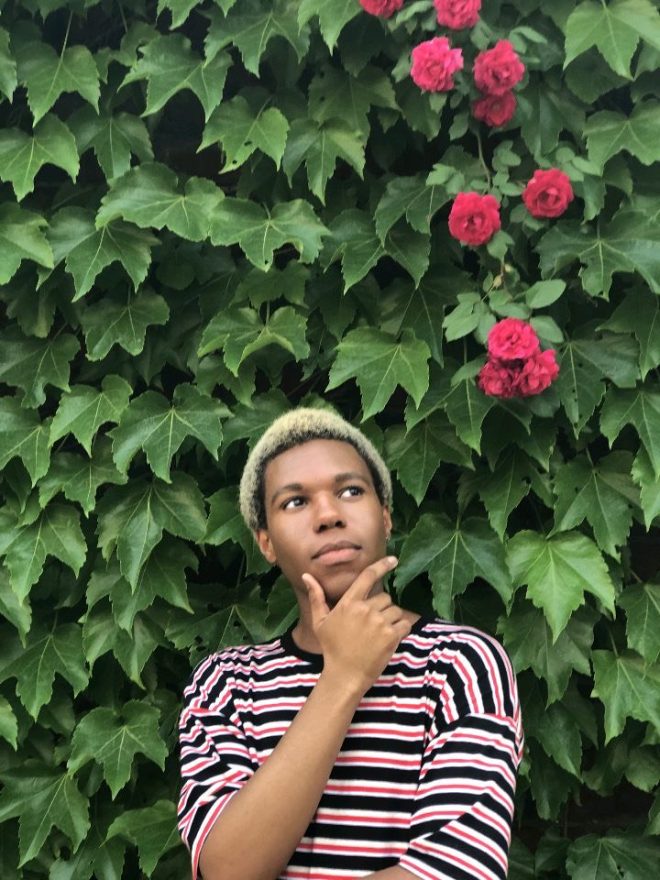
Trae Hawkins (he/him) is a writer and dreamer. He has an MFA from the University of Nevada, Reno, and works freelance as a sensitivity reader. An editor for Anathema Magazine and an alum of the Viable Paradise and Tin House workshops, his fiction has appeared in Beneath Ceaseless Skies, Augur Magazine, and in the acclaimed New Year, New You: a Speculative Anthology of Reinvention. He was a winner of We Need Diverse Books and Penguin Random House’s Black Creatives Revisions Workshop. He loves to write about empowering Afrofuturist worlds and far-off spacefaring shenanigans.
About the Narrator
Pippa Alice Stephens

Pippa Alice Stephens is an actress and voiceover artist. She is soon to be seen in ‘The Invisible War’ playing Rose Berkeley and ‘Spiralling’ playing Natalie.
