

Escape Pod 1066: Negative Scholarship on the Fifth State of Being (Part 1)
Negative Scholarship on the Fifth State of Being (Part 1 of 2)
By A. W. Prihandita
“Doc, there’s a . . . hole growing in me,” the alien said through the spherical interpreting machine hovering over them.
Semau barely registered the word “hole,” so taken was she by the sight of the alien. If she were just a tad less caring about propriety, she would’ve let her eyes blow wide open. The alien looked impossibly transparent yet not transparent at the same time, like a mound of water. Their shape was almost humanoid: a roundish head sitting atop a misshapen lump of torso. They were visible in the way ocean waves were visible, only through folds that magnified its translucence to almost-opaqueness.
Semau glanced again at the patient form. Name: Txyzna (he/him). Species: Plyzmorynox-matori. Semau had never heard of the plyzmorynox before, and a quick lookup in the Brazs’s Database of Interstellar Species told her this wasn’t her fault. The plyzmorynox had an occurrence rate of 0.000013% of interspecies encounters, which made her impulsively count the decimal places—she’d never seen anything that small. She wanted to look up the Matori system as well—what kind of place was home to this super rare species?—but this wasn’t the time to satisfy idle curiosity.
“Hello. Welcome. Please sit down . . . ?” she trailed off into a question, worried the alien wouldn’t fit in her patient’s chair. But he shrank as he was sitting down, fitting the chair like liquid fitting its container.
“Would you tell me more about this . . . hole you mentioned?” she said. The plyzmorynox didn’t look holey at all. Could water be holey?
A liquid lump separated from his “torso” and formed an approximation of a human arm, one with no hand at its end, just a dull point. He gestured at his chest. “There is a”—he paused, or rather, his interpreting machine paused, blurting a second of static noise—“hole in me. Very small, but it is there. I can feel it growing.”
“How exactly does this feel?”
A pause. He had no face per se, but the liquidy lump that formed his head was more textured than his torso, the way the surface of a vast ocean was more textured than the surface of water in a cup. And now, the waves of his head swirled, tightening in a confused eddy. Semau decided this was his face, the waves a means of expression.
“It’s hard to describe,” he said. His interpreting machine rendered his words in a doubtful tone, matching his face. “There is . . . I just feel it. Inside of me. It feels . . . heavy, but not in the usual way.”
“There’s a hole inside of you, but the hole feels heavy?”
“Ah. That is contradictory, is it not?”
Semau turned her emerging grimace into a smile, and for good measure she shook her head too. “Not a problem. We’ll puzzle it out. Is there anything else you feel?”
The plyzmorynox gave her a headshake that looked uncannily like the one she’d just given. He offered no further explanation.
“All right, then,” Semau said.
She reached for the largest screen hovering over her desk, the interface of the health model she was licensed to use. The screen displayed a transcript of their conversation so far, but she ignored that for now, pressing CONSENT PROTOCOL instead. “I’m practitioner-doctor Semau Keo. I hold license FKGHB-00987-NUSANTARA for the Interspecies Health Model INT-HealthGTT version 8.5, which I will use to diagnose your symptoms. Do you consent to the processing of this consultation for diagnosis and prescription?”
“Yes,” the plyzmorynox said.
Semau pressed DIAGNOSE. With such a measly doctor-patient interview, she’d expected the model to ask for more data, but instead it quickly returned a message framed in red. SPECIES: PLYZMORYNOX not included in database accessible to FKGHB-00987-NUSANTARA. Expansion pack needed.
Drat. Six generations of mentor-apprentices had held this license before her. In that time, they’d been able to purchase practically all the expansion packs needed for the rarer species crossing the Nusantara system. But of course, why would they purchase access to data about a species with a 0.000013% occurrence rate?
She should’ve checked the model first before saying a word to the plyzmorynox. Now she was just wasting his time.
“Mr. Txyzna, I’m sorry, but my health model apparently isn’t equipped to diagnose illnesses of your species. Would you want me to refer you to another doctor?” He’d probably have to travel at least three systems away, but that was the best she could do.
“Can you not help me without the machine?”
Semau blinked. “I’m a practitioner-doctor, Mr. Txyzna. Not a scholar-doctor. I’m licensed to use the health model and be the intermediary between the patient and the model, but I’m not qualified to make observations and conclusions on my own. If my health model fails to help a patient, I should refer them to a practitioner-doctor with a capable model, or to a scholar-doctor.”
“I would like you to help me. The field notes say to seek a doctor as soon as the hole forms.”
“The field notes?”
His interpreting machine whirred, hovered down, and hinged open, revealing a nook that cradled a tiny book.
“Field Notes from One Corner of the Universe, by Alycia Balakrishnan-Smith,” Semau read the cover.
“I got this from my parent, who got it from his grandparent, who got it from his great-great-grandparent. These are the only interstellar field notes on my race before the destruction of our solar system by the umunua. You should be proud that these field notes were written by one of your own, a human.” The plyzmorynox paused, the waves of his face shifting into a melancholic churn. “My parent died a few moons ago. He was supposed to walk me through the forming of my hole; he’d promised to be my”—another blurt of static noise from the interpreting machine—“doctor. But my hole came late, and his death came early. I only have these field notes, which told me to seek a doctor immediately.”
Semau stared at the waves of the alien’s face, then at the tiny book. Then she stared at her screen, at the message still blinking red.
I’m sorry, I don’t know what I can do, she wanted to say, the same words she’d wanted to say to every one of her patients. She knew what INT-HealthGTT could do for them, but she never knew what she could do, other than what the model was already doing. And without a model . . . well. She was even more useless.
“It takes a while to get an expansion pack,” she said weakly. She wasn’t sure the district government had funds to spare, but she could check. Still, she made sure to also say, “I can’t promise you anything.”
Every evening after her shift at the clinic, Semau did a round of wellness checks for the elderly in her district. Her supervisor at the Health Office had wondered—in a curious yet snide way—why she wouldn’t get a more entertaining hobby, but she liked the work. Today she had Mrs. Achterberg, who lived in an apartment complex on Float 36, just a block off its main pier. On the ferry ride to that artificial island, Semau leaned over the railing and stared at the waves below, and all she saw was the sea-like face of the plyzmorynox.
The second the plyzmorynox stepped out of her office, she pulled up her account with the district government to check her remaining budget: 876,098 solars. Then she logged into her INT-HealthGTT account and searched for the plyzmorynox expansion pack. That was when her stomach dropped.
It cost 1,800,000 solars.
“I just don’t know what to do,” she told the wheelchair-bound Mrs. Achterberg after a quick recount of her predicament—appropriately anonymized, of course. They were in the old lady’s living room, the stereo set in the corner belching out classical quantum opera at half volume.
“You can always just diagnose his illness on your own,” Mrs. Achterberg said.
“That’s illegal,” Semau protested, voice cutting over the opera’s techno aria. “You know . . . you know what happened . . . before. My clinic only holds a ‘B’ ranking now. I can’t afford further scrutiny.”
Mrs. Achterberg waved a hand. “That was all in the past. Godang’s malpractice suit was dropped, and you’re a different doctor.”
Semau shook her head in frustration. “I’m still his mentee, his successor. If the Medical Board got just a whiff of a non-certified diagnosis, that’s it. They’d prosecute me like those Negative Scholars. Where would that leave my other patients?”
“You should’ve gone to med school, then,” Mrs. Achterberg grumbled. “People like you, always wanting to be good, always restless with too little to do—you should’ve been a scholar-doctor.”
“You know I couldn’t afford that. Guru Godang—”
“—would’ve been delighted to throw you into a shuttle and launch you at the university, if that meant more freedom for you. What, you think I don’t know him? We used to play in the same playground when we were kids, all the way to adulthood!”
And I was the one standing by his deathbed as he wasted away, Semau thought achingly. But she said nothing out loud. Sharp words would only flame her frustration.
Instead, she got up and fussed with the potted plants at the windowsill, ignoring Mrs. Achterberg’s glare. The plants had evidently not been watered for a few days; one of them had grown yellow and molded. Perhaps later she’d get a purple starplant to replace it—purple and green made a nice contrast. It would brighten the room. The thought helped her calm down, distracting her from the pangs of fear and dismay she felt every time someone brought up her mentor’s old mistake.
“It seems you have everything in order,” she said once she’d tended to every plant. “Give me a call if you feel any discomfort or need help with household stuff. I’ll drop by again in a week.”
“I’ll be fine, sweetheart,” Mrs. Achterberg said with a smile, one that made her look strangely tired.
Semau waved her goodbye, but as she stepped outside, the old lady called out once more, in a voice just loud enough for her to hear. “Just because Godang raised you and trained you, it doesn’t mean you’re him, you know. You’re allowed something else, something more.”
The plyzmorynox returned three days later. Semau sat stiffly, palms sweating in her gloves. “Mr. Txyzna,” she said, barely managing to stare the alien in the face. “Unfortunately, I’ve been unable to acquire the necessary expansion pack. Should I refer you to another doctor? I found one with the appropriate model ten systems away.”
The waves of the alien’s face ebbed and eddied in a churn. When he finally spoke through his interpreting machine, his voice reminded Semau of a whale song she’d heard once, in a documentary on ancient Original Earth. “You are kind to try. How much does the expansion pack cost?”
“1,800,000 solars.”
The plyzmorynox nodded. It looked like a crashing wave. “I do not have that amount right now, but I shall work toward it.”
“Wait.” Semau leaned forward, hands gripping the edge of her desk. “You don’t need to shell out that much money, Mr. Txyzna.” How would he get that, anyway? “I’ve found you a practitioner-doctor with the appropriate expansion pack. You can get your treatment with a fraction of that price, even if it means traveling to another system.”
The alien’s waves dissolved into a thousand tiny ripples. In the silence that followed, his body swelled until it strained against the armrests, a liquid bubble close to bursting, but then it shrunk until he was an emaciated ocean-man stooping in a patient’s chair. The gesture looked like the universe’s saddest sigh.
“I cannot do that, Doctor. It needs to be you.”
“Why?”
“Because,” he reinflated slowly, as if gathering the courage to reoccupy his existence, “I am unsure if I have time. I have wasted quite a lot of it consulting other doctors, all of whom rejected me for a host of other reasons. If you would not help me, I am unsure anyone else would. There is the possibility that I would travel so far only to arrive before someone who would only find another reason for why they cannot treat me. It seems I am too much of an alien to anyone of any species anywhere.” He paused. “I apologize if this sounds harsh, Dr. Keo—I do not mean to blame you or shame you. I am merely expressing my fear.”
Semau’s cheeks heated up. She fought the impulse to look away. “I’m sorry,” she murmured. It wasn’t an apology—or perhaps it was, for her impotence—but above all it was an expression of sympathy.
“I have access to 500,000 solars right now. Should I send it to you? I will get more—”
“Wait, what?”
“My clan received reparation after the Matori Tribunal of 1997 SGE. There was nothing we could’ve used it for, since there were so few of us left even then, so we’ve just been accumulating interest.”
And what was she to say to that? Her shoulders sagged with the burden settling upon her, her breath stifled by a lump growing out of grief and shame both. She felt like a boat unmoored.
There were very few things she could do, but saying yes was one of them, no matter how hollow it sounded to her own ears. “Yes, Mr. Txyzna. We can use your 500,000 solars as downpayment for your treatment.”
I’m sorry, she almost said again. This time, she wasn’t sure if she meant it for the plyzmorynox or herself, if it was an apology or sympathy.
The plyzmorynox came three more times after, to give her 200,000 solars each visit—even though he could’ve transferred the money without meeting in person. And because Semau felt bad dismissing him after confirming receipt, she started asking him about his symptoms, as if he was already her official patient.
On the first meeting, she asked if he’d been feeling any worse. He nodded his cresting-wave nod and told her, “The hole has grown about five millimeters. It does not feel disproportionately heavier than before, which I suppose means it hasn’t changed in its density. But I still cannot fathom what it is.” Semau also couldn’t fathom what it was. She stared surreptitiously at the mountain of water that was his torso. Despite his transparency, she still couldn’t see any hole.
Before he left, he said, “Please call me Txyzna, Doctor. You are kind, and I would like to be seen as a friend by a kind soul.” Semau’s mouth hung open. Should she accept the friendship, ask him to call her Semau? Should she allow herself to be anything other than a doctor—a practitioner-doctor, to be exact? In the end, she merely nodded.
On the second meeting, out of restlessness that she wasn’t doing enough and could never do enough, Semau asked if Field Notes from One Corner of the Universe said anything about what plyzmorynox doctors usually did with the holes forming in their bodies of water. Txyzna said no, there wasn’t a lot of specificity, only that it was customary for young adult plyzmorynox—anywhere around 75 to 100 years old—to spend time with a doctor once they sensed a hole growing inside them. Txyzna’s parent also never took the time to expound on this, before his sudden death.
At the end of the meeting, Txyzna extended a watery limb, whose end quickly morphed into a hand with pudgy fingers. The waves of his face flowed into gentle curves that looked like a hundred little smiles. Semau hesitated, then took off one glove and grasped the hand. It felt cool to the touch, like a dip in a pool in the summer, only that her hand didn’t sink into his, and neither did it get wet.
That night, she fell asleep thinking about that touch and the hundred little smiles on his face, and realized with creeping fear that she wouldn’t mind being called Semau, even if it meant she’d risk disappointing a friend and a patient both.
On the third meeting, Txyzna said this was the last 200,000 solars he had. He was trying to mortgage his abode for the rest of the payment, but the paperwork was taking time. He apologized for the delay.
“We’ll figure it out,” Semau said, “no matter how long it takes.” She didn’t dare ask if they had time. It seemed the growth of the hole was something every plyzmorynox went through, so hopefully it wasn’t fatal.
Once he left, she logged back into her account at the district government and filed an emergency budget use notification for 700,000 solars. With all the money Txyzna had provided, they now had 1,800,000 in hand. Enough for the expansion pack.
She pulled up her INT-HealthGTT account and searched for the plyzmorynox expansion pack. She hit buy.
The pack downloaded in less than a blink. Semau frowned. She checked the metadata and found the whole thing weighed less than one megabyte, a hairline fraction of the usual health model expansion packs.
She double checked everything, fearing she’d downloaded it wrong. But everything checked out.
She went through the information disclosure protocol for a list of the pack’s training data sources, and found only the following:
- Body measurements of three (3) plyzmorynox individuals of three (3) different ages
- Maps and climate descriptions of the plyzmorynox’s Matori home planets
- Bioweapon blueprint from the Umunuan Empire War Committee (excerpted, 10 pages)
- Field Notes from One Corner of the Universeby Alycia Balakrishnan-Smith (excerpted, 20 pages)
Semau stared at her screen for one too many raging heartbeats. She felt cold at first, like her innards just dropped ten kilometers down into a pool of ice water. Then the cold morphed into heat, small and flickering, starting from the pit of her stomach up to her chest, until it was a solar flare eruption in her head.
One million and eight hundred solars for nothing more than the trace of silence. For nothing at all.
For her round of wellness check that evening, she had Mx. Grovbol, the dalvanber from the Lizpen system. This meant a trip to New Java, which she normally loved—it felt anchoring to step foot on the planet’s only real island—but this time she hardly felt the difference between the always-swaying deck of the ferry and the steady soil of Java.
Her smile was automatic when Mx. Grovbol answered the door with a graying tentacle. Her list of questions was muscle-memorized, her small talk polite but perfunctory. Sometimes her mind drifted back to the list of four items on her screen back at the office, and her smile turned taut for a second, before she remembered herself.
The visit ended at 6:50 PM, ten minutes earlier than usual. She staggered down the front steps, pausing at the bottom. When she reached the harbor, she boarded the ferry to Float 36, not home.
“The little whale surfaces,” Mrs. Achterberg said by way of greeting, when she opened her door. “Who would’ve thought?”
“I’m here for the plants,” Semau said, showcasing a pot of dark purple starplant.
Mrs. Achterberg stared at her with gray eyes unclouded by age, eyes that immediately softened. Semau looked down at her feet, as if not seeing the old lady meant the old lady wouldn’t see her either; as if that little gesture could hide her embarrassment that this wizened woman knew—because she did know, Semau could tell—that Semau always doubled the care she gave to others just when she failed to care for someone. As if a pot of starplant was enough to make up for generations of erased plyxmorynox-matori.
“I do love purple,” Mrs. Achterberg chirped. “Did you know it took me two months to convince Fiona to wear purple for our wedding? Two months!”
The starplant joined the row of green plants on the windowsill. Mrs. Achterberg babbled as Semau rearranged the lineup, making the plants go from light green to dark green to purple, then back to dark green and ending again with light green. The starplant she got was a juvenile, and they usually took five months to grow into their full size. Which meant in five months Semau would need to move it to a roomier corner.
“Five months . . . Five . . . ” Semau murmured to herself. “It takes five years to complete a scholar-doctor’s degree.”
Mrs. Achterberg stopped her babbling. “Ah. So that’s what’s bothering you. The expansion pack didn’t work, huh? The health model failed you.”
Semau thought, maybe not for the first time but it felt like the first time, that maybe the health model was designed to fail. In some cases, at least. For some beings.
“Well, yes, there’s the university,” Mrs. Achterberg continued. “After five years there, you won’t have to depend on the health model. But I guess you don’t have five years now?”
“No.”
They were both silent as Semau checked the underside of the leaves.
Mrs. Achterberg cleared her throat. “Semau, dear. You know your Guru Godang used to make independent diagnoses for his more difficult patients, right? Before he took you in—”
“We’ve gone over this—the accusation was false,” Semau retorted. “You know that.”
“The accusation got thrown out,” Mrs. Achterberg corrected. “I never said it was false—you said that. The accusation got thrown out because I pulled some strings and paid a lot of money for that, using my family connections. No, let me finish,” she said when Semau whirled around to protest. “You shouldn’t see this as a stain on his reputation. Godang only saw it that way because he worried about losing the health model license and leaving thousands without healthcare. That was why he asked for my help. But otherwise, he didn’t regret what he did. ‘You do what you have to do to save those that INT-Health won’t save,’ he used to say.”
“If this is all true, why did he never tell me anything?”
“Maybe because my great-aunt retired from the Upper Court some four years later,” Mrs. Achterberg said with a flippant wave of a hand. “Our safety net went with her. Or maybe he didn’t want you to carry that risk. I don’t know. My point is, Godang never let INT-Health or the university stop him from helping people.”
“How was he even helping people? That doesn’t make any sense. He had no scholarly training—”
“He had connections with the epistemic rebel group The Negative Scholars. They taught him the basics of human-based medicine, among others.”
Semau winced at the organization’s name. She remembered watching the public execution of their leaders, after INT-Health Inc. and the Intergalactic Consortium of Medical Universities won their intellectual property theft lawsuit. To think that Guru Godang used to study under them, even for a minute . . .
But it actually wasn’t that hard to imagine her mentor doing exactly that. She remembered him complaining about how it was almost impossible for practitioner-doctors like him to take five years off. A backwater planet like Nusa could only afford a handful of licenses; they couldn’t spare any doctors, not even for a scholarly education. Your people come first, Guru Godang used to say. That was why Semau never considered going to the university.
But “your people come first” could easily mean doing anything for one’s patients. Including using illegal means to access the knowledge needed to save them.
“I know you’ve worked so hard to continue Godang’s legacy,” Mrs. Achterberg said. “You’ve used his license well. But Godang would’ve died twice as happy if that license hadn’t been his only legacy. He always wanted to be more. To do more.”
That night when she got home, aware that some things shouldn’t be said in her doctor’s office, Semau used her personal communication line to give Txzyna a call. With choked up apologies, she told him about the uselessness of the expansion pack, and that there was nothing else she could do as a practitioner-doctor. Then she told him to meet her at Float 30’s southern pier tomorrow, after the end of her workday.
(Continued in Part 2…)
Host Commentary
By Mur Lafferty
And that was part 1 on Negative Scholarship on the Fifth State of Being by A. W. Prihandita. We’ll get the second part to you next week.
As per usual, I will wait until next week to give my thoughts about this story, but I will offer you the comments from the author on the story:
“This story ended up winning the 2024 Nebula Award for Novelette. It draws from my PhD dissertation — I took the insights I got from my research and turned it into a sci-fi story. This is perhaps the most important question I was thinking about: In what way is knowledge accumulation a form of violence as devastating as knowledge erasure? It’s also about kindness! Primarily so!”
Escape Pod is 100% audience supported, and we count on your donations to keep the lights on and the servers humming. Head to https://escapeartists.net/support-ea/ to see all the available donation and subscription options, including Patreon, PayPal, Ko-Fi, and Twitch.
You can also support Escape Pod for free by rating or reviewing us on Spotify, Apple Podcasts, or your favorite app.
Escape Pod is distributed on a Creative Commons Attribution-NonCommercial-NoDerivatives license. Our music is by permission of Daikaiju. You can hear more from them at daikaiju.org.
That was our show for this week. Our quote comes from Cullen Hightower: “Worry compounds the futility of being trapped on a dead-end street. Thinking opens new avenues.”
About the Author
A. W. Prihandita
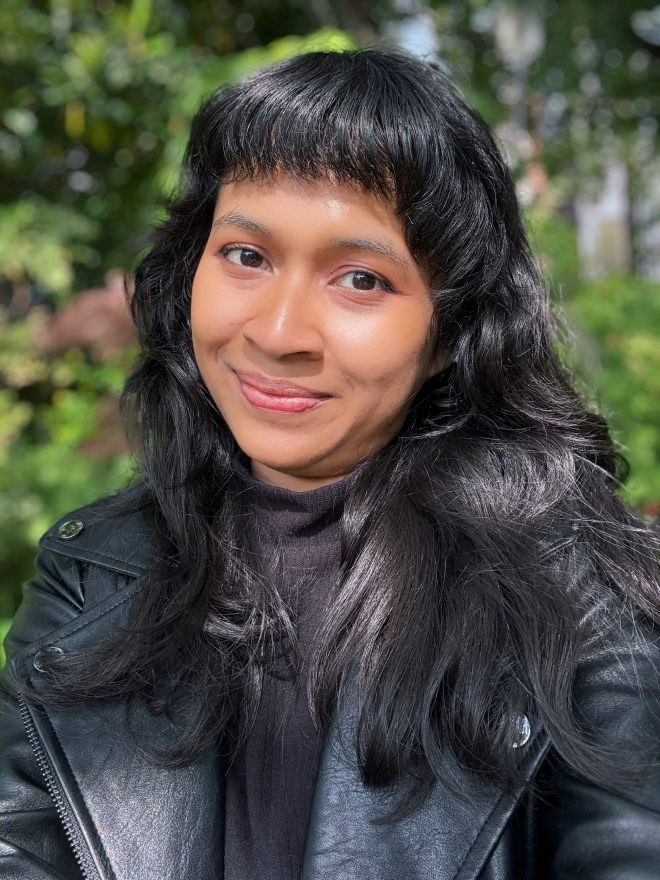
A. W. Prihandita (she/her) is a Nebula Award-winning author of speculative fiction. She splits her time between the U.S., where she pursued her graduate studies, and Indonesia, where she grew up and where her home remains. She attended the Odyssey workshop in 2023 on their Fresh Voices Scholarship, and the Clarion workshop in 2024 on their Octavia Butler Scholarship. Her stories have appeared in Clarkesworld, Uncanny, Cast of Wonders, The Dark, and khōréō, among others. Besides the Nebula Award win, her story has also been a finalist in the Ignyte and Eugie Awards. After earning a Ph.D. in language and rhetoric from the University of Washington, she is currently pursuing an MFA in Creative Writing (Fiction) at the University of Maryland, College Park.
About the Narrator
Tatiana Grey
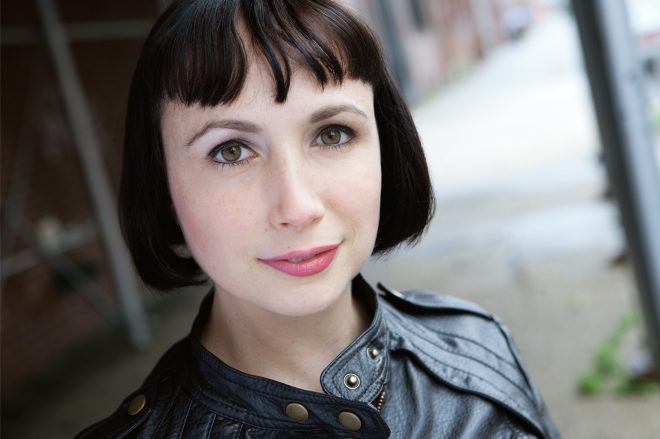
Tatiana Grey is a critically acclaimed actress of stage, screen, and the audio booth. She has been nominated for dozens of fancy awards but hasn’t won a single damned thing. She lives in a minuscule apartment in Brooklyn, New York which she hopes to move out of one day because they don’t allow pets. What a travesty. Magic the Gathering fans, hear her bring familiar faces to life on “Lorwyn, Eclipsed” out now on Magic The Gathering’s Magic Story Podcast, wherever you listen to podcasts
