

Escape Pod 1057: Riftwork (Part 1 of 2)
Riftwork (Part 1 of 2)
By C. W. Maurer
It’s no secret that the surfies think we’re crazy.
It’s no surprise either, when you think how thin the air is up there. With all the light and noise and space, I doubt a person could think two thoughts in a row without their attention going off-route.
How else could they misunderstand so much?
Risa told us once—during some late-night chatter in the girls’ residential node—that most surfies she grew up with think all us rifters work the periphery. Her own da thought she’d be setting up a bed in un-shored tunnels with a million tons of rock and concrete and steel and people overhead.
We apprentices won’t even see the periphery nodes until we’re journeymen.
And the journeymen might get to work in the periphery nodes, but it’s still math-practice and map-drafting and material-inventory duty under the eye of the masters for three more years.
Only the masters venture into the tunnels.
They’re the ones the surfies really mean, when they call us crazy.
They’re the ones who do the first rounds of surveying and tunnel bracing, going belly-to-ground to get through passages where pre-cryo supports have collapsed in the centuries since the tunnels were first built.
That was back when the mini ice age forced those who couldn’t flee to warmer climates to go underground—er…the cryochron glaciation, to be proper about it. And Instructor Parin always wants us to be proper about it.
Even among the rifters, not everyone hopes to become a master, which sometimes makes me think even some of us are crazy.
Who wouldn’t want to be the first person in a thousand years to survey new tunnels? To see if the tunnels here, four-hundred feet under Neresin City, extend the whole way along the coast?
If there’s a new undiscovered hub somewhere out there, I want to be the one to find it.
Just a few more years of training, and I’ll get to start looking.
“Here you go, Nat. Well done.” Instructor Parin’s voice pulls me back to the classroom. He sets my exam on the desk in front of me, the score circled at the top of the page. A high score, but not a perfect one.
“On the back of your exams,” Parin says to the entire class as he continues down the row, “you’ll find your partner assignment for the practical exam.”
I ignore that, instead flipping through the pages to see what I did wrong. The only correction to be found is at the bottom of the second page. I frown and check the string of equations twice. I mis-converted the units.
I glance nervously at Parin, who is still returning exams at the back of the classroom.
It was exactly the sort of miscalculation that deterred rifters from pursuing the mastery.
Here, it meant a few points off on my exam. Out in the periphery, it could mean an incorrect load distribution during tunnel widening, which could lead to a tunnel collapse.
At best, that meant shoveling out to the closest node by hand.
At worst, it could trigger a collapse that opens a sinkhole big enough to swallow up some surfie’s home.
Will the mistake disqualify me from the practical exam?
I push the thought away before it can take root, then take a breath.
Be reasonable, Nat.
Rifters work in pairs for good reasons. Most work goes quicker with two. And if something goes wrong in the tunnels, someone is there to help. Or to go for help.
But calculation checks are just as important.
Even a master can drop a negative sign or convert units incorrectly, but the chance of two making the same mistake is small enough to bet their lives on it.
It’s why even in our apprentice practicals, we’re assigned partners. To learn to teach and learn from each other. To rely on each other in our individual weaknesses.
There’s no risk of collapse in the tunnels they use for practical exams. The central hub is at the southeastern edge of Neresin City, and the apprentices’ training and residential nodesnare at the far reaches of the hub system. We’re two full miles away from any building on the surface that might have disturbed the ground when the city was built. Back before they knew the rifts were there.
I assume they’ll put me with Zef. He’s pretty good at drafting tunnel maps but struggles at the math. I don’t think he’d be apprenticing at all if he didn’t need journeyman credentials to leave the boundaries of the central system. Some of the bigger nodes on the periphery still have artifacts from the before-times in them, and he’s as determined to study those as I am to survey new tunnels.
I turn the exam over.
Maybe instead of Zef, it would be Luma. Or Torin. I’m not sure they’d teach me much, but I could help them.
I frown down at the page and read it again.
Risa? What could Risa and I have to learn from one another? She and I are always top in the class. Aren’t they supposed to match us with people who are bad at things?
Are there things the instructors think I need to improve that I don’t know about?
I look across the room to see if Risa’s as confused as I am about the assignment, but she’s already gathered her things.
She’s the strangest surfie I’ve ever met.
A lot of rifters keep to themselves, but Risa is oddly distant about it. Sticks close to the walls when passing anyone between nodes and shudders at the accidental shoulder bumps that are inevitable when navigating the tunnels. Like she thinks coming from Neresin City puts her above us—in a non-physical sense, I mean.
She twists her dark brown braid into a bun at the base of her skull and jabs a pencil through it as she starts toward the door, moving on to the next thing in her schedule and ignoring the rest of us as usual.
Our exam is four days later.
We both get to the node early for equipment, but we’re quiet as the instructors hand out our gear. There’s no point in asking about the partner assignments. If the instructors mean to explain, they’ll do so when we’re done.
I arrange my notebook and drawing tools alongside the tightly wound rope measuring line in my pack, then add medical supplies, a bottle of water, and a ration kit, though I’m sure we’ll be done with the exam before we need lunch.
Risa checks the helmets, flipping the headlamps on and off. She hands mine over, and I pull it tight over my dark curls before snugging down the straps.
Next year’s practical will add the ventilators everyone wears outside the central system, but for now, it’s enough to have the air quality sensors that all rifters wear snug around their necks at all times.
Even out in the periphery, a person can take steps to avoid tunnel collapses, or get lucky and survive if a ceiling comes down. No one survives asphyxiation or respiratory paralysis from gases they can’t see.
The last thing Instructor Parin hands us are the beginnings of a map and three sheets of transparent overlays that depict a city which (in this manufactured world of the exam) stands over the tunnels we’re about to enter. To pass the exam, we need to accurately survey the tunnels, labeling important features and marking where we would recommend additional support braces if the tunnels really did run under the city on the transparents.
Risa reaches for the maps before I can gesture toward her, and I try not to frown at her assuming the role. She’s certainly the better draftsman. But she could have at least pretended to consider before claiming the job.
Parin hands the sheets to her without additional comment.
That makes me the rope-runner. I grab my gloves from their pocket in the toolbelt and tug them on, then pull the measuring line out of my pack. My heart accelerates with nervous anticipation as I stand next to Risa in front of the safety door where we’ll enter the tunnels.
We’ll return through the one on the far side in a few hours.
When Instructor Parin opens the door, my mouth goes dry at the sight of the dark passage stretching beyond the doorway. My first tunnel expedition. Not a real tunnel, maybe, but close enough to make me stop and stare, distracted by thoughts of the periphery.
It means I’m a few seconds behind Risa in turning on my headlamp.
“Good luck,” Parin says.
I give him a polite smile, my mouth dry, and Risa nods without looking at either of us before going through the doorway. I follow, unable to stop myself from grinning as I cross the threshold into the darkness beyond the safety door.
The door swings shut, sending a gust of air rushing past us as it clanks into place, shutting out the light of the node and the ambient whirring noises present throughout the central tunnel system.
I shut my eyes and laugh, appreciating the warmth of the sound echoing off dirt floors and walls of bare stone. It’s so different from the sharp edges of noise that bounce off the metal plates lining the tunnels and nodes throughout the central system.
Ahead, I hear Risa snort and open my eyes to find her looking back at me, smirking—not mocking, but amused. It’s probably the most directly she’s ever interacted with me.
I return the smile, then let out a breath.
Time to get to work.
I reach overhead, where I can easily place my hand flat against the ceiling. “Height is about six foot here. Width is similar.” I stretch my arms wide to confirm.
Risa nods. She’s already gotten her notebook out and clipped the first page of the map to it. She takes a few notes before looking down the tunnel and adjusting the angle of her headlamp. It provides full visibility ahead and reveals a right turn in the tunnel about a hundred feet out.
A turn without a node surrounding it.
Weird.
She points at a wooden support frame built against the stone a little way down the stretch of tunnel. “First checkpoint.”
Fifty feet? No. Risa is already thirty feet from me. I eye the distance between her and the support. “Sixty feet out?”
Risa tips her head in acknowledgement and sets her triangular pencil flat against the map, comparing the measurement scales etched into the sides to what’s on the page. “Would make it an even ten feet per grid-square,” she says.
That seems a little too neat, but we’ll know for sure when we’ve gotten a true measurement.
I press the magnet hooked to the end of the rope onto the door just above ground level, then unwind loops as I walk forward. A glance at the map as I pass Risa shows that the instructors have sketched out the beginnings of the map for us, stopping at that first support frame, which they’ve labeled in the same shorthand we’ve all been taught from day one.
The rest of the page is a blank grid that we’ll fill in as we go, noting positions and conditions of existing support structures and places where additional supports will be required, considering the layout of the imaginary city overhead.
The midpoint of the first support frame lines up exactly with the blue line on the rope labeled “60 feet”.
I grin. This is going to be easy. Fun, even.
I yank on the rope to pull the magnet free of the door but regret it when the harsh clang of metal on stone echoes through the tunnel, much louder than I’d expected.
Risa yelps at the sound. “Can’t you be careful?” she hisses as I finish dragging the magnet in more carefully.
“Sorry,” I snap back, annoyance easily outweighing guilt. “If I have to go back for it every time, we’ll be here all day.” Still, I tug off my gloves and set them and my pack on the ground while I swap out the magnet for the metal stake we carry for spots where there’s no metal to hold a magnet. It takes more work to place, but it’s what the masters use out in the periphery. And the lighter weight makes it less noisy.
I turn to glare at Risa but find her already walking away, scanning the walls and ceiling.
I grumble under my breath and drive the metal stake into the packed dirt floor at the center point of the support, angled so that I’ll be able to tug it free from the far end.
Then I grab my pack and set off after Risa, letting out rope behind me. I stop short where she has paused to consider a section of the wall, her pencil tapping restlessly against her notebook, her hands unsteady.
Had the noise bothered her that much? How can someone who has spent two years training as an apprentice still be scared of the training tunnels?
I pretend not to notice her unsteadiness and look up at the tunnel wall. The stone there seems to have shifted.
It certainly looks like a weak point in the structure.
I reach up to trace the line that distinguishes it from the stone next to it. It’s a decent blend, but after a closer look, it’s clear that it’s been mortared into place. I snort. “I hadn’t thought about how they would make things look like weak points without actually risking instability.”
Risa doesn’t comment. “Distance?”
I roll my eyes and walk the rope to the turn in the tunnel, making sure it’s taut before reading off the measurement at the corner.
She crouches to check the placement of the “weak point” on the line before starting toward me again, sketching in the section of the tunnel as she walks.
I yank on the rope to pull the stake from the ground, and she braces for a moment, relaxing at the much quieter strike of the stake against the packed dirt. I finish winding up the line to plant the stake again, and we repeat the process.
We go on like that for two hours, with Risa sketching out the path we’re following and me taking measurements, both of us absorbed by the smooth pattern of the work. There’s no further sign that Risa’s in any way bothered by being in the tunnels, and I shrug and pretend the strange moment never happened.
Now and then, she mentions that we’re approaching a building in the over-city, and we stop to look more closely at how the transparent sheet of the city map overlays the map we’ve been making. Each of us does the calculations for where new supports should be installed. We compare answers, and if they don’t match, we repeat the calculations from the top until they do.
This is me and Risa, though. So, every calculation matches exactly.
I find it strangely irritating.
Eventually, soreness across my left palm makes me pause.
I look down to find the skin there rubbed raw where the rope pulled across it each time I wound it up. I’d never put my gloves on after swapping rope-ends. I grimace at the damaged skin and reach for the gloves in my toolbelt, but the only thing in their pocket is the magnet-end for the measuring line.
“Ugh.” I look down at the pocket in disgust, then turn and stare hubward. Back where we had come from. How had I been so stupid?
“What?”
“I dropped my gloves.” Stupid. Stupid. Stupid.
“When?”
I turn off my headlamp, then remove my helmet to wipe at the forehead sweat that’s made my head itch for the past hour. Unfortunately, there’s no way to avoid answering. “At the first support.” I’m not so rude as to remind her that it was because of her outburst.
Things are going well, and I’m not going to be the one to ruin that.
Risa doesn’t answer, but she does make a faint acknowledging sound before shuffling through the map pages.
Every support, existing or proposed, is identified by how many feet it is from the safety door. Our most recent addition, where the instructors had blocked half the tunnel with debris, mocking up a partial cave-in, was at 2,671 feet. Or possibly 2,670.
It’s the only one so far with a measurement that doesn’t fall on an even ten. The break in the pattern was probably the only reason I noticed my stinging palm.
But now, it means 2,670 feet to backtrack and get the gloves. Then another 2,670 feet to walk back before we can continue.
Without having to stop every fifteen or twenty feet for measurements, doubling back for the gloves shouldn’t take more than half an hour, but it would be half an hour without any progress.
What if I just leave them? Be more careful winding the rope?
I’d have to slow down for that, too.
I stick my helmet back on my head, but don’t bother pulling it down snug. Instead, I drop my pack roughly to the ground and squat next to it to look for the med kit. Whether I go back for the gloves or not, I should wrap my hand before it gets worse.
“Use mine.” Risa says.
I spin around to glare at her, annoyed that she even got to her med kit before me.
She stands there holding out her gloves.
Right.
I shake my head and let myself fall back onto my butt to sit cross legged. Closing my eyes, I take a long, slow breath, wondering when I had gotten to be so touchy.
“Time for a break?” she suggests, setting her bag down and dropping her gloves on top.
I laugh bitterly, then remove my helmet again. I set it on the ground next to me and lean back to lay flat on the cool dirt floor and stare at the tunnel roof.
Somewhere past my feet, Risa sits against the right-side wall and digs through her pack, water sloshing in her bottle as she takes it out to get a drink.
If I had a different partner, we would have probably taken a break an hour ago, and I would have noticed the missing gloves when I re-checked my equipment.
Sighing, I stare up at the stone overhead. “Why did they put us together?”
“You don’t know either?”
I laugh and force myself to sit up. “I guess that puts us in the same node.”
She looks up from the map pages set out on the ground in front of her, faintly amused.
“What’s so funny?” I ask.
“It’s rifter slang.” She snorts at whatever expression I’m making. “No nodes aboveground,” she says before looking back down at the maps and tracing a finger along the lines of her sketch.
Right. I go back to my pack for my water bottle and med kit, then scoot over to lean against the opposite wall while I take a few sips. “What do surfies say, then?”
“For this? That we stand facing east,” she says, the path of her finger pausing as she erases one of the lines and draws it in again.
“Toward… the mountains?” I ask, trying to remember if there’s anything else of interest to the east of Neresin City.
“Toward the unknown. If it’s something we both know, it’s the west. You know. To the homeland.” For a moment, she looks… embarrassed? “To the sea, rather.”
“Ah,” I say, as if I understand whatever surfie knowledge she’s referring to. I’ve seen maps of the surface, obviously, though not many of our pre-cryo ancestors’ homeland. There isn’t much value in a rifter learning the surface geography of a place four generations removed.
“My granny kept a lot of old traditions,” Risa says, sounding like she’s apologizing for something that should have offended me. She picks up the map pages and taps them all against the ground as if they hadn’t been perfectly aligned already.
“No old traditions in the rifts,” I say.
Risa makes a face. “I think you’d be surprised.”
I’m not sure what to make of that, so I turn my attention to pulling a roll of bandages from the med kit and wrapping it around the raw skin on my hand. “Well. For now, we stand looking east, then.” I say, considering the mysterious will of the instructors.
She goes back to the beginning of what we surveyed and adds more weight to the lines that indicate the walls of the tunnel. A careful widening and darkening that is the sort of thing that makes her maps the best. “Unknown, but discoverable. If it’s unknowable, we say we face the stars.”
It sounds very grandiose, but then, surfies have a tendency to overcomplicate things.
“Do you think you’ll go back?” I ask.
“I don’t know,” she says, her pencil stopping for a moment as she sits there staring at the map.
Some do just come down for training. As much as the surfies don’t understand people who live in the rifts, they value engineers and architects who know what’s going on under the city. Rifters shoring up old tunnels doesn’t do much good if reckless construction overhead caves them in.
“I guess I need to see if rift-life fits,” she says, staring off down the tunnel, drawing hand dropping to her side, where the pencil taps idly against the ground. “Or if I fit.”
I’m not sure if she means outgrowing the tunnels or not having the skills to work them, though she’s clearly better than most of the apprentices studying with us. The fact that she’s in training with the rift-grown apprentices and not in the surfie-training group is proof that she indicated wanting to stay below after training. I’m not sure why she doubts it now.
Unless her family made that decision for her.
That happens sometimes too.
I don’t realize that I’m fidgeting with my bandages until Risa tosses her gloves in my direction.
“Here,” she says. “It will hold the bandages without needing a pin.”
It’s hard to argue with that. I grab the gloves and pull them on. My left hand feels strange and bulky, but it will do.
Risa has turned her attention back to the maps, the transparent city layer set over the pages of the one she’s been sketching. The measurements we’ve taken already have the tunnel map traveling off the bottom edge of the original page, then off the right-side edge of the second. Our path should be working around to the left soon to finish out the loop back to the training node.
I get to my feet and put my helmet back on, starting to feel restless now that the conversation has lulled.
“What were these tunnels, anyway?” I wonder aloud as I look at the maps Risa is adding subtle details to. These tunnels are the only ones where the turns aren’t built into nodes for stability. They’d been used for training for generations, but no one had ever quite figured out what they’d first been built for.
Risa shrugs. “Is it strange that I find them comforting? Sometimes up on the surface…” she pauses and shakes her head, clearly embarrassed. “Never mind.”
I ignore the words she clearly didn’t mean to say. “Going to check the numbers again,” I say, grabbing the measuring line and heading hubward.
The layout of the nodes and tunnels in the central system make it clear that people lived and worked there in pre-cryo days. They’re arranged as spokes around the hub with cross-branches connecting commonly accessed areas. Each turn and intersection occurs at a node—not much wider than the tunnels themselves, but much better supported. Even out on the periphery, they’ll find tunnels where pre-cryo supports have failed and tunnels have collapsed, but every single node they’ve found has been intact, whether navigational or residential. And even where tunnels have partially collapsed, they know that if they keep digging straight through, they’ll reach a node eventually.
When the homeland monument at the edge of Neresin City fell into the hub back when Grampy was a kid, it had taken very little exploration of side tunnels (after the debris and damaged hub safety doors were removed) to find the residential nodes built off the main tunnels. Most of the larger nodes were still recognizable as kitchens and hydroponic farms and garden patches. A little farther from the hub, they found bunk rooms still containing remnants of mattresses and bedding. Many with half-preserved corpses still in the beds.
Best the early rifters could guess, the pre-cryo people had gone underground when the weather went wrong, but their power sources couldn’t last forever. Without the air filtration systems running, it wouldn’t have taken long to poison those who were left.
The thought makes me shudder as I remeasure the location of the debris pile.
“I still have it as 2,671,” I tell Risa, angling my headlamp up toward the ceiling a little so I don’t blind her. “If we made a mistake earlier on, the last turning point would have been off as well.”
She looks back toward the debris pile, then toward the unexplored passage ahead, nods, and gathers her things to get back to work.
At 3,213 feet, we start seeing a trickle of a stream flowing hubward along the left side of the tunnel. A crack in the waterproof sealing on the walls somewhere ahead? Or another intentionally placed feature for us to find?
It has to be the latter. Zef and Torin went through yesterday, and even they would have noticed that. If it were a real issue, one of the instructors would have dealt with it. Right?
The little trickle widens as we go, and Risa carefully notes the changes as we approach the next turn in the tunnel. I wave a hand toward one of the decoy supports the instructors had put in as I pass it, unrolling the measuring line. “They gave this one water damage.” Probably to go with their stream.
Risa waits there while I continue forward, but before I reach the corner, I hear her boot scuffing the ground. “There’s sediment in the water.”
“Huh?” I ask. Not because I didn’t hear her, but because the words don’t make sense.
The water isn’t moving quickly enough to erode the packed floor of the tunnel. The sediment must have come from somewhere else.
I turn and walk backward the last couple of paces, watching her crouch to inspect the stream more closely. Looking down at my own feet, I frown at the gray-white marks on the floor where the water has shifted paths and left sediment behind.
She was right.
“But that doesn’t—”
—make sense. I swallow the end of the sentence as the sound of my voice in the tunnel changes. The echo is different.
I reach the turn, but before I can pull the measuring line taut, I notice the shine of light farther down the tunnel. A reflection of my headlamp. I turn and freeze, then adjust the angle of my headlamp to see better. “Risa. Water.”
A lot of water.
(Continued in Part 2…)
Host Commentary
By Mur Lafferty
And that was “Riftwork” Part 1, by CW Maurer.
About the story, the author has this to say:
“More than any other story I’ve written thus far, “Riftwork” was written for my younger self. As a tomboyish teen, I read just about every girl-with-sword book I could get my hands on, and was always a little disappointed not to be able to find many girl-does-science books to balance out my sci-fi and fantasy reading habits.
“So it was a real joy to embrace my engineer-girl roots to write this, in hopes that another teen looking for stories about girls doing science might have one more option out there to pick up.”
I loved the importance of math this story. We see a lot of stories about scientists who struggle in SF stories, and we see a lot about the laborer’s dangerous jobs in space, or mining colonies, or exploring flooded out tunnels, but we don’t see a lot of stories that show us scientists in the field, or laborers displaying the math they need for their jobs. And since I wasn’t the greatest math student, going from a failed test problem into a life or death situation in the tunnels is terrifying to me.
This is a two-parter, so we can talk more about the story in next week’s show.
Escape Pod is 100% audience supported, and we count on your donations to keep the lights on and the servers humming. Head to https://escapeartists.net/support-ea/ to see all the available donation and subscription options, including Patreon, PayPal, Ko-Fi, and Twitch.
You can also support Escape Pod for free by rating or reviewing us on Spotify, Apple Podcasts, or your favorite app. Whether you’ve been a dedicated fan of Escape Pod for years or just started following the cast, thanks for tuning in.
Escape Pod is distributed on a Creative Commons Attribution-NonCommercial-NoDerivatives license. Our music is by permission of Daikaiju. You can hear more from them at daikaiju.org.
That was our show for this week. Our quote comes from Tom Bodett- in school you’re taught a lesson and then given a test. In life you’re given a test that teaches you a lesson.
About the Author
C. W. Maurer
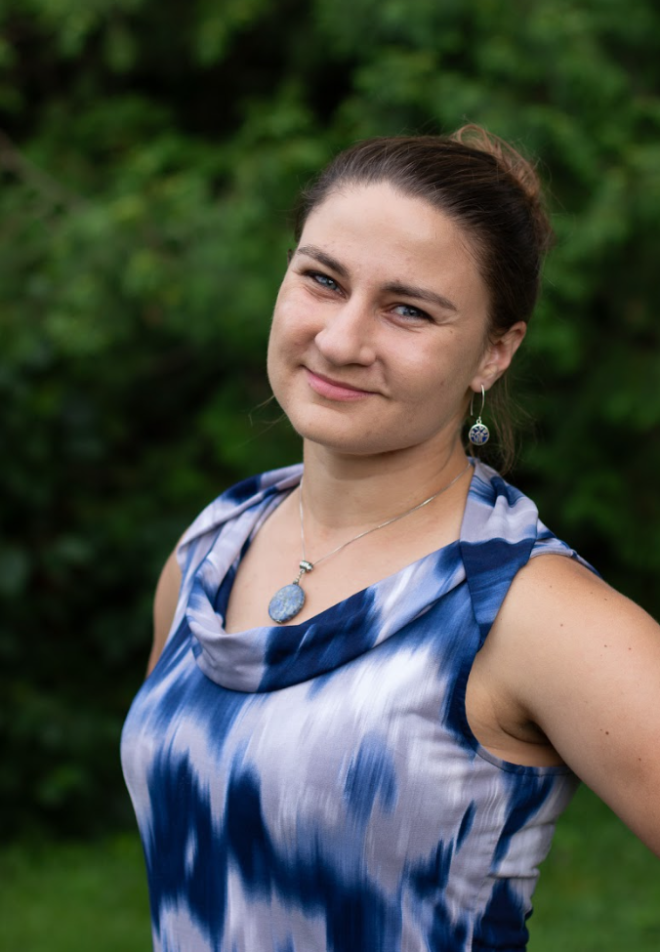
C.W. Maurer is a New England writer of epic fantasy, low-tech sci-fi, and video game soundtrack reviews. She lives in New Hampshire with her husband, son, and giant floof of a dog.
About the Narrator
Nicola Chapman
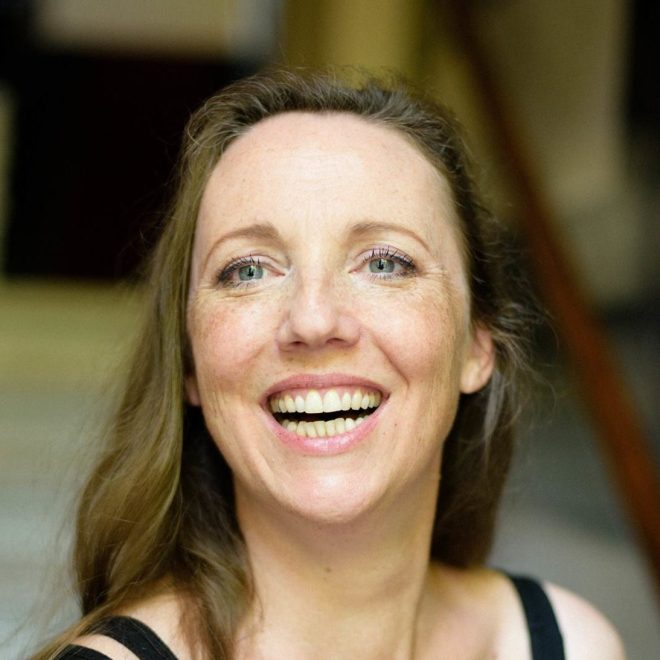
Nicola Chapman has worked professionally as an actress for over thirty years in TV, film, radio and internet. Her voice-over experience includes TV and radio advertising, singing jingles, film dubbing and synchronisation, training videos, corporate films, animation, video games and Interactive Voice Response for telephone menus. She spends most of her time running her voice-over business, Offstimme, which sources and provides translations, subtitles and voice-overs in over 40 languages. She has been known to write a story or two, purely for her own enjoyment, but she loves bringing other people’s stories to life in the studio.
When not working, reading or playing with her cats, Nicola can often be found up to her elbows in flour, trying to make the perfect brioche. This may take a while….
