

Escape Pod 1056: Woolly
Show Notes
This episode is sponsored by Sleepphones! Use code ESCAPEPOD and get 10% off your purchase.
Woolly
by Carrie Vaughn
At five a.m., Joy got a call from the truck stop off the freeway east of the city. Wasn’t the first time.
“Did it get dumped? Did it get loose from a truck?” Joy asked.
“I don’t know,” the night manager answered. “But it’s digging around in the garbage and you’d better get here before Miles shows up and shoots it.” Miles was the day manager. He’d shot the last mini woolly they’d found digging in the garbage.
Fortunately, the morning rush hadn’t hit, so the expanse of asphalt around the rows of pumps was mostly empty. At the back of the building, a couple of truckers were standing aside, pointing their phones. That told her right where the commotion was. She retrieved a yardstick and a bag of cabbages from her van.
She heard him before she saw him, banging on steel, along with the squelch and thud of bags and boxes getting scattered. When she rounded the corner, she saw the mess for herself.
The little guy had used his tusks and trunk to overturn the whole Dumpster and was rooting through coffee grounds, diner muck and other unmentionable things, probably poisoning itself. Hip high, he was covered in drooping gray hair, matted into tangles. Under his wrinkled skin, his ribs and shoulder blades were visible. The cartilage of his right ear had a tear in it, where an ID tag must have been torn out. This guy hadn’t been cared for in a long time. He might have wandered all the way here from someone’s backyard. Male, neutered, but he’d still probably hit a hormonal cycle that whoever had dumped him didn’t know about or thought they could handle.
The circle of truckers and roadtrippers looking on was growing. Fortunately, folk stood well back, eyeing those yellowed tusks that twisted back on themselves. One of the many genetic quirks the mini woollies had picked up were tusks that didn’t just curl, but corkscrewed. It made the tusks useless and awkward. Many caretakers trimmed them off entirely. This one still had his.
“Hey, do you need help?” a well-meaning trucker called to her.
“I think I can grab it for you,” said another.
Joy gestured him back. “No, it’s fine, really. I have a system. If you really want to help you can donate at Mini Woolly Rescue dot com.” She tried to smile winningly. She approached the mini with confidence but would have preferred not having an audience.
She got the mini’s attention with a low shushing sound. He lifted his head; his ragged ears twitched.
“Hey, hey.” She waved a cabbage, then tossed it to land a few feet in front of him. His trunk reached, nosing it carefully, then scooping it up and shoving it into his mouth. Matted strings of hair covered its eyes. He scuffed through the trash, seemingly unmindful of where he was going. He probably couldn’t see that well.
“Come on, sweetie.” She backed up, waving another cabbage. The mini’s trunk reached, and he stepped toward her. She offered him the yardstick. Minis were generally curious, and he curled his trunk around the stick, feeling it, tugging at it. Carefully she led it toward the van, talking the whole time. “Hey, sweetie, how’d you end up here? You lost, or kicked out?” At the van, she waited, and the mini kept reaching, walking right up to her. No fear, which meant he was used to people.
He scooped another cabbage out of her hand, his mouth wide, pink tongue reaching. It didn’t fit, and half the cabbage split apart into a rain of leaves. Joy put a hand on the steep slope of the mini’s skull. He didn’t even flinch. This somehow made it worse than if he had been mistrustful and feral. This guy trusted, and someone had still left him on his own, unprotected. She hadn’t gotten any recent reports of escaped or missing minis. That made it more likely he’d been dumped.
Pushing his side, she encouraged him to lurch into the back of the van and shut the door behind him.
By then, the sun was up and Miles, the day manager, strode up from the convenience store. He wore a ball cap pulled low over his head. Frowning, he pointed back to the wrecked Dumpster.
“You gonna clean all that up or what?” he demanded.
Joy ignored him, climbed into the driver’s seat, and drove away. In the back, the mini lurched with movement, but seemed unconcerned, munching on the hay and cabbage stowed there. Not a mile into the trip, he circled, lifted his tail, and let out a great, stinking splat of manure. Instantly, the whole van reeked.
Sighing, Joy opened the window and breathed through her mouth.
Cloning a woolly mammoth was a science experiment.
Cloning it, then genetically engineering it to produce a miniature version to make it easier for hobbyists to raise them for wool and meat was an opportunity. A business venture.
But it was the movie about the little girl who bonded with a miniature woolly mammoth and had an adventure where they escaped from terrorists into the wild and the mammoth was fatally injured saving her from robotic killer drones that really ruined everything because after that, everyone wanted a miniature woolly mammoth and it turned out miniature woolly mammoths made really shitty pets.
At the farm, Joy stopped at the mailbox at the end of the driveway and shoved the stack of letters into her courier bag. She’d sort the bills from the trash once she got the wayward mini settled in an isolation pen.
Through the gate, the lane led to the back of the property and a shed and pen set off from the others. The new guy would spend a couple of weeks here, until a medical assessment cleared him to join the herd. On the other side of the lane, metal fencing marked the pasture. A few of the female minis that lived there shuffled up, sticking trunks through the bars. Penelope was dark gray, with notches in her ears from an old injury she got from tangling with barbed wire. Zoey was a little bigger. She licked the metal bar over and over again, an old habit. Through tufts of wool, her dark eyes gleamed with what Joy could only describe as humor.
She called out through the window, “Hey girls, I’ll come see you in a minute, okay?” Their trunks curled and waved; they chirruped at her.
Woolly mammoths didn’t look very much like elephants. The comparison was easy to make, but the woollies were a primordial example of the family: bulky, rangy, with exaggerated features. The domed skull and draping coat of hair were distinctive. They were elephants from an alternate timeline, out of place on a modern farm. Yet here they were.
She backed the van up to the gate of the isolation pen so the new guy could trundle right out.
He hesitated at the door of the van, trunk curling with unhappiness. He was making nervous grunting noises under his breath. This was probably the first time he’d smelled other minis since whatever breeding situation he came out of. The air was heavy with the scent of manure, animal musk, hay, and the organic miasma of any farm. Beyond the paddock lay a meadow with a pond, ducks, and a couple of emotional support goats.
“Oh, I know sweetie. But this is better than where you were, I promise.” She grabbed the yardstick and offered it. He took hold of it like it was a pacifier. She tugged back gently, and he followed the pressure, out of the van and into the pen.
After closing the gate on him, she went to the main barn and brought back a few flakes of hay. He burrowed into the pile, throwing some around, stuffing some in his mouth. He’d need to eat a lot of hay, to get to his proper weight. She hung on the fence for a while, doing a preliminary assessment until Ben, their vet, could get in to look at him. His coat was so matted they’d probably have to shave it. He needed to be hosed off, but not until she got a better idea of his disposition and behavior. See if he’d ever had any training.
Once he’d stuffed a few mouthfuls of hay into his mouth, he looked up at her, tilting his head, his trunk reaching. He marched over, so his trunk was within touching distance, and she reached back. His trunk, pure muscle, infinitely flexible, rubbed her arm in a simple greeting. She’d have to check for a microchip and put out an announcement. Get a DNA sample to try to figure out what lab lineage he came from.
Thankfully, most people dropped off their minis at the rescue when they realized they couldn’t take care of them, rather than kicking them out thinking they could fend for themselves. Of course, it would be better if people who got minis learned to take care of them properly. Or didn’t acquire them at all, if they didn’t know what they were getting into.
After parking the van, she returned to the paddock of cows and distributed cabbages. The girls crowded in, brush tails swishing, trunks plucking vegetables from her arms. They could be so affectionate and personable. She scratched a few trunks and went back to the front office to wait for the next call.
A week or so later, Joy and two of the volunteers were mucking paddocks when a high-pitched whirring sounded overhead, simultaneously insect-like and artificial. The buzzing was mosquito like in its annoyance, but too steady to be natural. She shaded her eyes, searched, and there it was, a quad-engine drone the size of a dinner plate whirring overhead, hovering, cruising along the fence line, then zipping straight up a dozen or so feet.
She had the distinct feeling that she and the drone were staring at one another. She resisted the urge to point a middle finger at it. It could have been a reporter looking for a story, or a militant animal rights activists looking—in vain—for evidence of animal abuse. It could have been some local yahoo going out for a spin.
When the drone zipped toward the drive by the front office, she peeled off her work gloves, stuck them in her back pocket, and followed. She arrived in time to see the drone sink to the trunk of a dark sedan with government plates. The man in a suit and tie operating the joystick controls looked ostentatiously out place in the muck and stink of the farm.
Joy approached. “Hi, can I help you?” The question held more than a bit of suspicion. The unspoken, impolite, What are you doing here?
The guy must have been about her age, that mid-thirties professional prime, with enough experience to exude confidence but young enough to still have energy. He had an open smile.
“Oh, just getting a head count, thanks!”
“I’m sorry?”
“A head count. You have nine minis here, correct?”
She had to do a mental count. The new one from last week made nine, yes. “Who’s asking?”
“Are you Joy Reyes? I’m Dev Conner with the U.S. Department of Agriculture?” He regarded her expectantly, like this should mean something to her. Confused, she shook her head, and he explained. “You should have gotten a notice. We never heard back, so…” He opened his hands, as if to say, here he was. Making some kind of offering of himself.
Joy kicked herself. A week’s worth of mail was still stuffed in her courier bag which she’d left on the floor by the front desk. “I’m sorry, I must have missed it. I’ve been so behind, and I keep meaning to go through things. If you’ll give me a minute I can go find it.” She started toward the office, talking, and Dev Conner followed, saying, “I can just explain…”
They ended up in the office, little more than a spruced-up shed, with a desk, computer, filing cabinets, and a few folding chairs from thrift stores. Joy went digging in her bag for something official-looking.
Conner stared at the desk. “What on earth is all this?”
He pointed at the pile of wool, a fluffy mound of fiber the size of a couple of small dogs. It was all from Penelope.
“Mammoth wool.” She found the letter, obviously official, with the Department of Agriculture seal on the upper left corner. She would have known about this if they’d sent an email or called, but there was probably some arcane federal law that said they had to send a letter. She tore at the envelope.
“Do you…shave them?”
“No, we brush it out and end up with a big pile like this.”
“And then what?”
She unfolded the letter and looked at him over its edge. “I spin it.” She held up the drop spindle sitting next to the pile of wool, and the yarn wound around the shaft. He seemed confused. Baffled, even, like he had never considered the possibility. She set down the letter and hauled out the plastic tub of her work from under the desk. “I make yarn out of mammoth wool, then knit it up into stuff. Sell it online and at craft fairs, that sort of thing. It’s a big part of our fundraising. See, I attach the names of the minis that it comes from.” She found a chunk of chocolatey brown yarn, washed and twisted into a skein. The tag hanging off it was labeled “Cleo.” She pulled out a couple of hats, a scarf, several mittens and cowls. The colors ranged from gray to an earthen brown, and that was one of the surprises, how many different colors mammoths produced, though there was speculation that some of that was triggered by the genetic manipulation that miniaturized them. The items were all thick, tactile—you couldn’t help but knead them, experiencing the heavy texture and the instant warmth. Mammoth wool was thick, supple, and comforting, like a favorite bulky sweater.
Conner was doing this now, squeezing a set of gloves, petting the wool, slipping one on his hand. “Woah.”
“You’ve never seen mammoth-wool knitting?”
“No. It’s cozier than I expected.” Next, he sniffed it. She wondered what smell he was expecting.
“We do wash them. They still smell a little earthy. I like it.”
“Ms. Reyes, the notice was to inform you of new regulations about keeping miniature woolly mammoths.”
She was already reading. Took her two tries to get through the text, to pick out the relevant information in a swarm of bureaucratic language.
This was it: “The new regulation requires the termination of artificially produced exotic livestock by May 15.” There were instructions to respond to make an appointment for the supervised removal of livestock for termination by a date two weeks ago, that she had clearly missed.
“I’m sorry, what?” She read the letter a third time, to be sure, and this time could only see the word termination.
“I was getting a head count. So we can provide the proper transportation.”
“No,” she said bluntly. Firmly. “No, why would you do this?”
Conner sighed and adopted a tone that was more than a little condescending. “I’m sure you’ve been following the hearings—”
“And there’s been no new legislation restricting mini mammoths and other clone-derived livestock.”
“This isn’t legislation,” he said. “It’s coming from departmental regulations. It’s within our mandate.”
“But this is a no-kill shelter,” she stated.
“And your shelter certification falls under Department of Agriculture rules. So.” He shrugged.
“Why?” It was the only thing left to ask.
“I’m sure you’ve seen it yourself. When Alpine Genematics commercialized the cloning process, it promised a certain level of oversight of their product. Only selling to certified owners, promising no releases, no problems with ferals. You know exactly how that’s worked out.”
Almost immediately, a black market had sprung up. Certified owners selling minis to uncertified owners, despite promises not to. Attempts at unauthorized breeding, producing offspring that didn’t meet original standards. And then, inevitably, the dumping. The market for minis paralleled the market for wolf hybrids. A lot of people wanted them. Very few had the means to successfully care for them. Joy’s wasn’t the only mini rescue around.
“And what, the solution is to just kill them?”
“They shouldn’t even exist in the first place.”
This was true. “So ban breeding, ban future cloning and genetic manipulation. But don’t just shoot the ones that are already here!”
“They’ll be humanely euthanized.”
She put a hand on her hip and glared. Like that changed anything. They didn’t ask to be made.
He produced another set of documents from an inside jacket pocket. “I just need you to sign this release form, then we can schedule a day for picking up the specimens.”
“They’re not specimens! They’re living creatures, they have names.”
“Ms. Reyes. I don’t need your approval, but your cooperation would make this easier.”
“You’re not taking my minis!”
“Technically, they belong to Alpine Genematics under their licensing agreement. None of these animals should have made their way to the wider public.”
“Mammoths can’t read licensing agreements.”
“Well, yes.”
“So go after the people who set them loose, who dumped them.”
“Do you have a licensing agreement, Ms. Reyes?”
Of course she didn’t, that was the whole point, the whole failure of the enterprise. You couldn’t put up a fence around these things and expect nothing to get out. “So I’m being penalized for cleaning up after other peoples’ messes.”
“Welcome to bureaucracy.” To his credit, his thin smile seemed tired. He probably hadn’t gotten into government work in order to kill livestock.
“I won’t sign.”
“I’m very sorry, Ms. Reyes.”
“I know, I know, you’re just doing your job.”
They stood on opposite sides of the counter. He was kind of cute, in that competent urban professional kind of way. Brown eyes, well-groomed hair. The suit fit well. But right now, that was all overshadowed by the rage that was bubbling up. She wondered what short straw he’d drawn to get this gig.
“Ultimately, I won’t need your permission.”
“I’ll be calling my lawyer.”
He picked up the knitted gloves again and gestured with them. “How much for these.”
She snatched the gloves away from him. “Not for sale. You don’t get any mini knitting.”
Unperturbed, he set a business card on the counter. “Call me after you’ve spoken to your lawyer. For what it’s worth, this is the best rescue operation I’ve visited. Your animals seem happy.” He turned and left.
She wiped away tears. Yes, she worked hard to keep her animals happy, because it was the right thing to do.
And now it looked like it was all for nothing.
When a rancher in west Texas tried keeping mini woollies, three of them died of heat exhaustion. Another hobby farmer tried shaving one to help it cope with the heat better, but the mini still died, overheated and sunburned to boot. Its hair provided insulation and air flow. The real problem was they didn’t have fully developed sweat glands and had no natural way of cooling themselves. They’d evolved in an ice age, after all.
The Alpine Genematics designers suggested trying to incorporate some hot-weather genes along with the miniaturization. But where did it end? Every tweak came with unintended consequences.
Not to mention they weren’t entirely adapted to modern grasses and grains. There weren’t enough minis for feed companies to try a custom-made formula for them, which left people experimenting with different hay, grass, fodder, whatever they could find. In the meantime, cleaning up after a woolly mammoth with the runs—even if it was a miniature woolly mammoth—was nightmarish.
The company didn’t release numbers on how many minis were returned under its licensing agreement, but animal welfare organizations estimated it was close to sixty percent. That didn’t include animals who were disposed of without the company’s knowledge.
Joy called Bess, who answered with a good-natured, “I’ve been expecting you.”
“A guy from the Department of Agriculture is spying on me. They want to kill my minis. Can we sue?”
“The problem is they’re calling minis a disease vector and a danger to other livestock. Minis are considered exotic and unnecessary. There’s a move to introduce legislation to make possessing them illegal.”
Joy had been waiting for that for years. And she didn’t even think banning minis was wrong. But what about the ten thousand of them that were already in circulation?
“So they can do it. They can just take my minis and kill them.”
“Joy, I’m sorry. I know how hard you’ve worked.”
“Can we get, what do you call it, an injunction? Isn’t this an illegal search and seizure?”
“We can try. I’d even do it pro bono just to see what happens.”
“Can we get the humane society on board? Is there some celebrity with a pet mini we can bring in as a spokesperson? The actress who played the kid in that movie, maybe.”
“The sticking point is these animals shouldn’t exist.”
“French bulldogs shouldn’t exist but I don’t see anyone trying to ban them.”
“French bulldogs have been around for a couple of hundred years. And they’re cute.”
“Minis are cute!”
“Yeah. Yeah they are. Don’t sign anything, I’ll make a couple of calls and get back to you.”
“Thanks, Bess. You’re amazing.”
“I hope you’ll still say that if this doesn’t work.”
She’d be angry. But she was going to have to stop being angry about this at some point, wouldn’t she? She was just trying to do something good.
Joy had never seen the famous movie about the girl who bonded with a mini woolly mammoth who saved her life. At this point, she refused to see it on principle. Didn’t matter how cute it was. Most of the mini mammoth scenes were CGI anyway.
What got her obsessed was acquiring, from a friend of a friend, a skein of woolly mammoth yarn. A dusty gray color, dense and fuzzy. She almost didn’t want to knit anything with it; she could just cuddle it and soak up its warmth. Eventually, she knitted the fuzziest, snuggliest hat that kept her almost too warm in sub-zero winters in Missoula, Montana.
She looked into getting more mammoth yarn, tried to find out about sustainability practices, and learned that mammoths, even the mini ones, were notoriously difficult to keep. Maybe especially the mini ones—people expected full-size mammoths to be difficult and dangerous, needing lots of space and specialized care. But the minis were sold as being no more difficult than alpacas or Great Danes. This was a lie.
She was drawn to them in spite of herself. She met her first mini at a wool show and was charmed by its personality, its friendly pushiness—it knew how to search pockets for treats. Then the dealer sidled over and suggested he knew a way she could get one of her own—cheap, under the table. She hadn’t known how to respond and just walked away.
That was what got her into rescue: genuine affection for the animals, outrage at the double-dealing. And as something of an apology, for what had been done to them.
Her volunteers had gone home, and she had a last little bit of work to do, so she went out to the paddocks to clear her head.
The isolation paddock still needed to be mucked. The newly-rescued male was pacing along the fence, back and forth. Every couple of laps he stopped for a mouthful of hay. Once, he submerged his face in his water trough, blowing bubbles and swishing until half the water splashed out the sides, creating a sizeable mud puddle. The behavior was unspeakably cute. When the first cloned mammoths reached maturity, some scientists hoped they’d get new insight into the behaviors of the prehistoric animals. But in so many ways, they behaved like modern elephants. Was this because mammoths were like modern elephants, the way lions and housecats were similar? Or was it because enough elephant DNA had been added during the cloning process that these were, effectively, hybrids?
When he saw her, the new mini lumbered over, trunk lifted in greeting. He leaned his whole body against the fence, raised his trunk and tilted his head toward her. She scratched the bony hump there, and he leaned into the touch.
He wasn’t even going to be around long enough to get a name. It wasn’t fair. But very little about animal rescue was ever fair.
“Goobler,” she said impulsively. “Your name is Goobler. How does that sound?”
He tapped her arm with his trunk and opened his mouth, begging for treats.
Joy called an emergency meeting of the Flathead County Fiber Guild.
The guild met in the back of Lanie’s Yarn Shoppe, setting up folding chairs in front of the fireplace. Usually, the shop held classes here, everything from beginning crochet to steeking to color theory. Paisley, Lanie’s daughter who ran the shop now, brought out the electric kettle for making tea.
The Fiber Guild was made up of the hardest of hard core, the ones who taught classes, who dyed their own wool, and who took the hobby to the obvious extreme: getting right to the source, and raising their own sheep, goats, alpacas, and angoras.
When Joy arrived, maybe twenty people sat in a circle, half with spinning wheels out and whirling, and the rest with knitting needles, crochet hooks, and inkle looms. At first glance, they were an ordinary group. Mostly women, but a couple of men joined in. Most were middle aged or older. A few younger women chatted about pets and schools, not even watching their hands as they worked, turning wool into yarn and yarn into clothing. Everybody wore something knitted. Sweaters, vests, scarves, cowls, quality ranging from quaintly homemade to legitimately chic. Just like the members. Paisley was wearing a pink cat hat – she’d made one for everybody, back in ’17.
Joy marched to the middle of the circle and dropped a trash bag full of wool.
Mary immediately opened the bag without invitation and started pawing through mammoth hair, drawing out fibers, twisting them experimentally, studying them critically.
“Oh my God, are you finally going to sell some of this?” Bruce asked, hands twitching. He would ask first, before pawing into the bag of wool.
“Do you think there’s enough for a sweater?”
“You spin on a spindle, right? How does it spin up on a wheel?”
She’d sold mammoth wool items at the guild’s annual sale for years, but she rarely brought wool or yarn because she didn’t want the members getting ideas about keeping minis themselves. But this was an emergency.
She said, “I need your help.”
Close to midnight, Joy backed the van up to Bruce’s back pasture, ten fenced-in acres of rolling grasses. His alpacas had the run of the place but weren’t visible right now. They were probably gathered in one of the shelters across the way. Maybe they wouldn’t notice a couple of interlopers.
Bruce was waiting at the gate. She left the headlights on but shut off the engine and got out to open the back door.
“You sure your herd will be okay with this?” she asked.
“It’ll be good for them.” Bruce took his alpacas to fairs and festivals. Minis might not be the strangest thing they’d ever see.
The two younger males trundled out the van, hesitating. Their trunks were up, tasting the air. Their ears flapped nervously. Then, they spotted the couple of bales of hay Bruce had put out for them. They shuffled over and dived in.
Goobler lingered in the van, and Joy couldn’t blame him. He’d had a busy couple of weeks and was probably tired of being shuttled back and forth, without a clue about what would happen next. At least he’d put on some weight and filled out a bit.
“Aw, he’s a shy one,” Bruce said.
“I can usually convince them to move by getting them to hold on to one of these. You want to try? Just hold it out.” She handed Bruce her yardstick, and Goobler grabbed on to the familiarity of it. Bruce coaxed him out, as patient as he was with his alpacas.
“What’s his name?”
“Goobler,” she said.
“Really?”
“Don’t argue.”
“Yes, ma’am.” Bruce scratched the hump on Goobler’s head as he stepped cautiously onto the grass, and the mini responded with a tap on his arm with his trunk. Bruce grinned.
“You know I’m going to pull wool from him, right?”
“If this keeps them safe for a little while longer, you’re welcome to it.”
When the livestock trailers pulled up, Dev Conner followed in his dark sedan. Joy wasn’t waiting to greet them. She watched from the main pen, where she and Ky, one of her volunteers, were shoveling manure.
The trucks and trailers barely fit in the turn around the drive. Joy might have hoped they’d all get stuck, but then her drive would be blocked.
The grumbling engines were an intrusion, angry and unnatural.
Making his way down the lane to the paddocks, Dev Conner managed to dodge mud and piles of manure without looking like he was dodging them, suggesting he had some kind of internal radar protecting his dress shoes. Maybe he’d grown up on a farm. Joy didn’t want to think so—that might make her think better of him.
He arrived at the fence and studied the surroundings, frowning. Joy leaned on the manure fork and waited expectantly.
“They’re gone,” he said, rather obviously.
She blinked at him. “What’s gone?”
“The mini woollies.”
“Oh, Mr. Conner, keeping mini woollies is illegal.”
He chuckled a little, ducking his head, an expression of patient forbearance that wasn’t actually patient at all. “All right. Where are they?”
“Do you have a warrant?”
“That only works on TV.”
She shrugged. “It was worth a try.”
“Ms. Reyes. I will get a court order.”
This wasn’t going to work. She was an idiot to think this would work. She squeezed the fork handle hard, to keep her hands from shaking, and barreled ahead with more bravado than she thought possible. She was so nervous she thought her knees might buckle. She was a terrible liar. “It’s like you said, I don’t have a license to keep minis. So technically, I’m not responsible. You should talk to Alpine Genematics.”
“Ms. Reyes,” he said sternly. No one had used that tone when saying her name since she was fifteen years old.
“I’m sorry, I’m very busy right now. I’m planning on bringing in alpacas, and I need to get the place cleaned up. They tend to freak out at the smell of minis.” She went back to raking and scooping, more slowly and methodically than necessary. A few paces behind, Ky nervously did the same.
They reached the inevitable impasse. Conner was the one with the car—he was the one who’d have to turn around and leave. Trouble was, she wasn’t sure just how long he could stand there, trying to wait her out. If he waited much longer, she’d start crying.
But eventually he walked off, waving as he got into his car. The trucks and trailers ponderously edged around the drive and away.
Joy was wearing work gloves so couldn’t exactly rub her face. She also couldn’t throw herself to the ground weeping unless she wanted to spend the rest of the day washing the stink off. So she just laid her arm across her forehead and sighed. Took a moment to consider the surroundings, bright blue sky and rippling grasses sloping down the hill across from the property. It was a nice day, otherwise.
“Are you going to get in trouble?” Ky asked, gripping her shovel with both hands.
“Oh, probably.” Fines, lawsuits. Jailtime? She couldn’t think that far ahead. Bess was calling every judge in the state to try to get an injunction. For now, they just needed to buy time.
It likely wouldn’t take Conner long to figure out what had happened. Minis might not be full sized, but they still weren’t exactly easy to hide. And she had given him a clue without meaning to.
Bruce called her a week later. “Joy? I spotted a drone over the farm. It was only here a couple of minutes. I tried to follow it to the operator, but it got away from me.”
He wouldn’t have been able to do anything even if he had found the operator.
“Thanks for trying,” she said. “Please don’t do anything to get in trouble over this.”
She just about heard his shrug over the phone. “Can’t think of anything else I’d rather get in trouble over.”
Miranda, also from the guild, called the next day; she’d also spotted drones. Joy figured in another couple of days the trucks would pull up to their places. Maybe she could stage a sit-in. Maybe she could throw her body across the road to keep the trucks from moving.
That was when she’d get arrested, she figured.
When Dev Conner sidled back to her farm in his sedan, she figured that was going to happen next. Did Department of Agriculture agents have the power to arrest people? She supposed she’d find out.
She was raking out the isolation paddock when he strolled up, hands in his pockets, looking smug. She didn’t want to talk to him. “Still no minis here.”
“Oh, I see that. No alpacas, either. How’s the clean up coming along?”
“Fine,” she bit out.
“Been learning a lot about alpacas this past week. Surveying some of the local farms. You know?”
Here it came. It had been useless to even try. She was going to throw up.
“Good fiber,” he continued. “Cozy yarn, you know?”
“Yes, it is.”
“I didn’t realize there were different kinds of alpaca. You know, different varieties.”
“Yeah.” Really, there were only two breeds, the Huacaya and Suri. Bruce and Miranda only had Huacaya, so she wasn’t sure what he was talking about.
“Some of them have bigger ears, I found out. Shorter necks.”
“And the fleece,” she said flatly. “Comes in all kinds of colors. Mutations can be funny sometimes.”
“Yes, exactly.” He seemed to be trying to suppress a smile. “But you get them together in the same herd you can hardly tell them apart.”
Yeah, that was definitely a smile.
She stared back. Was he serious? Was he actually saying this? She didn’t know what to do. Did he expect her to thank him?
No. He expected her to play along.
“We do love our alpacas around here,” she said.
“I can see that. So, I was wondering if I could buy that pair of alpaca wool gloves I saw the other day.”
The feds would just send someone else. Alpine Genematics would come after her next. Time, she just needed to buy time. Maybe she’d bought enough.
“I think I can do that for you. If you’ll come up to the office?”
Host Commentary
Vaughan says:
I spin fiber using a drop spindle, and acquired some yak fiber to spin thinking it’s probably the closest we have to mammoth in our post ice-age world. Just to try it!
This line feels like 2026 distilled into espresso.
‘But she was going to have to stop being angry about this at some point, wasn’t she? She was just trying to do something good.
I wear a lot of blue t-shirts, with the logos of fictional people who help on them.
Superman, the autobot symbol, the Starfleet Academy crest, Captain America’s shield. I do this for three reasons. The first is practicality. I’m tall and I’m large and these t-shirts are designed to fit someone with my frame.
The second is whimsy, my patron saint. The third is, I’ve come to realise, a mission statement. One of the nicest things anyone ever said to me was a friend who once told me ‘I’m not like you Alasdair, I’m not here to help.’ My house gods include Clark Kent, Chris Stephens, Benton Fraser, Mark Greene, Beverly Crusher, Cassie Mckay and Hank McCoy. Fictional people whose job is to help real people be better.
I’m not fictional, although I do play fictional people on the radio. But I am someone staring fifty in the face and realising the impostor syndrome is finally evaporating. That the years I’ve spent volunteering aren’t a means of medicating the sneaking suspicion I’m not wanted, that everyone is just being polite anymore. That my consistency is not my invisibility, my invisibility is not my superpower and my kindness is not my weakness but my strength. It still feels it, weekly sometimes in a year built it sometimes seems out of terrible global news. But it isn’t.
I mention all of this because I have a sneaking suspicion the mammoth sanctuary has a blue t-shirt in its merch store, and if it does I would buy one in a heartbeat. I’m watching The Pitt right now, literally as I write in fact, and the two stories harmonise with each other and with that story I tell myself. The true story, to borrow a line from my day job. There are good people in the world, people trying their best, people who are here to help. And make some pretty kickass knitwear.
But for all that, my favourite beat in this story is not the kindness shown to the minis, or the benevolent conspiracy of hope. It’s that final exchange. The one where two people trapped by a situation neither of them wanted take a moment to silently enjoy the fact that the worst, cruellest elements of the system can be beaten. That they are in fact on the same side. That they aren’t alone. And neither am I. And neither are you.
Thanks, folks.
Onto the subject of subscribing and support: Escape Pod has long survived on donations alone, and even though there’s ads now, subscribing through our Patreon remains the best way to ensure we can keep bringing you one story, told well. And, if you subscribe at the $7 tier, you can get rid of the ads again! So if you’d like to support what we and the rest of Escape Artists do, please join our Patreon at patreon.com/EAPodcasts through your browser, to avoid paying the app store fees. Prefer another method? There are details for supporting us via Twitch, Amazon Prime, Ko-Fi and PayPal on EscapeArtists.net, or you can reach out directly by email at donations@escapeartists.net with any questions and someone will get back to you.
The legal bit: Escape Pod is part of the Escape Artists Foundation, a 501(c)(3) non-profit, and this episode is distributed under the Creative Commons Attribution-NonCommercial-NoDerivatives 4.0 International license. That means you can share it, and please do!, but you cannot sell it and you cannot change it; if you want specifics, check creativecommons.org. Our music is by Daikaiju.
Oh and one last thing, Columbo style. Escape Pod is proud to say that we have partnered with Sleepphones headphones to provide a special Escape Pod branded set of headphones.
SleepPhones® headphones are soft headphones that you can wear while you sleep. They’re comfortable, slim and essentially ‘headphones in a headband’. So you put it on, unplug and surround yourself in an ultimate sound experience – without disturbing, or being disturbed by, the person next to you. SleepPhones® headphones were designed by a family doctor and provide wearable comfort that’s literally music to your ears and they’re available with both standard 3.5mm audio jacks and Bluetooth.
They’re easy to clean, comfortable and now you can get them with our logo on the headband! And you can get a 10% discount off your order of the Escape Pod branded sleep phones if you use the coupon code EscapePOD (all one word.)
Follow the link in our shownotes to Sleepphones and remember the code ESCAPEPOD to get 10% off!
We’ll see you next week. Before then, remember, take a hold of the hand that breaks the fall.
We’ll see you next time, folks. Until then, have fun.
About the Author
Carrie Vaughn

Carrie Vaughn is best known for her New York Times bestselling series of novels about a werewolf named Kitty who hosts a talk radio show for the supernaturally disadvantaged. Her latest novels include a near-Earth space opera, Martians Abroad, from Tor Books, and a post-apocalyptic murder mystery, Bannerless, from John Joseph Adams Books. She’s written several other contemporary fantasy and young adult novels, as well as upwards of 80 short stories. She’s a contributor to the Wild Cards series of shared world superhero books edited by George R. R. Martin and a graduate of the Odyssey Fantasy Writing Workshop. An Air Force brat, she survived her nomadic childhood and managed to put down roots in Boulder, Colorado.
About the Narrator
Cherrae L. Stuart
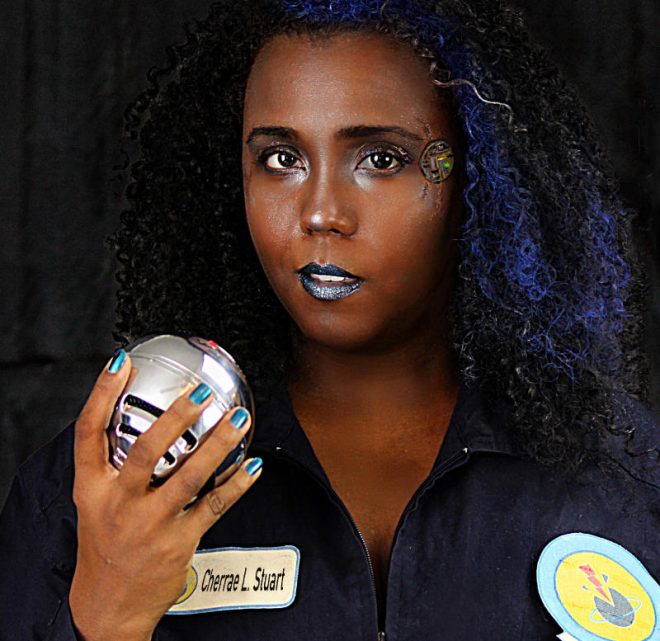
Cherrae L. Stuart is an independent filmmaker and writer in Los Angeles. She loves all things dark from Speculative SciFi to Horror.
She is the creator and head writer for the Dystopian Scifi Comedy Series Good Morning Antioch which was shortlisted for a 2023 Ignyte Award. A member of the Horror Writers Association she was featured as one of 2023’s Black Women in Horror.
She often lends her voice as a regular narrator for the Nightlight Horror Podcast, Pseudopod, Escape Pod and Cast of Wonders.
