

Escape Pod 1048: The Library of the Apocalypse
The Library of the Apocalypse
By Rati Mehrotra
Hunter’s Moon rises fat and golden over the burned-out husk of the CN Tower. Excitement ripples through us, making us forget, for the moment, the hunger that gnaws our insides. The sign for the Library appears only on clear, full moon nights, and it’s been months since we last saw it. Will tonight be the night we see it again? Sheila thinks so, but she is the most optimistic among us. Also the sickest, but we try not to think about that.
We wear respirators as we pick through the debris above ground, scanning the surroundings with our sensors. It’s not the coy-wolves we fear, but other humans—stronger, better armed, more dangerous. Not everyone left the city when it burned. There are too many memories beneath the rubble, too many bones. We cannot abandon them.
What will it look like this time, do you think? asks Katie as we make our way single file through a narrow alley toward Queen Street. The walls still stand here, covered with neon graffiti, glowing pink and purple in the moonlight: Resist the Invaders; Fuck America; Canada is Not For Sale. And, oddly, Free the Capybaras.
A carved wooden signpost, answers Hanif, who has been analyzing the data, trying to fit it into a series of equations. Trying to make sense of the incomprehensible.
Last time, the sign was a stone marker at the end of this alley. The time before that, a license plate hanging off the rusty hulk of an abandoned truck. The medium keeps changing, but the message is always the same: Welcome to the Library. Sometimes there will be a picture of a shelf of books, or a kid reading, or an owl with spectacles. Other times, there’ll just be an arrow, telling us where to go.
We always go, even though we don’t know how many of us will make it back. What is there for us here but the detritus of a fallen city?
Each other, Sheila whispers. We have each other.
We were fifteen, who are now seven. Each time one of us vanishes, and the link breaks, we feel the loss like something physical. We are haunted for weeks by the footsteps we might have taken, the things we might have seen and heard, the people we might have become.
Anton, the youngest of us, just before we lost him, said, I want to be somewhere warm and bright with beaches and palm trees and seashells and fish and coconuts and clean air. I want never to hear a gunshot again. Not even in my nightmares.
Did he get what he wanted? Did any of us? We can hope. We can dream, even as we diminish. We can argue, endlessly, about whether the Library is good or bad, alien or terrestrial, physical or virtual. Whether it exists at all times, or only on those special nights when we can see the sign. Whether it appears only to us, or to all survivors. Whether we dreamed it into being out of our collective desperation to escape. Whether I had something to do with it, when I linked us all together, the summer before last. That had been a full moon night too, and the first time we saw the sign. Has our linking opened up not just new senses but new worlds?
It’s possible, says Hanif. Anything is possible in a Quantum Universe.
Quantum is your favorite word, says Katie, snorting. The answer to everything and the meaning of nothing.
Just because we do not understand something doesn’t make it less real, says Hanif.
They can go on for ages like that. We have plenty of time to argue. Clear full moon nights are rarer than they used to be before explosions ripped our cities and torched our oil wells. Sometimes the wind direction will be wrong, carrying ash clouds from the west to darken our skies. Or fires will be burning what’s left of Northern Ontario’s boreal forest, and smoke will thicken the air, making it difficult to breathe, let alone see the moon.
Sheila interrupts them. Remember the field of poppies just after sunset? It stretched to the horizon. The sky was banded red and orange and purple. I ran and ran, but I never got out of breath. The air was sweet, earthy, damp. The breeze soft on my skin. Far in the distance, a cottage with a lamp at the window beckoned me. But before I could reach it, the path twisted, and I found myself back at the entrance of the Library. She coughs, nearly doubling over.
Avni massages her back. It was sunflowers, not poppies. Talk less. Have you taken your medicine?
Knowing she has not. Knowing that the last, expired bottle of cough suppressant is finished, every drop sucked dry, and even that was putting a Band-Aid on a bullet hole. If we do not lose Sheila to the Library, we will lose her to the poison that has seeped from the air into her lungs.
It was daffodils, not sunflowers, says Sheila, straightening. And there was a stone castle on a hill. A handsome man in a black velvet cloak was waiting for me at the castle gate.
A vampire? says Hanif, glancing back at her. Oh hush, it’s my turn. I swam with mermaids in the Caribbean Sea. Their scales glittered in the sun like jewels. Their eyes were bright and sly, their teeth so white, their lips bloodred. They gave me a sweet purple fruit to eat, and I turned into a mermaid myself. They told me stories of shipwrecks and treasures and the cave-like bones of prehistoric monsters resting at the bottom of the sea.
Rob laughs. You do not know how to swim. Didn’t they have to carry you on their backs?
That was before I turned into a mermaid, says Hanif. I drowned and they gave me the kiss of life and brought me to their underwater palace where I lived like a queen for many days.
You were gone for half an hour, says Clare.
Hanif shakes his head. It was at least a week. It was a shock, coming back to this body, this world.
We fall silent as we reach the end of the alley. It is always a shock, always a disappointment, always a relief. We wait anxiously for the others as we emerge from whatever world the Library has chosen to show us. Are we all still there? Or has one more of us fallen into a story, never to return?
I’m pretty sure I’ve seen a version of your mermaid story, says Katie, her tone tentative. In a Cineplex. You know, before.
Before the war, before we linked. Back when we thought the world normal because fires raged in different continents, far away from us. Back when the cities being reduced to rubble were ones we didn’t have to care about. Back when the families being obliterated were not ours.
The bones beneath the rubble sing to us in our sleep. We huddle together in the subway car we call home, listening to the songs of the dead. They are half the reason we cannot leave. The other half, of course, is the Library. We cannot be certain it would follow us.
Our sensors pick up a tiny movement on the opposite side of Queen Street. Avni grips my arm, her nails digging into my synthskin. Still traumatized by our last encounter with an armed street gang. They grabbed her by the hair and dragged her through the street while the rest of us watched, petrified. Kill them Ged, screamed Clare through our link.
It only takes one of us to give strength to the rest. My limbs unlocked and I shot them all, leaving their bodies on the street for the coy-wolves to devour. Nothing more than they deserved, but a deed that still haunts us, that we do not wish to repeat.
But the movement we just picked up is nothing more than a pigeon, pecking at the dirt on the ground.
Just a pigeon, I reassure her.
She releases her breath and her grip on my arm. If only they weren’t poisonous.
That would certainly solve our food problem—if we weren’t vegetarian, says Clare as we walk down Queen Street, past the broken and shuttered store fronts.
Rob wrings his hands. Are you blaming me? I know you’re blaming me!
Yes, I am blaming you, says Clare. I could be eating pigeon curry right now.
It would make you sick, argues Rob.
They continue their mock dispute, as old as our linking. Rob is vegetarian, which means we all are—one of the consequences of being linked.
Hanif, at the lead, comes to a sudden halt. We know, even before he speaks, that he has seen the sign. It is there in his elevated heart rate, his rapid breathing. We gather around him before the smashed glass storefront of a deserted laundromat, our own heart rates accelerating. Not a carved wooden signpost, as he had predicted, but white paint on a broken door, hanging off the hinges. Welcome to the Library. Nothing else but an arrow, pointing toward the inside of the store.
At last, says Katie, her voice tremulous. Shall we?
We go in. Of course we do. The laundromat seems to have escaped vandalism, unlike almost every other store on Queen Street. The floor is free of debris, the roof undamaged. Empty machines line the narrow hall like squat sentinels guarding the entrance to the Library.
The moment of transition is never clear, never sharp. We think back later to which footstep may have crossed the boundary from the familiar to the fantastic. But we can never agree on the exact moment, which means the experience is different for all of us from the very beginning.
The Library is the only place where we are separate. That is part of its danger, part of its allure.
It is past the fourth machine and before the fifth that I feel the ground shift beneath me. I blink as visible light replaces the infrared of my sensors. I am standing in a vast, oval hall with a domed ceiling, stained glass windows, and wall to wall bookshelves. The center is occupied by cozy reading nooks and desks. A library ladder rests against a shelf at the opposite end. I cannot sense the others and, as always when that happens, I feel a flattening inside of me, as if nothing matters anymore. I recite their names to anchor myself, to remind myself of what’s important. Keeping them safe. Keeping them alive. Keeping them with me.
I circle the hall, trailing my hand on the book spines, waiting for the moment of magic. Have the others made it safely inside? Are they well? What face will the Library choose to show them? It could be the same as the one I am seeing or completely different. Here, too, the data is chaotic. Last time, I found myself in a dungeon with rusty black trunks overflowing with books. Everyone else got a cozy second-hand bookstore. Go figure.
My fingertips tingle and simulated adrenaline pumps through my body. Here. I stop before a wooden bookcase like any other, my hand suspended before a shelf stuffed with antique, red leather spined books. I close my eyes and trace the spines with my fingertips, letting the Library guide me. I could pick any book at random, but most are ordinary. Well, ordinary is not the word I want. I have seen spellbooks, histories of alien races, maps of other worlds, languages that don’t exist, and recipes that demand unknown ingredients. I mean that most books will not open a portal into elsewhere.
I open my eyes when I feel the spark, the connection. My hand rests on a thick, faded red tome with yellow lettering. A Brief History of the First Galactic War.
I sigh as I pull the book off the shelf and examine the cover: gold edged, embossed title, and the outline of what I surmise is a spaceship of some sort. Or perhaps a space monster. Why don’t I get mermaids and poppy fields? I consider continuing my search for a different book, a different story.
But I don’t get that chance. The book falls open in my hand. Golden yellow light shines through, dazzling me. And then I am falling, falling, falling into another world.
As Fleet Commander, the success or failure of this mission rests with me. No matter that the odds are stacked against us, no matter that I disagreed with the Admiral over this last, suicidal attempt to take back control of the Verismus Wormhole. Eighteen imperial warships patrol the space around the wormhole. Just one of those would be enough to blow us to smithereens if they detect us. I sense the grim determination of the pilots of the seventeen lightcraft flying in stealth mode around me. So slight, the possibility of success. So certain, our impending death. The only question is if we can make our deaths worthwhile for the Alliance.
On a predetermined signal, we emerge into vector space and fall toward the warships. Eighteen lightcraft laden with nuclear warheads detonate in simultaneous, explosive glory.
My last thought, before darkness takes me, is that I always seem to get the most violently unbelievable stories.
My return to the real world is jarring, as always. It takes me a minute to orient myself: the switch back to infrared, the row of blank machines, the smashed glass storefront, and the man huddled on the floor, weeping.
Rob. That’s Rob. I kneel as the link lights up, sending images of his story: the seaside village, the ice cream stand, the bakery, the pretty wife, the two little daughters, the numerous cats sunning themselves on rooftops. I hold him as he cries, my own eyes burning, not knowing if the tears are for what we left behind or what we regained.
One by one, the others return and join us: Hanif, then Katie, and last of all Avni, who is unable to speak or even send a coherent thought.
But Sheila and Clare don’t come back. We wait until dawn, our hopes dwindling with every passing hour. Sheila we can understand, but Clare, we cannot. Clare, we had thought, would always come back to us.
As the sun rises, the sign on the broken door fades, and Hanif rouses us. Time to return home, he says, his voice heavy.
Home. The word holds so many meanings, most of which have been destroyed. We trudge back to our subway car between St Andrew and Union Station, not speaking, thinking of all our missing selves. Our wrecked homes. Our beloved dead. Trying to gather the tattered pieces of our hearts together.
We were seven, who are now five.
November arrives cold and foreboding. Rain cleans the air and for a while we can breathe without respirators above ground. The respite is short-lived. The bombing begins again, this time to the north. We hide in our subway car for as long as we can, but hunger drives us up outside, and for a while it’s okay. We find tins of food that have rolled under the counter of a looted convenience store. It’s a treasure, and we celebrate with our first real meal in many days: chickpeas, tomato paste, mushroom soup, and pineapple.
Three nights later, while we are foraging in Dufferin Mall, a beam falls on Rob and crushes his head. As the link breaks, our hearts clench, and a keening sound fills the air, more desolate than the songs of the dead. It takes us a while to realize that it is us.
Grief made audible, visible, physical. Gray wool filling our eyes and nose and mouth, making it impossible to breathe. Impossible to live.
But we live. Even as Rob dies, we live. We carry him out and bury him in what remains of Dufferin Grove Park.
The dead sing to us, and now his voice has joined theirs.
Rob’s death changes something in us. It gets harder to motivate Katie, Avni, and Hanif to leave the subway car, to walk above ground, to forage for anything edible. I go without them, my anxiety growing with the distance between us. I find them food, but they cannot always eat it. They grow thinner, quieter, their thoughts a jumble of broken images that pierces me every time I try to untangle it. A feeling of helplessness wells up in me. I try to hide it from them, but of course I cannot. I cannot hide anything. None of us can, and so I know, if nothing changes, they will not live to see the summer.
The Library, I tell them on Christmas Eve, as we listen to the dead sing Christmas songs.
Avni squeezes my hand. Don’t worry, Ged. We won’t leave you.
But they must. The knowledge tears at our insides. But it’s the only way for them to survive.
It is January before I see the sign again: a billboard in Exhibition Place, pointing toward the abandoned Horse Palace. It’s not far from our subway car, but it’s still more than they can walk in their current condition, especially in the snow. I carry them out one by one, despite their protests. I support them down the street, across the park, and over the railway tracks. And somehow, we make it to Exhibition Place while the moon is still high in the sky. I thank my makers for my body, so much stronger than theirs.
Maybe we shouldn’t, says Hanif as we stare at the moonlit Horse Palace, his voice weak and thready. But already, I can feel the gulf between us growing.
I’m so tired, says Katie, leaning against me, her breath shallow. So cold. Why did you bring us here, Ged? I just want to sleep.
It will be warmer inside. Gently, I chivvy them up the ramp to the building. At the entrance, they stop and turn.
Aren’t you coming with us? asks Avni, shivering.
I make myself smile. Not this time, darling. You’re on your own. Be brave.
Her face crumples. She leans forward and kisses me. Find others like us. Help others like us.
She takes Katie’s arm, and together they open the door to the building. Hanif cups my face in his hands. Thank you, Ged-4. We couldn’t have survived without you. Tears roll down his gaunt cheeks as he steps back.
We love you, Ged, they say. And then they walk inside, and I know, even before the door closes behind them, that I will never see them again.
We were four who are now one.
The dead sing to me. How can I leave? This city where I was created, where I will most certainly be destroyed. I visit Rob’s grave and ask him what I should do but he doesn’t answer so I go home, and I want to smash the subway car and those pathetic little tins of food we were saving for emergencies, but I don’t because what if they come back? What if the Library spits them out one day and they’re hungry and cold and need food to eat and a place to sleep? Here where we huddled together for warmth. Here where we cried as we named those who were gone. Here where we patched our wounds and promised each other that tomorrow would be better.
Was I the one holding them back? Did they not leave all this time because of me? I always knew that the Library would not give me the escape it offered the others. Whether or not I had anything to do with its appearance, it would treat me differently. While I was linked to them, I could forget that. I could forget my otherness. My skills, so useful in protecting us all from predators.
Ged-4: the fourth and last generation of combat soldiers produced by General Dynamics before its factories were bombed into oblivion. How many of my brethren still survive? How many still remember their mission?
I don’t. I don’t know what I was made for, or whether it would be useful if I did know. All I remember is waking to Hanif’s cool palm on my forehead, to Avni’s soothing voice in my ear. They patched me up as best they could, but mostly, I fixed myself. I did it for them. One by one we found the others, and I showed them how to link, how to survive, how to share strength, memory, and resources. They gave me purpose and now I have none.
I walk the streets, willing predators to attack me. But they must sense that I am the most dangerous predator of all, for no one approaches me, human or animal. I feel my sense of self fraying, and I stroke the assault rifles slung against my chest, needing, searching, for a target.
They rain death from the skies, but I am waiting for the day their boots touch this ground and then I will rain death upon them. The snow will turn red with their blood and perhaps that was my mission all along. I can see it now, their hateful uniformed bodies broken and twisted, their limbs shot off-
A soft sobbing brings me to a halt. I return to myself, standing in front of a ruined home on Walnut Street. The roof has caved in and so have most of the walls. Beneath a dusting of fresh snow, I smell the stench of death. Three human corpses, frozen stiff, around three days old.
I toss aside the broken gate and follow the sobbing to a badly dented car. Behind it, clutching an oversized teddy bear, is a small brown girl of ten or eleven, wearing a green puffer jacket and black snow boots. I crouch before her, keeping a distance of two feet, and try to summon a harmless expression. Find others like us. Help others like us.
She wipes her eyes and stares at me.
I stare back, stretching my lips in what I hope is a gentle smile, scanning her for injuries. Frostnip, malnutrition, and bruises. Nothing that cannot be reversed.
She is the first to speak. “Are you a person?” she asks.
“Yes,” I reply, the first word I have spoken aloud in weeks. “Although not quite like you.” Aware, as I speak, of the patches in my facial synthskin where the metal shows through.
She casts a glance at the house. “Can you save them?”
I shake my head. “They’re dead. But you’re alive. I can help you stay that way. And I can tell you about the most amazing library in the world.”
I rise and hold my hand out to her.
For a single, nerve-wracking moment, I think she will not take it.
But she does. She takes my hand, holding the teddy bear in the crook of her other arm. And I lead her home.
Host Commentary
By Mur Lafferty
And that was “Library of the Apoxalypse,” by Rati Mehrotra.
About the story, the author has this to say: “The story channels Canadian anger and anxiety over the taunts by the American President. If the worst happens, I pray for a library escape for all of us.”
This story is indeed darker than we usually publish, but it kept reminding me of one thing: starfish.
I feel corny quoting inspirational posters, but I have to say that right now one of the things that brings me hope is the story about the little boy and the beached starfish. A man sees a boy among a vast beach of starfish that have washed ashore. The boy is going around, picking them up and throwing them back into the ocean. The man tells the boy that he can’t possibly make a difference, there are too many fish and only one of him. The boy throws one more in and says, “I made a difference to that one.”
I remember this when I feel despair that nothing I do will make the world better while it’s on fire. And that’s the message this story brought to me. Ged can’t save the city, can’t save all the kids, possibly can’t even save itself. But it finds someone to whom it can make a difference, and that helps it keep going.
It doesn’t matter how small your actions are, or how unimportant you think they are: actions count. Voices count. votes count. Keep going. The steps may be small, they may be heavy. But if you can make a small difference to someone, it will still make a difference. And you never know what good that does in the long run.
Escape Pod is 100% audience supported, and we count on your donations to keep the lights on and the servers humming. Head to https://escapeartists.net/support-ea/ to see all the available donation and subscription options, including Patreon, PayPal, Ko-Fi, and Twitch.
You can also support Escape Pod for free by rating or reviewing us on Spotify, Apple Podcasts, or your favorite app. Whether you’ve been a dedicated fan of Escape Pod for years or just started following the cast, thanks for tuning in.
Escape Pod is distributed on a Creative Commons Attribution-NonCommercial-NoDerivatives license. Our music is by permission of Daikaiju. You can hear more from them at daikaiju.org.
That was our show for this week. Our quote comes from Robin Williams: No matter what people tell you, words and ideas can change the world.
About the Author
Rati Mehrotra
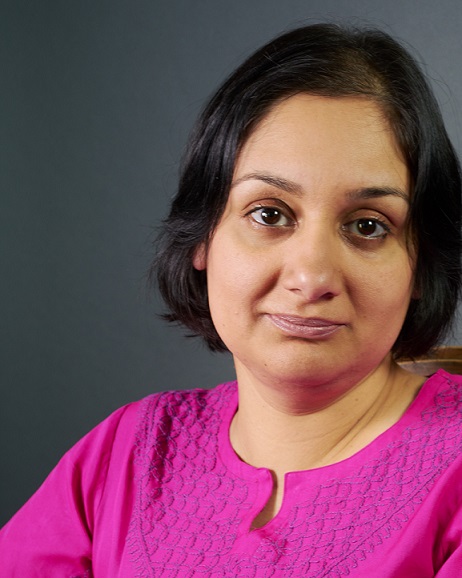
Born and raised in India, Rati Mehrotra now lives and writes in Toronto, Canada. She is the author of the Asiana duology, Markswoman and Mahimata, and the YA fantasy novels Night of the Raven, Dawn of the Dove and Flower and Thorn. Her stories have been shortlisted for The Sunburst Award, nominated for The Aurora Award, and have appeared in multiple venues including The Magazine of Fantasy & Science Fiction, Clarkesworld, Lightspeed Magazine, and Uncanny Magazine.
About the Narrator
Joe Moran
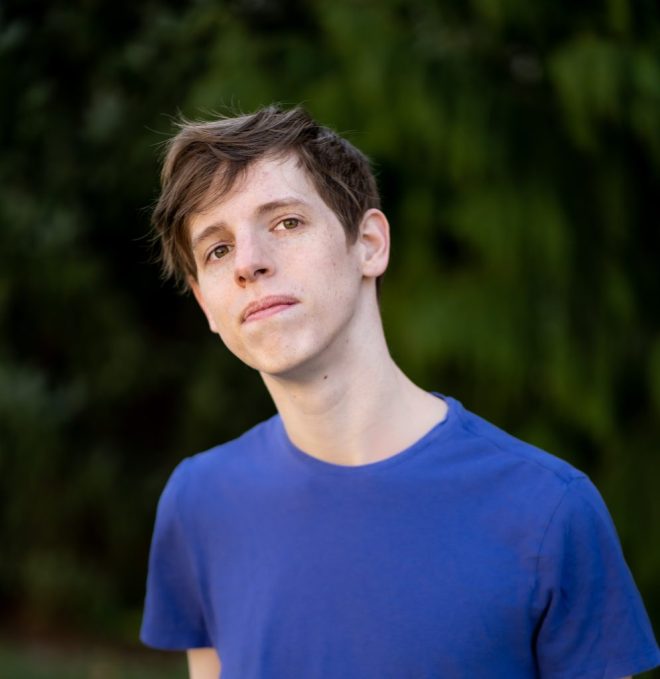
Born in Indiana, Joe Moran (He/Her) loves fiction, audio, and all things dramatic. He was trained to act and create soundscapes at Indiana University, playing parts in productions of Three Sisters and By the Bog of Cats. She also streams on twitch with her friends, playing social deduction games and chatting with a small but dedicated audience. You can find out more at josephterencemoran.com
