

Escape Pod 1047: EDIE (Part 2 of 2)
Show Notes
Don’t miss Part 1: Escape Pod 1046: EDIE (Part 1 of 2)
EDIE (Part 2)
by James Dick
EDIE was a smart machine, but every machine, no matter how smart, was prone to mistakes. She made a life-threatening mistake by continuing to channel power to the absent melt probe.
It wasn’t her fault. The strange circumstances that had cut the melt probe loose from its umbilical exploited a glitch in EDIE’s programming; a two-digit error committed by a human ten years ago who hadn’t slept very well one night before work.
But just as this situation had been, in part, created by a human operator, so too was it remedied by the same. Another programmer, who perhaps had drunk a tad too much coffee one morning, had the foresight to include a failsafe program in EDIE’s software. After her power dropped below forty percent, the failsafe kicked in.
EDIE shut off every system in her compact metal frame and rebooted on battery power. The only systems that switched back on were her primary drives, her communications array, and her diagnostic mechanisms. The power from her batteries and RTG went nowhere else, and therefore was not drained by the umbilical.
With her program stable and her power reserves slowly regenerating, EDIE attempted to make contact with Earth…
The telemetry still hadn’t returned.
Wendy ran a hand through her hair. She really didn’t want to tell Kate she’d lost EDIE.
“How much longer do you want to give it?” Nils asked.
“A couple more hours at least,” said Wendy.
Five seconds later, the telemetry returned.
A big smile spread across Wendy’s face. Clever girl. “Looks like she did a total restart.”
“Remind me to give a big kiss to whoever did failsafe programming,” said Nils.
“Amen to that.” Wendy laughed. “Oh, I love this little lander.” She watched EDIE’s subsystems. “Nothing else has powered on yet. It looks like she’s sticking to the essentials. And the power drain has stopped.” Wendy moved the mouthpiece of her headset closer to her lips. “Comms, Control, my feed shows EDIE in safe mode. Can you confirm?”
Jim’s voice crackled over the line. “I confirm safe mode.”
“Okay, in this order: command her to perform self-diagnostic, isolate the melt probe subsystem and restrict access, then start bringing her hazard cameras online.”
“Copy diagnostic, melt probe isolate/restrict, restore hazcams. Working.”
“Thank you.” Wendy clasped her hands together and rested her chin on her fingers. She wanted the hazard cameras online so she could take a look at the surface anomalies. I’m willing to bet they changed during this event.
Factoring in the light delay, it took the better part of a day to nurse EDIE back to health. On the bright side, she was quite responsive to her team’s ministrations, and none of her systems showed any signs of permanent damage. Wendy watched her screen as each of EDIE’s systems went from red to green.
Around nine-p.m., well after the time she should have been home, Kate called her.
“There was an article that said EDIE was in trouble,” Kate said. “What’s happening?”
Wendy cursed silently for forgetting to text home. She explained the situation and told Kate she wouldn’t be back before bedtime. “EDIE’s doing fine, hon,” she said. “She’ll be okay.”
“Do you know what happened to Snorri?” Kate asked.
“Seismology says there was a seismic event just before the probe was lost. Snorri probably got sheared off by two sheets of ice.”
“And what about those things growing on the surface?”
Yes… what about them? “We don’t have the cameras back yet. We should be getting them within an hour.”
“Okay. If you forget to call me, I’ll be very upset.”
“Consider me duly warned,” said Wendy. “Listen, why don’t you get to bed. I promise I’ll fill you in on anything that happens in the morning, okay?”
“Sounds good. I’ll start working on hypotheses. Love you.”
“Love you too, sweetie. Let me talk to dad?”
There was a rustling sound and Cam’s voice filled Wendy’s ear. “How’re you holding up?”
Wendy rubbed her eyes. “I’ve heard of smoother missions.”
“Ars Technica ran an article today. They made it sound like you’ve got things under control.”
Wendy laughed hollowly. “Oh God, are you really getting EDIE updates online before I tell them to you?”
“Yes, but, I forgive you.” Cam chuckled. “Nils must be crushed.”
“Actually, he’s handling the loss of Snorri quite well.” Wendy looked across the control room to where Nils and Jim were coordinating on software fixes. “It’s one thing to know that, statistically, there’s a good chance that every mission will go belly-up, but—”
“Doesn’t take the sting out of it when it happens, does it?”
“Not at all.”
“Wendy!” Nils stood up straight and waved at her. “We’ve got a confirmation signal from EDIE: she turned her cameras back on. Downlink in thirty seconds!”
Wendy gave Nils a thumbs-up. “Okay!” Then, to Cam: “I’ve gotta go. We got the cameras back.”
“Should I get Kate?” Cam asked. “She’s brushing her teeth.”
Wendy bit her lip. “No, let her get to sleep. We don’t know if we’re out of the woods yet.”
“All right. I’ll kiss her goodnight. Don’t work too hard.”
“Ha. Love you.”
“You too.”
Wendy hung up and rose from her chair. “Nils?”
“Fifteen seconds, Wendy!” Nils said.
The big screen, which until now had been blank, filled with light and colour. The familiar landscape of Europa reappeared, and a murmur of shock rippled through Mission Control.
The Europa Deep Ice Explorer had a fairly simple shape: four legs, a square body, and a large antenna. A child could draw her. Children had drawn her. Her simplicity of design was part of why she’d been green lit by NASA.
There was, therefore, no mistaking the statue of ice that now dominated the screen; it was, for all intents and purposes, an exact copy of EDIE.
Nils turned to Wendy, his jaw slack. “What do we do?”
“Call the Administrator…” Wendy said, her voice barely a whisper. “Call everybody.”
Just get through this and you can get back to work, Wendy thought, giving her best smile to the cameras.
Hannah Ross, NASA’s public relations coordinator, seated in the chair beside Wendy, introduced her and kicked off the panel. “It’s been a busy time for you and the team, hasn’t it?” Hannah asked.
Wendy laughed. “That’s ah… a bit of an understatement.”
Hannah grinned. “So, we’ve had this strange ice statue appear on the surface of Europa that seems to be an imitation of the Europa Deep Ice Explorer. Can you tell us a little bit about how the team is approaching studying this thing?”
“Yeah, so, we’ve started from the very beginning, as far back as Europa Clipper, consolidating every scrap of information we’ve ever collected about Europa, and are systematically working through it all to try to figure out what this statue is.”
Hannah nodded. “I understand a huge part of your mission—and really, every Europa mission—is the search for biosignatures. Signs of life, basically. Can you speak to that investigation and what your team uncovered?”
“Before the melt probe was lost, we did gain some data on the composition of Europa’s ice. We found no chemical biosignatures like hydrocarbons or other complex molecules associated with life. This is really what our team is chewing on: ‘what could mobilize that quantity of ice and arrange it into such an organized shape?’ Because, so far, in the area surrounding EDIE, we’ve found nothing that could do that.”
“What excites you most about this discovery?”
Wendy laughed again. “What doesn’t excite me? Um… I think what fascinates me is that the process we’ve just witnessed on Europa runs counter to everything we know about entropy: here we’ve got the disorganized surface ice of Europa and all of a sudden, an incredibly organized shape has emerged. In other words, order came to chaos, and that’s the opposite of how we believe the universe works.”
They spoke for a little longer about the processes and technologies the team was using to study the EDIE replica, and then finally came to the part of the press conference Wendy had been both excited about and terrified of in equal measure.
“We have some calls from the press,” said Hannah. She consulted her tablet. “First up is… Ben Avildsen from the Washington Post.”
There was a pause while the media department patched Avildsen through. Wendy clasped her hands together to keep them steady.
“Hi,” said a disembodied voice, “Ben Avildsen here. Wendy, there’s been a lot of speculation as to whether Europa could harbour life…”
Here we go…
“… microbial life, at least. Is there any possibility that a microbe of some sort could accomplish what we’ve seen?”
“It’s not impossible,” said Wendy, “and finding life on Europa is the goal of our mission, but like I said, we’ve found no evidence of life so far as we know it.”
“Are there any microbes on Earth,” Avildsen said, “that could accomplish it?”
“Hmm… here on Earth, there are definitely microorganisms that can cause massive changes to the environment. For instance, algae can form a blanket over an entire lake, provided they have the right nutrients and energy sources. Diatoms alter the composition of Earth’s oceans as their bodies decompose in saltwater.”
Hannah moved along to the next reporter. “Okay, next we have Rhys Granger, The Sun.”
A click, and then another disembodied voice. “Hullo, Wendy, Rhys Granger here. Do the complexity and specific dimensions of the statue at least suggest an artificial origin?”
“That’s one possibility,” said Wendy, “but we also see incredibly complex water-ice structures form naturally. Take a snowflake, for example; a single snowflake is a remarkably intricate structure, totally unique in the universe, with facets and shapes that no other snowflake shares with it. They’re so detailed, in fact, that a person who didn’t know how snowflakes formed might assume they were artificial, when in fact they’re a completely natural phenomenon. It’s entirely possible—and to me, this is really quite a fascinating idea—that the appearance of this statue represents a natural process totally unknown to human beings.”
Hannah nodded sagely. “All right,” she said, “next question… Josh Hill, Space Today.”
Another pause… “Hey, thanks Hannah. Wendy, there’s a growing concern among people that, if it does turn out there’s an intelligence behind this statue, that the recent loss of the melt probe represents an act of aggression. Can you speak to that?”
Here was a deep rabbit hole Wendy couldn’t descend. “Again, there’s no solid evidence as of yet that there’s an intelligence behind any of this. As far as we know, the loss of the melt probe was the result of a natural shift in the ice that sheared the umbilical in half.”
Hill pressed on. “But, let’s assume for a moment that an intelligence is at work. Would you agree that the loss of the melt probe seems aggressive?”
“Even assuming we disturbed something intelligent in the ice, the loss of the probe might be as involuntary as an immune response. Every complex organism has an array of behaviours and responses when a foreign body penetrates it.”
Hannah looked at her tablet. “And next—”
“But what about the creation of the statue,” Hill interrupted. “Surely that was intelligent.”
I have to wrap this one up quickly… “There are many degrees of intelligence,” said Wendy, “and if it turns out the statue was an intelligent creation, that still doesn’t tell us the ‘why’ or the ‘how’ of it. These early days are so exciting for me because we’re just at the beginning of our journey towards understanding what’s happening on Europa.”
“Thank you, Josh,” Hannah said, disconnecting him. “Now we’ll take some questions from social media…”
Wendy came home to the smell of coffee and tomato sauce. She dropped all her bags in the chair by the front door and shook the snow off her parka.
Down the hall, Cam poked his head out of the kitchen. “Hey!” he said. “How was it?”
“You didn’t listen?” Wendy asked.
“You told me not to.”
“Oh… right.” Despite her exhaustion, Wendy managed a laugh. The questions had grown more and more sensational as the press conference dragged on. The world’s wonder at the discovery on Europa was matched only by its fear. Conspiracy theorists came crawling out of the woodwork. Social media blazed with debates on everything from the origin of life to government secrets. Online petitions decried the whole thing as a NASA’s scheme to generate funding and support. It was everything Wendy would’ve expected from an event like this.
But then there was the unexpected, too; the sense of serenity Wendy felt, being at the centre of these turbulent discoveries, surprised her. Her work kept her busy. Her family kept her sane. She was in the eye of a hurricane, untouched by wind or rain.
Kate thundered down the staircase. “Still alive?”
“What’s it look like?” said Wendy dryly.
“Good, ‘cause I have some hypotheses.”
Cam came down the hall holding a steaming mug of creamy coffee. “There’s a double shot of Bailey’s in there.”
“You’re a god,” Wendy said, accepting the coffee and inhaling the aroma.
“I know,” Cam said as he strolled back to the kitchen.
Wendy discreetly admired his backside as he went, but her admiration turned to concern. “Has your dad lost weight?” Wendy whispered to Kate.
Kate frowned and gestured for Wendy to come closer. Wendy did, and Kate leaned over the banister to whisper in her mother’s ear. “He was worried about you already, but since you found the statue of EDIE, he hasn’t eaten much.”
Wendy looked back down the hall and saw Cam disappear into the kitchen. His smile had been replaced by an expression of worry. Oh, my sweet man. Wendy turned to Kate. “And you weren’t worried about me?” she asked accusingly.
“You’re doing things mere mortals can’t even wrap their heads around. I’m jealous.” Kate spun on her heel and trudged back up the steps. “Come on!” she said, “we need to look at the board.”
Wendy frowned. “What board?”
Kate had replaced her desk with a corkboard covered in photographs, typed pages, and handwritten notes. Threads connected everything. It was like a scene out of a police procedural.
“We really need to take away your internet access,” Wendy said.
“If you do, I’ll just hotspot my phone,” said Kate. “Now, pay attention.” Kate gently pushed Wendy into her desk chair in front of the board. The seat was a bit too small for Wendy’s butt.
I seem to have picked up the pounds Cam lost.
Kate grabbed a ruler and pointed to the board. “Okay, this all started when you said that this could be a natural phenomenon. It was smart of you to consider that, but I don’t think you’ve thought of everything.”
Wendy struggled to keep a straight face. “Well, ma’am, that’s high praise coming from you.”
“Indeed. But as I’ve said, you’ve missed something.” Kate pointed to each cluster of notes. “Hypothesis A: this is a natural phenomenon unknown to humanity. Already under consideration. Hypothesis B: microorganisms in the ice are shaping it as a reaction EDIE’s presence, unsupported; lack of biosignatures. Hypothesis C: the ice is being shaped by an unknown entity as an attempt at communication; again, unsupported. Hypothesis D…” Here, Kate turned and looked at her mother. “The ice itself is alive.”
Wendy was about to laugh. She could feel it bubble up from her belly. But her scientific mind (to say nothing of the seriousness of Kate’s expression) demanded the idea be considered, and once it lodged in her head, she couldn’t get it out. The smile she’d worn up until this moment died. Her brow knit together. “How’d you come up with this?” she asked.
Kate wrung the plastic ruler and paced the room. “You know the old question ‘would we recognize life if we found it?’”
“Honey,” Wendy said dryly, “think about who you’re talking to.”
Kate waved the ruler. “Don’t be snarky. Our whole approach towards looking for life is that it will be carbon-based, like us, living in an energy gradient, with tissues, cells, DNA. And we’ve always assumed it will dwell in or near water.”
“Right,” said Wendy, “because we only have ourselves for comparison and we can’t find what we don’t know exists.”
“What if EDIE just did?” Kate jabbed at a printed image of Europa at the centre of her board. “What if we just found life, not as we know it, but as we don’t know it?”
Wendy contemplated the craggy, ruddy moon. “So, what, you think the whole moon is alive?”
“I think the ice could be alive, and possibly the water beneath it, too.”
Wendy had been willing to entertain Kate thus far, but now it was starting to seem a little too wild. “It’s a fascinating idea, hon, but we’ve found no evidence to support it. A life form this big would announce itself through chemical markers, microscopic evidence—”
“Not necessarily,” said Kate. “We might not be able to distinguish a life form’s biological processes from the natural world around it. Take fungus, for example. Most of Earth’s forests have a layer of fungus beneath them that influence the behaviour of the plants whose roots interact with this layer.” Kate pointed to another section of her board: a collage of fungi. “And this entire layer is alive! For most of human history, we had no idea that the growth of trees and the spread of forests were linked to a micro-organism that grows among the roots.”
“Yes, but… fungus can be sampled. We can dig it up and study it. We can see evidence of it in the soil and rocks. We know it’s there. Snorri sampled the ice before it got sheared off and it found nothing but a handful of minerals.”
“Maybe we just haven’t designed the right instrument to confirm that Europa is alive,” Kate countered.
Wendy sighed. “Hon, you’re really reaching with this.”
“A hypothesis is only a reach until it’s proven or disproven.”
“Where does a life form the size of a moon get the energy it needs to survive?”
“Easy.” Kate pointed to a picture of Jupiter. “Right there. Tidal flexion, radiation, electromagnetic field. Every single part of Europa, from the ice on down to the core, could soak up one form of that energy or another.”
“Okay,” said Wendy, “but life forms are organized.” She got up from the chair, massaging her sore posterior as she did, and ran a finger over the cracks in Europa’s surface. “This doesn’t look organized.”
“The outer layer of our skin,” said Kate, running her hand over Wendy’s outstretched finger, “is dead, and peels regularly. It only gets flush and organized deeper down. And we know that ice crystals can form in extremely orderly ways, and can even channel various kinds of energy under the right conditions.” Kate waved her ruler at Europa. “The melt probe didn’t sample the deepest layers of ice, so we don’t know how organized they are. We only got a few hundred metres down.”
“All right. So why the statue, then?”
Kate bit her lip. “Argh, fine, okay, I haven’t figured out why the statue formed, but I think I know why it formed after EDIE landed.”
“Let’s have it.”
“EDIE’s got a small nuclear reactor inside her.” Kate crossed her arms. “We channeled the energy from the reactor into Europa via the melt probe.”
Now, Wendy did laugh. “You just told me a second ago that Jupiter provides more energy in a single second than we could with a million melt probes.”
A wry grin tugged at Kate’s mouth. “But we introduced a highly localized source of energy, and the statue appeared only three feet from EDIE.”
“Why would a life form so big react to something that small?”
Kate’s grin widened. Her hand darted out and she pinched the back of her mom’s hand.
Wendy hissed. “Ow!”
“You just reacted,” said Kate smugly.
Wendy set her coffee down on Kate’s nightstand. “Indeed…” She turned and narrowed her eyes wickedly at her daughter.
Kate’s expression grew worried. She backed up.
Wendy lunged at Kate, hands darting under the girl’s armpits, fingers tickling her mercilessly. “How’s this for a reaction, huh?” said Wendy. “Huh?!”
Kate laughed and tried to retreat to her bed, slapping her mom’s arm with the ruler. “Stop it! Stop it!” Kate slipped out of her mother’s grasp and darted out of the room.
Wendy picked up her coffee, shoulders hitching with laughter. “Yeah, you better run!” She started to follow her daughter, but paused and looked at the corkboard. My girl did this, she mused as her eyes roved over the ideas, the hypotheses, the endless, endless questions. Whatever discoveries we make on Europa, whatever EDIE uncovers, Kate will always be my greatest gift to the world.
“Mom?” Kate called from downstairs, “dinner’s ready!”
“Coming!” said Wendy, sipping her coffee as she left Kate’s room.
Every robotic explorer humanity had hurled into the Solar System had a finite lifespan, sometimes measured in decades, sometimes in hours. Sometimes these explorers exceeded their lifespans, and sometimes their lives were cut short. No one could’ve foreseen the sudden cracking of the ice beneath EDIE.
Perhaps it was one of the natural rifts that formed as a result of Jupiter’s gravitational squeezing of the moon. Perhaps it was instigated by the deployment of the melt probe. Perhaps it was the work of some as-yet-unseen intelligence on Europa. Perhaps a combination of these. Perhaps none of them.
But the ice cracked, without warning, and EDIE fell twelve-hundred metres to land on an ice sheet as hard as rock. Her chassis split, her cameras shattered, and her RTG smashed open, spilling pellets of plutonium all over the ice.
Then, just as soon as the crack appeared, it sealed, entombing EDIE deep beneath the skin of Europa.
We’ve been cheated. It was probably the least-rational thought Wendy had had since the mission began, but she couldn’t help it. She and her team had just been presented with one of the greatest mysteries humanity had ever encountered, and their principal investigator had been assassinated just as they’d begun to unravel it. Wendy knew the universe was under no obligation to make sense to her, but at that moment, she felt a great deal of animosity toward it.
Nils put a hand on her shoulder. “The carrier stage will make its pass over the landing site in a couple of minutes.”
Wendy crossed her arms. “Good.”
“How did Kate take the news?”
“Kate sees this as a challenge,” said Wendy. “As if Nature has thrown down the gauntlet.”
Nils blew out a long breath. “I understand the feeling.”
“Me too.” Wendy put an arm around Nils and gave him a squeeze. “We’ll just have to make sure the next team…” She forgot whatever she was about to say. Silence fell over Mission Control.
The carrier stage had not yet overflown EDIE’s landing site, but it was clear already that something wild was happening on Europa. The view was like looking at a small city from above, with the cars frozen in tableau. Wendy studied the image with awe and wonder.
More ice statues had appeared in various stages of completion, and each one was in the likeness of EDIE.
Near the front of the Mission Control, Jim Watson leaned back from his computer. “Carrier stage says there are three-hundred of them and counting,” he said.
Somehow, Wendy wasn’t as shocked as she would’ve expected, nor did she feel as angry as she had a moment ago. She wished her daughter was there, in Mission Control, sharing this moment with her.
“Well,” Nils sighed, “I don’t think I’m going to be sleeping anytime soon.”
“I don’t think anyone is going to, Nils,” said Wendy.
Kate was sitting on the staircase in her pyjamas when Wendy got home. Cam was beside her, his arm around her shoulders. They looked up when Wendy stepped over the threshold.
“You guys saw?” Wendy asked.
Kate beamed. “We did.”
A huge smile broke out over Wendy’s face. She knelt in front of Kate and Cam and pulled them both into her arms, breathed them in, felt their love.
“You should see the ice sculptures,” said Cam, breaking the embrace, “in front of the mural at the rec centre. A whole bunch of little EDIEs. There’s a dozen of them now, and another shows up every hour.”
“Who’s carving them?” Wendy asked.
Cam shrugged. “Anonymous.” His teeth flashed as he smiled. “It’s a mystery.” Then, his smile faded, and fear flashed across his face. “Do you think that whatever is out there is dangerous?”
It was a fair question. EDIE was gone, and Wendy couldn’t ignore the possibility that the probe’s vanishing wasn’t accidental. Before she could find words to answer Cam, Kate beat her to it.
“Everything in the universe is dangerous,” Kate said. “The snow outside is pretty, but it can throw a car into a skid and kill everybody inside. But if you mean whether whatever is out there wants to hurt us, we can’t know. Not yet, at least.” Kate shrugged. “For all we know, Europa is making EDIEs because it’s bored.”
This didn’t quite reassure Cam.
Wendy reached down and gave his hand a tight squeeze. “We can’t live in fear of what we don’t understand. If we do, we’ll spent our whole lives being afraid.”
Cam nodded and took a shaky breath. “You know,” he said, “I think I was much happier before you two came into my life and awakened me to all these cosmic horrors.”
Wendy chuckled. She let go of Cam’s hand, reached around, and squeezed his ass. “Liar.”
Kate made a gagging noise.
Wendy turned to Kate. “I take it you’ve already got theories?”
“She made me buy five more corkboards…” Cam groaned.
“And already used them up?”
“What do you think?” Kate said, feigning offence.
“Show me what you’ve got,” said Wendy.
“Dinner’s in ten,” said Cam as he turned and headed for the kitchen.
“Fifteen!” Kate corrected.
“Fine, fifteen.” Cam sighed. “I’ll just tell the laws of physics on my stovetop to change.”
Kate looked back at Wendy as she ascended the stairs. “Funny he should say that,” she said. “I have a hypothesis…”
Host Commentary
And we’re back! Again, that was part 2 of Edie, by James Dick, narrated by Abra Staffin-Wiebe.
About this story, James says:
Astrobiologists have a saying: “follow the water”. Water is the key ingredient for life as we know it. Beneath the icy crust of Jupiter’s moon Europa, there is three times more water than in all the oceans of Earth combined. It makes sense we would look for life there.
What if we stumbled onto a mystery stranger than anything we hoped to find? How would we react as a species? Would our curiosity prove stronger than our fear?
And back to me now–I sure hope so, James. I really do. And I would love to find out more about what happens in this particular Europa timeline. So if you, like me, also enjoyed this story about Edie’s scientific mission, then go check out the sequel! It is called “ESRI”, and James says it appeared in the July/August 2025 issue of Analog, and is also due to appear in The Year’s Top Hard Science Fiction Stories #10, edited by Allan Kaster, and published by Infinivox, in June 2026.
Escape Pod is part of the Escape Artists Foundation, a 501(c)(3) non-profit, and this episode is distributed under the Creative Commons Attribution-NonCommercial-NoDerivatives 4.0 International license. Don’t change it. Don’t sell it. Please, go forth and share it.
How do you share it, you ask? Well! In addition to your social media of choice, consider rating and/or reviewing us on podcast listening sites, such as Apple or Google. More reviews makes for more discoverability makes for more Escape Pod for you.
Escape Pod relies on the generous donations of listeners exactly like you. And remember that Patreon subscribers have access to exclusive merchandise and can be automatically added to our Discord, where you can chat with other fans as well as our staff members. So! If you enjoyed our story this week then consider going to escapepod.org or patreon.com/EAPodcasts and casting your vote for more stories that tell the laws of physics to change.
Our opening and closing music is by daikaiju at daikaiju.org.
And our closing quotation this week is from Carl Sagan in the Pale Blue Dot, who said:
“Once we lose our fear of being tiny, we find ourselves on the threshold of a vast and awesome Universe.”
Thanks for listening! And have fun.
About the Author
James Dick
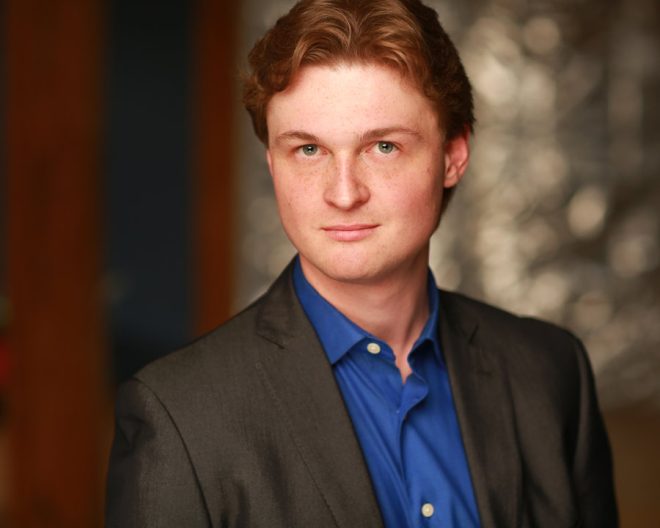
James is an actor, author, screenwriter and director from Scarborough, Ontario. His stories have appeared in Analog, Andromeda Spaceways, Jupiter’s Eye, and many other publications. His debut novel, Seekers of the Fallen Stars, is forthcoming from Flame Arrow Publishing in 2027. At Christmastime he dons pointy ears and works as Santa’s elf, but is frequently mistaken for a Vulcan.
The sequel to “EDIE”, titled “ESRI”, which appeared in the July/August 2025 issue of Analog, is due to appear in The Year’s Top Hard Science Fiction Stories #10, edited by Allan Kaster, and published by Infinivox, in June 2026.
About the Narrator
Abra Staffin-Wiebe

Abra Staffin-Wiebe loves optimistic science fiction, cheerful horror, and dark fantasy. Dozens of her short stories have appeared at publications including Tor.com, F&SF, Escape Pod, and Odyssey Magazine. She lives in Minneapolis, where she wrangles her children, pets, and the mad scientist she keeps in the attic. When not writing or wrangling, she collects folk tales and photographs whatever stands still long enough to allow it. Her most recent book, The Unkindness of Ravens, is an epic fantasy coming-of-age novella about trickster gods and favors owed. Enjoy an excerpt here: http://www.aswiebe.com/moreunkindness.html
