

Escape Pod 1038: Meet the Mets
Show Notes
Sponsored by Mixtape Stories
Meet the Mets
by Ace Tilton Ratcliff
Bobby didn’t know who threw the first punch.
A fist glanced off his cheek, then a smattering of blows rained down in the darkness, a private thunderstorm of focused pain. His head was empty of everything but his brother Tom’s voice as he became a profligate expenditure of answering energy and motion. Wrist straight. Tuck your thumb over, not under.
Tom, weaving and bobbing in insistent demonstration beside their enraged dad. The sound of Tom’s closed fist smacking his open palm added an erratic tempo to being bodily thrown out the front door. Bobby tripped down the steep front steps, falling in a heap of his own clothes, scattered haphazardly across the sidewalk. It was the last time he’d seen his family.
Growing up, he’d figured out teeth and nails worked where skirts held him back. Roberta—he hated that name, especially once he realized his dad hated him—became a spitting, hissing, feral beast who drew blood however and whenever they came after him for who he was.
Except gnashing and bashing worked best when you weren’t outnumbered.
Bobby moved at the center of the group, feet scuffling against perfectly manicured grass and kicking up red clay dirt. Light spilled onto the field. Like smoke, they began to dissipate into the darkness beyond the bases. In passing, someone hissed, “Fuckin’ cross-dressing queer! Nobody wants you here!” Then silence.
Bobby grunted into the sudden calm, wiping his mouth. Alone, his knees bent and the other hand braced against his thigh, he noticed home plate was splattered with blood.
“Told you, no fightin’ at work.” Mr. Richardson’s silhouette muttered from the dugout doorway, limned in gold light. He pointedly ignored the figures still fleeing the long distance across the outfield. Sometimes Mr. Richardson paid him for after-hours tasks—watering the grass, maintaining the bases and lines. Not because he liked Bobby, but because Bobby did good work. Sometimes, the other guys who worked those same jobs started shit. Usually they finished before the boss showed up.
“But…”
“Last warning.”
“Sorry, sir.” Bobby straightened.
“Done for tonight?” The manager’s voice was tight. “Get home. Mr. Met’ll be on-field tomorrow to take pictures for the first game. Best behavior.”
Or else was loud for being unspoken.
Bobby had grown up being hit; his bruised ego hurt more than the beating. He needed the paycheck. He slunk away from the ballpark and took the long way home.
Castanets tapped in his skull and his whole face hurt, but joy exploded in his chest when beautifully blue Shea Stadium stretched bright and bold before him. A wide open sky promised a perfect day for spring baseball. The stadium was waking up—grounds crew chattering, packing down the bullpen dirt; the Usherettes pulling on their heavy striped wool jackets and crowding around the brand new escalators; hungover reporters meandering to the press box. Dust motes from the new construction danced in sunbeams as he carefully pulled on his concessionaire vest and stacked peanuts and Cracker Jacks in his heavyweight bag. This was the only thing better than a new copy of Worlds of If or a lazy afternoon tucked into the cozy warmth of a library corner, re-reading The Man in the High Castle.
Bobby never would have guessed Flushing Meadows would be the hot spot for the summer, with the Stadium finally open and the New York World’s Fair simultaneously drawing a huge crowd in the same park. It was good to have National League baseball back, though, even if it was the Mets. Nobody expected them to win, which was exactly why Bobby and the rest of Queens adored them.
Shifting his bag, Bobby started the trek to the non-public bathrooms for his pre-shift leak. Breaks while working meant less money, and he was barely scraping by. He’d been using the men’s room for years now, but extra privacy was always safest.
He pushed open the door and eyed his reflection in passing. He’d tried a bandaid on his split eyebrow, but it came unstuck when he opened his mouth. His cheek was red, eyelid darkening with a bruise. Repositioning his cap, he tried to block the damage with the brim’s shadow.
In the stall, he moved his wallet from his front pocket to the concession bag so it’d be harder to pickpocket. Shea Stadium was an improvement over the Polo Grounds, but years of being cautious made him doubt if the break room was safe to store his stuff. Probably not, given last night. His forged ID was tucked next to his Subway token and a tiny hook pick, just in case he ran into a situation involving locked doors. He’d learned that lesson the hard way.
The bathroom door opened mid-pee. Eyes down on the way out, Bobby spotted the strange, mostly-round shape of Mr. Met’s papier-mâché baseball head resting on the trough urinal. Not where he’d park the unventilated, oversized thing right before balancing it on his shoulders for several hours. A laugh bubbled up—the forlorn, stitched mascot head was a horror show. A little weird to wave at someone in the bathroom, but maybe they’d commiserate before the chaos of first pitch. He looked up and saw what he expected: a human form, chest emblazoned with the Mets logo, bare arms fussing with a belt buckle. But then, instead of a head, there were long blue tentacles circled around shorter yellow ones, clustered like flower petals around an iridescent eye the size of a grown man’s skull.
The eye blinked.
Dimly, Bobby noticed it had no eyelashes. His first instinct, somewhere tucked behind his ribs, was to lash out. Clobber the strange thing into submission until he’d conquered it. The thought of those tentacles touching him made him gag. He had a removed desire to end it, stop it from scaring him.
“Someone is not supposed to see,” announced Mr. Met’s head, still perched on the urinal.
Bobby threw open the door and ran.
Bobby’s heart beat in frantic tandem with the bag banging against his hip. He knew immediately he had a responsibility to look out for the people in the stands, especially the women and children. That’s what Captain America would do—what any good man would do.
Last night they’d hit him hard enough to make his ears ring, but not to hallucinate. He’d read enough science fiction to know: under Mr. Met’s costume was an alien, and where there was one, an invasion followed. The reporters in the press box would know how to handle this. It was like that live broadcast of War of the Worlds before he was born, except real.
He skittered to a stop at the base of an escalator, crowded with families. Each child held hands, creating an uncrossable wall. A disconnected curiosity crossed his mind: did his brother ever come to watch a game?
“Hey mister!” said a kid a step above him. “Got any Cracker Jacks?”
“Ten cents,” he answered, head full of radio static. Why was he thinking about Tom, who probably wouldn’t recognize his little sister Roberta now if they stood nose to nose? His fingers scrabbled over his wallet in the bag. Did the aliens want to kill everybody? Take over? Were they body snatchers? He shuddered. Being stuck in the middle of all these people made his skin itch.
“James!” A bouffant bobbed. “No candy, we’re not even sitting yet!”
The boy leaned in determinedly, the pointed curiosity of youth untamed yet by the manners of polite society. “What happened to you?”
Bobby flashed a smile that only moved his mouth. “Caught one of Kanehl’s pop-flys with my face during practice.” He was desperate to start moving.
“Didja keep it?”
“He’s gonna sign it for me after the game.” Bobby pushed the candy into the kid’s hands, who looked especially young and wide-eyed. The kid didn’t deserve to die by alien invasion. None of them did. Bobby batted away the dime. “Don’t tell your mom.”
At the top of the escalator, Bobby pushed forward and didn’t look back.
He’d stopped moving for the national anthem like everybody else, but when the band shifted into Meet the Mets, he moved like a ball launched by the Left Arm of God. The sea of fans thinned, replaced by a trickle of men with press passes tucked in their suit jacket pockets, their voices lifted in exultation to the typeset god of small ball and big headlines.
Bobby had been to the press box once before, during a hiring tour of the incomplete stadium. Even empty, the tang of cigarettes clung to the room, heated by sunshine coming through the clean glass of the long window looking down on the field below.
On approach, the joyful shout of reporters shifted to a low murmur of annoyance. Maybe someone else had learned about the alien? One step forward, his mouth opened to make the announcement—but a broad hand pushed down on his shoulder, jerking him back. Bobby twisted away, his nervous system a spangle of wildfire and adrenaline. He didn’t realize he’d thrown a punch until his hand connected. Then there was a fresh red fount of blood staining a snow starched shirt. His manager’s face loomed, a rictus of pain and fury, hands cupped around his nose.
“Yer out, Bobby,” he said. “Get the fuck outta heah!”
Bobby shrank back from Mr. Richardson, whose face was a carbon copy of his dad’s during that last conversation. Shame twisted his guts. “I’m sorry, it’s just—” If he blurted it now they’d all think he was nuts. The distracted reporters started turning back to their work.
The corner of Mr. Richardson’s handkerchief was shoved up both nostrils to stop the flow. “I gabe you a chance, despite eberyting. Take him.” He pivoted with stiff finality. Bobby refused to argue when someone was intent on a specific outcome, a rule also borne from that final argument with his dad.
Someone shoved him like a sack of baseballs. Bobby’s shoulders lifted as his concession bag was hefted away. Cuffs bit into his wrists.The cop had shown up quick, probably hoping to glimpse the broadcasters on opening day. He was taller than Bobby by a head and his red hair stuck straight up in the back.
Hustling him away, the cop craned his neck to catch a glimpse of the biggest scoreboard in baseball. Bobby saw a flash of Mr. Met’s giant white mascot head below, dancing. Somehow it looked sinister instead of stupid.
“Gonna miss the rest of the game, gettin’ you booked,” the cop mumbled gloomily. “Already bottom of the second.” He spoke at Bobby, not to him, like he wasn’t expecting a reply.
“With the Mets, you never know how fast these games might go,” Bobby tried, hopefully. “Nine up, nine right back down.”
The cop jerked his arm a little, a small smirk tugging at his lips. “You a Mets fan, boy?” He sounded disinterested in the answer, his attention clearly on returning to the game.
“Grew up in the Heights, sir. Anything to not cheer for the Yankees. And the Dodgers are California bums.”
The cop chuckled, his smirk breaking into a smile.
“Doesn’t this new stadium have some empty offices, sir?” Bobby offered. “Not to tell you how to do your job, but the Mets’re so bad, we both know it won’t be long until you can take me downtown.” He hated being polite. Cops weren’t usually nice to men like him.
The cop hummed, coming to silent agreement with himself. “Could park you downstairs, in one of those admin offices. Call it a holding room.” He tried on the idea like it was his own. “Bring you in after. Who’s gonna care?” The hand he was using to steer Bobby tightened in warning. “You gonna be on good behavior? Looks like you’ve had a rough couple days.”
Bobby nodded. Like all cops, this man wasn’t going to be helpful beyond getting rid of him. Grasping for a plan before they stuffed him somewhere and locked the door, he thought of the payphones at the World’s Fair next door, futuristic objects part art, part practical.
“Can I make a phone call first?” Bobby’s voice trembled. He couldn’t remember, but the stadium must have public phones, too. He’d ask the operator to connect him to… there had to be someone who would help.
“Sorry, bud.” The cop’s voice was light. “Labor union turf war. No telephone or telegraph wiring in this place yet.”
Bobby’s calm popped like it’d been zinged with a four-seam fastball. Of course the Mets would play their first game in an incomplete stadium still dripping wet paint. The wiring must be what the reporters were mad about.
The stadium’s bowels were dingy and dark. The cop shoved him down onto a cold metal chair in a mostly empty room, one that ostensibly be used as an office as soon as the team got their act together. Goosebumps lifted on his skin. His body knew intimately the vulnerabilities and indignities of arrest. His shoulders ached where the cuffs pulled back his arms. Luckily, the cop was in a hurry to get back to the game and didn’t bother to touch him. Relief flowed through him like cold water. A pat-down might have revealed his lack of penis, and then they’d book him on some trumped up allegation of “male impersonation” on top of the battery charge, completely ignoring him about the aliens like he was just some hysterical woman in pants with a short haircut.
“Stay calm down here and I’ll make sure your boss gets the bag back,” ordered the cop on his way out, jutting his chin where he’d dropped the concessions. Bobby nodded silently. Sometimes when he was nervous, his voice went higher pitched than he meant.
In true Mets fashion, the doorknob had been installed backward, with the lock facing the hallway. It clicked neatly, sliding into place. Bobby slumped down in the simple wooden chair in the middle of the room. He looked like a defeated mirror of his bag, now leaning listlessly out in the hallway connecting the bank of unoccupied, unfinished offices.
If Bobby could get to his bag, he could get to his hook pick. With his pick, he could get himself free. The plan stalled after that, but his first focus was freedom.
The crowd above reacted to every play, but no screaming cacophony that revealed an invasion came. The families above would be so scared when it started. All those kids in the crowd, nobody knowing what was going on.
Trying to lift his arms over his head made pain ricochet up his elbows. He wiggled, trying to coax the legs of the chair into dancing toward the door, but they stuck fast in the short carpet. On his fourth attempt, the chair tipped precariously. He winced, bracing for impact. Not falling made him stop to take stock.
The yawning silence of a space obviously unoccupied was oppressive. The room held a useless phone, the chair beneath him, and a desk. A frosted inset window panel above the doorknob leaked light.
Bobby knew fear. He’d been scared to realize he was no more a girl than his brother or father. Scared to tell his mom, who cracked him across the knuckles with her worn wooden spoon and told him to shut his damn mouth. Terrified when he realized that if he tried to live his life trapped in a box of femininity, he’d end up in a coffin instead.
Scared was better than dead.
And everyone would be dead if he didn’t do anything.
Another inning came and went above.
If he fell over intentionally, he could probably scoot on his knees like a deranged snail, but he still couldn’t work out getting his hands in front or opening the locked door. Maybe there was a bobby pin or a paperclip in the desk—either could substitute for his pick.
That horrible alien eye kept jumping into his thoughts. The tentacles. He hadn’t noticed any stitches besides the red ones on the baseball head, but the human body had to be sewn onto the alien, right? Baseball stitches made his memory flash onto catching a baseball for the first time. The too-big glove, with its smooth leather, supple in the palm but cracked around the thumb. The golden summertime glimmer of afternoon glow warming the bricks of their brownstone as they played on the sidewalk. His dad said everybody should know how to catch and throw a ball, not just boys. Then, when Bobby asked, he’d carefully explained what the radio announcers meant calling plays in their excited, tinny voices.
At least Dad had given him the gift of loving baseball. He still wasn’t sure he’d ever understand how his dad could love the sport but not his son.
Bobby had been rocking while lost in thought, and he almost startled out of his skin when he realized he’d simply stood up. He’d been so terrified he’d completely spaced out the most obvious solution. He lifted his arms away from the back of the chair almost like he was winding up for the pitch and stepped away from it.
Now he just had to get his cuffed hands in front of him to search the desk. He tried to bend forward and step over them, but his too-tense body felt like he’d played a double-header. He flushed with a sheepish desire to make sure no one was looking before he crouched down into a squat and turtled onto his back, as elegant as a two-legged subway rat.
His weight crushed down on his hands, metal digging into the peaks of his spine. He gasped in discomfort as he rocked back, lifting his hips to draw his knees to his chin. The momentum let him shimmy his hands beneath his butt and around his thighs. A little wiggle and he’d be free.
The roaring of the crowd above broke. His huffing breath was interrupted by a sound he couldn’t place. He squawked involuntarily, frozen on his back, hands caught beneath the bend of his legs, knees pulled up to graze his lips. A tall shadow fell over the door’s frosted glass window: a gigantic, mostly-round head balanced precariously on broad human shoulders.
Mr. Met rattled the locked doorknob. Again.
Mr. Met spoke. The language was unrecognizable, but the frustrated tone was not. The door knob jiggled less intensely. Bobby’s pulse thrummed in his ears as he finished the uncomfortable act of pulling his cuffed hands up and around his legs. He struggled to his knees and, using his bound hands for balance, stood.
“Is someone in there?” asked Mr. Met, in English.
It was the same voice he’d heard earlier in the bathroom. It sounded electronic, like it was coming from a speaker. “If someone is in there, can someone please help open the door?”
“What?” Bobby clapped his hands over his mouth as if that could recall his question; his cover was clearly blown. His voice sounded so high.
“Can someone help open the door?” Mr. Met’s shadow shifted. “Please?”
“I can’t; it’s locked on your side.” If he could get the alien inside, he’d handle it himself. Screw calling in the cavalry.
There was a long pause, as if the alien was a processing computer. “Can someone help? Someones needs to be broken.”
Bobby would break the alien all right. He interlocked his fingers to make a bludgeoning hammer of his fists. “Twist the lock on the handle.”
“Someones does not have such fine motor control.” Mr. Met shrugged, his shadow stranger still as he held his forearms up, hands flopping forward limply at the wrists. Was a plaintive note creeping into his voice? A trick, to get Bobby to lean in closer?
“There’s a… key, in my bag in the hallway.” Bobby could use the hook similarly to a key. That counted. “It will help me open the door.”
“Bag?” The shadow scanned back and forth, moving away.
“Against the wall?” Bobby did not know how to explain what a bag was, wasn’t sure the alien knew what a wall was. This was surreal. The quiet stretched on so long he wondered if he should break through the glass pane. He could probably wrap his shirt around his hands, minimizing injury. His brain sent a disjointed image of a baseball shattering through a window pane. He wondered how much extra trouble he’d be in if the cops returned to find him topless, wearing only his pants and his binder, bloody after busting through Mets’ property. Mr. Met bleated in that strange language.
“What?”
“Someones found Cracker Jacks!”
Bobby pawed through the desk’s empty drawers, trying to find a tool to help. He tried not to imagine how the alien might eat. Slumping back into the chair, impatience replaced fear. The longer they talked, the less worried he was about the crowd being in danger. The whole conversation felt like trying to play neighborhood stickball with a drunk pitcher and made up rules. Over half an inning, they negotiated a slow understanding.
“Someones managed!” Mr. Met finally crowed, finding the bifold wallet. He could hear Mr. Met’s hands fumbling against the floor, trying to pick the wallet up and dropping it. It took an interminable period for him to open the wallet and push the correct half under the narrow gap between door and carpet. It took Bobby an even longer minute to shake himself into action, clumsily tugging the hook pick from behind his sham ID. His own face glowered up at him.
“What did you mean you ‘needed to be broken?’” Bobby twisted to feel the double lock mechanism on the cuffs. The pin was disengaged. This and no pat-down? NYPD was batting a thousand.
“To… be broken. To break. To stop?” Mr. Met tried. “Someones danced to make the smalls happy, sang the required song at the top of the seventh inning. Someones is tired.”
Bobby wiggled the pick in one of the cuff’s keyholes. “You’re down here for a smoke break?” Relief swept across him like summer rain when the cuffs popped off.
“Yes! Someones is breaking!”
Bobby massaged his wrists. Now he wanted out. He was almost positive Mr. Met wouldn’t hurt him—probably couldn’t even hold a weapon with those hands, but still. Maybe the tentacles were dangerous. Or the eye could shoot lasers. He’d pick the lock and throw the door open, slamming it into the alien and tossing a hard elbow across his unsuspecting face. Then he’d lock him in, duck out of the stadium, and call the precinct from the World’s Fair payphones. The alien would be their problem; Bobby would be the big hero. Maybe his dad would see him in the Daily News and reach out, apologize about all the mean shit he’d said.
The pick fit perfectly in the doorknob, metal singing against metal. The lock disengaged, but there was no reaction from the other side. Bobby wondered if Mr. Met could differentiate between locked and unlocked doors. This was going to take a bit of bravery and a lot of brawn, but real men did hard things. Hand wrapped around the knob, he silently twisted, pulling the bolt back and holding still. He needed a distraction.
“Hey, c’mere,” he said, motioning Mr. Met inside.. “What’re you doin’ here, anyways? On Earth, I mean.”
Mr. Met was silent. Bobby should have moved, erupting forward in an explosive rush, but he was strangely curious about the answer. He leaned forward and the slight shift accidentally pushed the door open. Off-balance, he almost fell over the sill, stumbling on his wallet and catching himself on the knob. Outside the door, Mr. Met held a box of Cracker Jacks in each hand. They stood frozen. That freakishly innocent baseball head stared unblinkingly.
“Someones just wants to watch baseball.”
Bobby’s guts lurched. “What do you mean?”
Mr. Met shrugged, shoulders out of sync. “Someones loves baseball. Makes someones feel alive. Like someones exist.” He tilted his head. “Doesn’t someone feel that way, too?”
Bobby’s body felt pliant and loose with action untaken and violence unrealized. That was all he wanted to do, too. He didn’t want to hurt anyone, no more than he wanted to be hurt. The realization made his heart ache. He pushed off of the door, extending an arm in invitation. “Wanna take your break?
Mr. Met tried to walk through the door but his mascot head hit the jambs and bounced like he’d been bunted. He stepped back sheepishly. “Would someone mind? This doesn’t feel good.” He lifted his arms, hands forward like he was calling a dead ball, but he meant his head. He was still holding both Cracker Jack boxes.
“I don’t mind. Much.” Bobby felt a little faint at seeing the alien again. Mr. Met held his head gracelessly, turning it sideways to pass into the room. A glow of dials and diodes reflected from inside. Bobby tried not to stare. He bent, flipping the wallet shut and shoving it into his back pocket. He wrapped the strap of his bag tight to hoist it with him.
Mr. Met perched on the desk edge. The head sat on the carpet. Bobby leaned against the wall because he was sick of sitting. “I have questions.” A vast understatement. “Name’s Bobby.”
“Someones would be happy to answer questions, Bobby.” Mr. Met’s pronunciation of his name lilted at the end, like how the Brooklyn rabbis said bubbe.
“You’re here to watch baseball, but do you plan on hurting anyone? Is your species trying to invade Earth?”
The pupil dilated. “Someone is invading?! Must tell Missus Payson!” The frantic voice did come from the mascot head, the speaker was definitely inside.
“N-no, no,” stammered Bobby. Where was he supposed to look while talking to a giant eyeball? Also, why was an alien on a first-name basis with the owner of the Mets? “Back up. Why are you here to watch baseball?”
The pupil relaxed. “Someones fell in love with baseball after first experiencing it.”
“Isn’t that today?” Bobby was incredulous.
“This is Someones’ first game ever in real life,” corrected Mr. Met. “Only ever listening before.” The voice took on the singsong timbre of a radio announcer. ”KDKA Radio: The Voice Of Pittsburgh.”
“You… heard the broadcast? In space?”
“43 years ago. Baseball is perfect.” The eye fluttered in recollection.
“How’d you know what the game looked like, in space?”
“Didn’t. Baseball is still perfect.” The voice took on a dreamy tone.
Bobby snorted. “You heard a baseball game called on the radio and then what?
“Found the leader of baseball.”
“The commissioner?” That was the only person Bobby could imagine as the leader of baseball. Maybe Babe Ruth.
“Yes! Someones met the Honorable Judge Commissioner Kenesaw Mountain Landis!”
“Wait, first Commissioner of Baseball Landis? That was in 1920! You’re tellin’ me he was wrangling the Black Sox Scandal and aliens?”
“Scandal came first, then commissionership, then radio, then someones greeted,” explained Mr. Met primly. “Years 1919 to 1922.”
“Busy four years, I guess.” Bobby laid it out mentally: the infamous Black Sox game-fixing scandal happened in 1919; Landis became the first Commissioner of baseball in 1920; radio announcements of baseball games began in 1921; and aliens apparently came to earth in 1922 to learn more about baseball.
Except no one knew about that last part but Landis.
Mr. Met nodded. “Startled Commissioner Landis, but someone told someones how baseball worked to better picture it.”
Bobby parsed the pronouns, mouthing the sentence to himself until he understood. “Landis explained how baseball worked so you could imagine while listening to the radio?” He wondered if they had scorecards in space.
The alien nodded vigorously, tentacles bouncing. “Precise! The Honorable Judge Commissioner Kenesaw Mountain Landis was happy to share, once no longer frightened.”
“Sure, okay, I guess that makes sense,” Bobby said dubiously. “But being down on the field leading the Seventh Inning Stretch is pretty far from listening to it on your spaceship’s radio.” Speaking of, if Mr. Met had come down here before the bottom of the seventh, the game was almost over.
“Wanted to watch live always!” Mr. Met argued. “Baseball is perfect, yes, but Earth does not like someones who are different. And someones are very different.” The alien gestured at his body with a Cracker Jack box. The caramel corn rattled. “The Honorable Judge Commissioner Kenesaw Mountain Landis couldn’t imagine someones on the field.”
“I’ve heard Landis was kind of a tight-ass. Both Leagues had a one-size-fits-all policy for a while.” That was about the nicest thing he’d heard Landis called. Bobby’s white hands on his knees seemed especially white. He ground his teeth until his jaw hurt. Once he’d told his dad he was going to grow up to play in The Show and his dad laughed. Said he was the right color but the wrong sex. No big surprise aliens hadn’t been invited, baseball lovers or not. That wasn’t how things worked on Earth.
“Someones got Negro League radio broadcasts in year 1942, but did not understand what that meant until year 1947.” The eyeball bobbed, excited.
“Because you heard about Jackie Robinson? They talked about a Negro man being on field with white players?” Number 42 joined the league when Bobby was five or so, too young to grasp the real importance.
“Then Satchel Paige, 1948! Perfect baseball was becoming even more perfect. Maybe someones could also be part now.”
Bobby hadn’t realized that the Negro League games weren’t radio broadcast at all until decades after the white games. Something about that made a sick sense. The descriptions of the players must have tuned the aliens into league integration. Everyone had been white before.
Bobby thought about asking the alien about the tentacles and the one eye situation, but decided against it. He didn’t like questions about his body; why would Mr. Met? Even now, he couldn’t imagine someone like him going pro. He didn’t imagine aliens were good at telling humans apart, anyways, if they couldn’t handle doors.
“Baseball got better,” Bobby nodded agreement. “More welcoming. But I still haven’t seen aliens in person before.”
“Officially someones thank third Commissioner of Baseball Ford Christopher Frick for the invitation,” admitted Mr. Met. “But the true someone to thank is Missus Joan Whitney Payson.” So the alien knew the difference between white and black players as well as men and women. Bobby wondered what the alien would make of him.
“The owner of the Mets?” Bobby pictured her: a soft, doughy woman with wrinkles radiating from the corners of her eyes and a stern mouth set into her jowls. Light curls haloed around her round face. “Wait, hold that thought.” Bobby pushed off the wall, uncomfortably aware that he was coming due for another run in with the cop. It was time to make his great escape. “Let’s get out of here.”
Bobby cautiously picked up the papier-mâché head, leading them to the hallway. Mr. Met ducked before scooting under it, standing to hide his unnerving face. Bobby knew what it meant to have to put on a mask in order to be yourself. His skull felt full to bursting with too much new information. They were halfway through the hallway maze before they spoke again.
“Can someones give paper for the Cracker Jacks?” Mr. Met was trying to fold the box’s flaps down to preserve the remaining candy. They were walking side by side out of the liminal space of the stadium’s administrative offices.
“Don’t worry about it. I don’t think I’m welcome back to Shea Stadium.” Bobby reached, dextrous fingers easily tucking in the cardboard flaps before handing it back. He thought wistfully that this would be his last view of the field. He hated the idea of being kicked out forever. He’d never be a Yankees fan.
“No use for this.” Mr. Met’s left hand was holding two Cracker Jack boxes. He stopped to tug a bill out of one of his uniform pockets, pushed it toward Bobby, then tilted his head thoughtfully. “Wondering, is there something different about someone?”
A chill snaked down Bobby’s back. Had this alien clocked him? He’d avoided asking about Mr. Met’s body, tried to keep discussions focused strictly on Earth’s safety and baseball.. But Mr. Met noticed human variation. Maybe he could just tell, the same way Bobby’s coworkers could. The cold drained away, replaced by a familiar flame of fury licking up his spine. His hands tightened into fists. Keep your wrist straight. Tuck your thumb over, not under.
“Someones is worried,” Mr. Met continued. “That is not normal for Earth someone, is it?” He reached a stiff hand toward Bobby’s bruised face, making a circle with his finger like he was outlining the black eye.
“I, ah.” Shit. Bobby drew in a deep breath. Exhaled. Inhaled. He didn’t want to linger in the anger that summered like hot coals in his belly. Didn’t want to be the kind of person who terrorized others with his fury and asked questions later. Really didn’t want to be his dad. “I’m different, too. I don’t fit in everywhere. Sometimes people are angry at me about it.”
Mr. Met shook his head, affronted. “Someones thinks that is rude.”
“You and me both.” Bobby pocketed the money. (Back home, he’d realize it was a crisp C note, more than he’d ever make in a single game.)
“Why will someone not come back?”
“I got fired earlier. They pay me to sell candy to fans, but I punched my boss in the face and the cops arrested me and I’m about to become an escaped fugitive.”
“Someones does not entirely understand, but can tell you one thing.”
“What’s that?”
“Missus Payson can make sure someone gets to watch perfect baseball perfectly, too.”
Bobby shielded his eyes as the welcoming warmth of sunshine engulfed them. “About that. How did Missus Payson get aliens to watch live baseball?”
“Missus Joan Whitney Payson knows what it means to be left out,” announced Mr. Met proudly. “Missus Payson loves Willie Mays and invented Mr. Met and then fought so someones could be on the field in costume to watch perfect baseball be played perfectly.” Mr. Met pointed to his own head with his gloved hands, Cracker Jack boxes now stuffed caddywampus in his waistband.
A deep sense of companionship filled Bobby’s chest, a camaraderie with the weirdo in front of him. Somehow Payson figuring out how to get an alien on-field to watch baseball just because they loved the game made sense. Not everybody liked her—she was an outspoken loudmouth and the first woman to purchase a major league baseball team without inheriting it—but Bobby did. He felt a flash of fervent loyalty to her and this team she’d built.
“Let someones bring you to Missus Payson,” Mr. Met implored. She always sat behind home plate, covering her eyes during make or break plays, peeking out between her fingers for the outcome. The Mets hadn’t scored since the third; it was the bottom of the ninth and Hawk Taylor was up. A Met’s win was unlikely. “Someones is needed on field after the inevitable loss. Misses Payson will be right there for introducing.”
Bobby felt a tug, his heart lurching against an undercurrent of terror. The possibility of failure, the probability of rejection, his manager’s bleeding nose, the cop’s embarrassment. Worst, the black eye announcement that he inherently would be trouble. Bobby dashed his eyes against his sleeve, sniffling against unbidden tears.
“Missus Payson loves an underdog,” Mr. Met offered conspiratorially, reaching out. Bobby didn’t pull away. The hand loosely gripping his was warm, roughly calloused.
Bobby swallowed down the sucking black hole in his chest. “You know, there are nineteen other teams in the league right now,” he said. His voice was the right timbre.
“Someones knows,” agreed Mr. Met cheerfully. “But why count?”
“You’re not the only someones, right?” Bobby waved towards the sky. “There are other tentacle eyeballs up there, wishing they were down here?”
“Ye-es. Someones would like to come watch perfect baseball in person.”
“What if,” mused Bobby, “the other teams in the league also needed team mascots?” He flashed a grin, feeling a dull sting pass as his eyes crinkled.
“Missus Payson will love that,” Mr. Met laughed, throwing his round head back as far as it would go. Together, they headed up toward first base, into that luminous expanse of wide open sky that promised a perfect day for spring baseball.
Host Commentary
And that was “Meet the Mets,” by Ace Tilton Ratcliff.
About the story, the author had this to say: “I fell in love with baseball two years ago, and as a trans person, it’s nearly impossible to love professional sports without being very aware of the way sports discriminate against us. This story tries to reconcile some of those complicated feelings while remaining hopeful that the world will keep changing for the better.”
It is the beginning of baseball season, and I’m looking forward to the chilly April games where we wonder why we choose to suffer, and then the horrifically hot July games where we wonder why we choose to suffer. I’m in North Carolina, and while we do not have an MLB team, we have possibly the most famous minor league team: the Durham Bulls (thank you, Susan Sarandon and Kevin Costner). My area also has a few teams in the Appalachian League, a collegiate summer league, which includes both The Burlington Sock Puppets and the Johnson City Doughboys. I need one of those sock puppet jerseys.
There’s a lot about loving baseball that doesn’t happen on the field. I don’t follow the majors, but I’ve had mini season tickets to the Durham Bulls for over 20 years now. I love the on-field shenanigans, themed events honoring players from the Negro League or just having fun with Star Wars costumes, and cheering for the underdog. Minor league baseball fandom is challenging, since every person on the team is doing his best to leave the team for something better. So if the team does well, they’re likely to lose the best players and managers to the Major League—the Bulls lost their winningest manager to the Rays in 2015– And if he doesn’t do well, he’s apt to get passed to a lower league. Don’t get attached, y’all.
In this story, we get no baseball, but we clearly see the love of baseball in what Bobby will endure just to be part of the whole baseball experience. He didn’t think making friends with an alien and then meeting Joan Whitney Payson to be part of things he would experience, but that’s what makes him grow as a character. Also, in case you’re not as up on Mets history as the author is, Missus Payson was absolutely a real person and a huge fan of baseball, art, and philanthropy. And she owned the Mets.
I’ve witnessed a lot of mascot shenanigans at Bulls games. We have huge mascot heads of the three stars of Bull Durham who will run very awkward races, a blue muppet to personify the blue monster wall in left field (like Fenway Park’s green monster wall), and our mascot Wool E Bull who is multitalented and very secretive, which makes me think the alien concept is plausible.
If you like board games and this story, please look up Hot Streak, a game about betting on mascot races. It’s fun and ridiculous and highly recommended. We’re not sponsored, I just love this game, and it’s relevant to this story.
On to housekeeping, this is the last weekend you can nominate for the Hugo Awards. You can look at escapepod.org and see our list of 2025 original stories that are eligible for best short story, and if you enjoy the show, consider us for best semiprozine and/or Valerie and Mur for best editor short form.
Escape Pod is 100% audience supported, and we count on your donations to keep the lights on and the servers humming. Head to https://escapeartists.net/support-ea/ to see all the available donation and subscription options, including Patreon, PayPal, Ko-Fi, and Twitch.
You can also support Escape Pod for free by rating or reviewing us on Spotify, Apple Podcasts, or your favorite app. Whether you’ve been a dedicated fan of Escape Pod for years or just started following the cast, thanks for tuning in.
Escape Pod is distributed on a Creative Commons Attribution-NonCommercial-NoDerivatives license. Our music is by permission of Daikaiju. You can hear more from them at daikaiju.org.
That was our show for this week. Our quote comes from Red Sox and White Sox legend Carlton Fisk: “It’s not what you achieve, it’s what you overcome. That’s what defines your career.”
Thanks for listening. We will see you next week with more free science fiction. Stay safe, stay kind, and have fun.
About the Author
ace tilton ratcliff
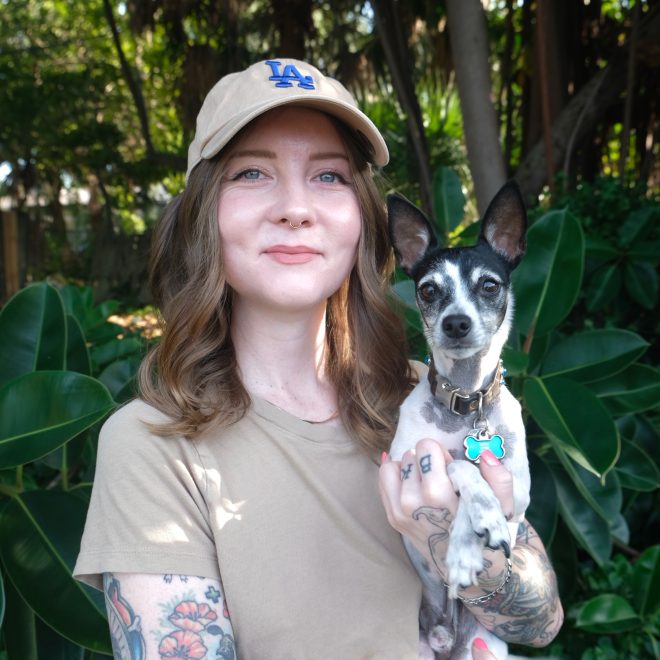
ace tilton ratcliff is a genderqueer, disabled metalsmith, multidisciplinary artist, photographer and writer who also moonlights as a narrative and deathcare consultant. The Little Book of Dog Care with Simon Element was their first book. Their metalsmith work was part of SNAG’s 2024 In Focus exhibition, in collaboration with Queer Metalsmiths and they teach metalsmithing at the Lighthouse Art Center in Tequesta, FL. Their art was included in Nike Footwear’s 2021 Art of Ease exhibit, created in partnership with Shoe Gallery for Art Basel Miami. They’re rarely seen without their service dog, Rupert. If they aren’t in their studio, you’ll find them in their garden.
About the Narrator
Jordan Kurella

Jordan Kurella is a trans and disabled author who has lived all over the world (including Moscow and Manhattan). In his past lives, he was a photographer, radio DJ, and social worker. His fiction has been nominated for the Nebula Award and the Sturgeon Award. He is decisive, but couldn’t decide in cat vs dog, so has both.
